TikTok Jewelry US Registration: Key Hurdles for Sellers
TikTok Jewelry US Registration: Key Hurdles for Sellers
Lately, almost every cross‑border jewelry seller I know is talking about TikTok jewelry category US registration. On the surface, it looks like a fresh growth channel, but the number of teams actually making it work is tiny. From what I’ve seen, six out of ten get stuck during document review. The four that get approved still trip over logistics and content compliance further down the road. Let’s walk through the real pitfalls and the unspoken industry practices nobody puts in the official guides.
Why TikTok’s US Jewelry Category Keeps Getting Harder to Join
TikTok’s review logic for jewelry in the US is on a completely different level compared to Southeast Asia. Put simply, the platform wants to scale jewelry sales, but it’s terrified of trust damage from mismatched products, counterfeits, or exaggerated material claims. So they’ve raised the entry bar aggressively and tweak the policies every few months. A document package that sailed through in January might get rejected by summer, asking for supplementary proofs.
The industry consensus is that trying to track policy shifts entirely on your own isn’t cost‑effective. I’ve noticed a growing number of sellers taking a “pre‑compliance” route—working with a professional service provider to align their materials, product catalog, and shipping plan with TikTok’s hidden requirements before submission. Platforms like Getfollow, for instance, operate on this compliance‑first logic: they flag risk points in your documents upfront instead of blindly submitting and hoping for the best.
Don’t misunderstand, though. A service provider solves process efficiency and compliance screening, not magic. If your product line doesn’t meet US standards—say, loose stones without a GIA report or silver jewelry with vague material labels—even the best partner can’t fix that. Many newcomers overestimate what a service can do and underestimate how firm the platform’s baseline is.
Three Documentation Traps in TikTok Jewelry Registration
When cross‑border teams prepare materials for TikTok jewelry category US registration, the items that cause the most trouble aren’t the business license or the brand authorization letter. They’re the three easily overlooked details below.
- Validity of gemstone certificates and lab credentials. The US platform doesn’t accept certificates from certain small domestic testing labs. Its whitelist is essentially made up of internationally recognized bodies like GIA, IGI, and GRA. Some sellers get products that arrive with a certificate, but if it’s from an obscure local lab, the review will almost certainly fail.
- Product photos and material descriptions must match exactly. If your title says “925 silver” but the description mentions “white gold plated,” the system will flag it as contradictory information. Many teams have their operations and photography running on separate tracks; when the two sides aren’t aligned, the submission gets bounced back.
- Verification of a real US return address. TikTok now spot‑checks whether return addresses can actually receive packages. A virtual warehouse address or a forwarder’s location that hasn’t been properly registered will be seen as insufficient logistics capability.
Experienced service providers run a “pre‑audit” before accepting a case, catching these traps early. In conversations with sellers, many feel this pre‑audit step is more valuable than the actual submission, because most rejections stem from small details rather than fundamental qualification issues.
Which Jewelry Subcategories Are Easier to Get Approved—and Which to Avoid
Based on feedback from the past six months, the difficulty of TikTok jewelry category US registration is closely tied to the specific subcategory. Pearls, karat‑gold pieces with gemstones, and lab‑grown diamonds with proper certificates tend to pass more smoothly, and the platform even gives them some traffic support. Ironically, the category that looks like it should be easiest—sterling silver and fashion jewelry—faces the tightest scrutiny, because that’s exactly the price range where product mismatches run rampant.
There’s an unwritten rule: the higher the item price and the more complete the certificates, the more TikTok welcomes the seller. High‑value pieces lift the platform’s overall transaction volume, while buyers who understand certificates generate far fewer disputes than those buying $30 fashion items. If you’re planning to move volume with low‑cost silver pieces, take a hard look at whether your supply chain can withstand the return rate and compliance risks.
Hidden Compliance Rules for TikTok Jewelry Stores
Once you finally get your account approved, the real work starts. The restrictions on short‑video content and live‑stream scripts in the US jewelry category are far more restrictive than most sellers expect, and plenty of those rules aren’t spelled out in public guidelines.
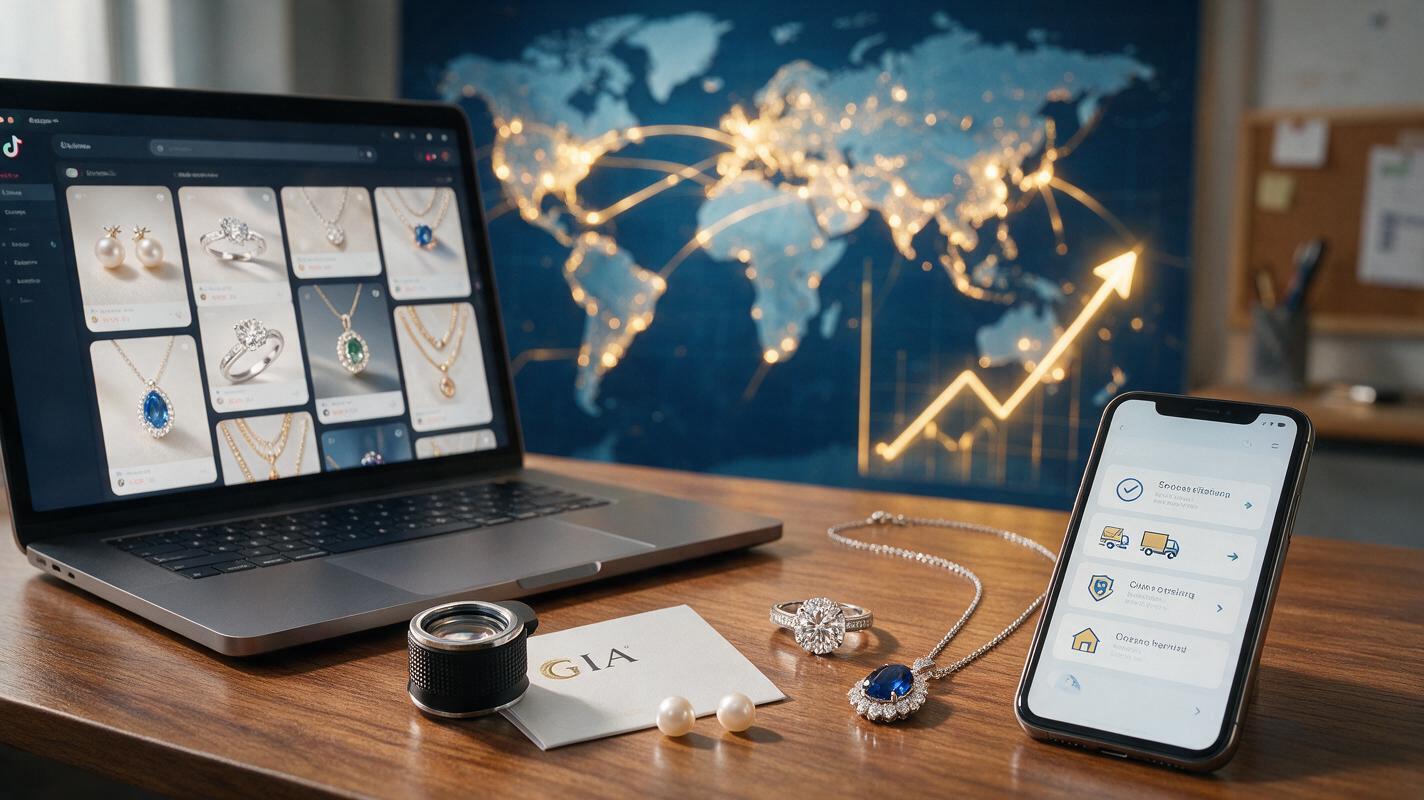
For instance, when it comes to describing materials, phrases that are common in domestic live shopping—like “solid gold‑grade” or “won’t tarnish or oxidize”—can easily be flagged as exaggerated claims in the US market. And you can never say “better than Brand X”; you can only say “our craftsmanship features…” From my own observations, the more factual and educational your content, the lower your violation rate, and conversions often outperform the hard‑sell approach.
Shipping speed is another enormous issue. The jewelry category essentially requires US‑based fulfillment capability; direct shipping from mainland China is usually not viable. Some sellers split inventory and send it to overseas warehouses, but not every warehouse will handle jewelry—it’s high‑value and risky. When evaluating logistics, don’t just compare prices. A reliable jewelry‑specialty line warehouse matters much more than a standard fast‑moving consumer goods facility.
One more easily missed risk is account association. In the jewelry category, if one store gets banned, other accounts under the same entity are very likely to be taken down as well. That’s why experienced teams set up entity isolation and network isolation from day one. They never put all their eggs in one basket.
Timing and Policy Trends for TikTok Jewelry Onboarding
The current stance on TikTok jewelry category US registration can be summed up as “easy entry, strict oversight.” The door isn’t shut, but the enforcement once you’re inside keeps intensifying. It’s highly likely that requirements will tighten again in the second half of the year, especially around delivery performance and how you handle returns.
For teams considering jumping in, the practical move is to secure your qualification while the window is still open, rather than scrambling to catch up after policies tighten further. At the same time, be crystal clear that getting approved is only step one. The real cost lies in ongoing compliance—monitoring rule changes, managing returns, and policing content. Without someone dedicated to those tasks, pure enthusiasm won’t carry you past three months.
How can I tell if I should use a service provider or handle TikTok jewelry registration on my own?
If your team has members who understand US policies and English documentation, and you can afford the time for one or two rejections as learning experiences, the DIY path is completely viable. But if your main energy goes into product and content, and you don’t want to burn hours on administrative back‑and‑forth with the platform, a service provider is the more efficient choice. Platforms like Getfollow don’t offer a “backdoor”; their real value is front‑loading compliance risk so you cut down on repetitive submissions. When choosing a partner, focus on whether they have a pre‑audit process, not just the price tag.
Once my jewelry category is approved, what subcategories can I sell?
The jewelry category generally covers precious metal jewelry, pearls, gemstones, diamonds, and imitations, but the specific products you can list depend on the certificate types you submitted and how your product catalog was reviewed. Some sellers get approved with karat‑gold pieces but later find they need to submit additional documents to add silver items. The initial approval doesn’t cover everything; you’ll need to renew reviews as you expand your product lines.
I don’t have a physical return address in the US—what are my options?
You can use the address of a partner overseas warehouse, but make sure to confirm in advance that the warehouse accepts jewelry returns. Many facilities refuse high‑value categories. Some sellers use a friend’s address in the US as a return point, but this only works if that person can reliably receive and handle the packages. If TikTok runs a spot check and the return attempt fails, the gap becomes obvious very quickly.
In the end, TikTok jewelry category US registration isn’t technically hard, but the experience barrier is sky‑high. Information gaps, perception gaps, and execution gaps will screen out competitors at every stage. Lay out your product line, credentials, and shipping capabilities honestly first. Figure out what’s missing and what needs fixing. That order of operations matters far more than rushing to fill out the application.