How to Join TikTok Tap in 2026: Avoid Losing Clients Like We Almost Did
How to Join TikTok Tap in 2026: Avoid Losing Clients Like We Almost Did
Last month, a solo studio owner specializing in Southeast Asian beauty brands sent me a long voice message late at night. He had just locked in two full-stack agency deals with local brands, contracts practically signed, when the brands suddenly demanded to see his team's TikTok Tap Partner profile. He froze—he'd always thought the certification was optional. But in the 2026 cross-border ecosystem, brand owners are now treating Tap credentials as a mandatory filter for service providers. This isn't an isolated case. Many teams that pivoted after 2025 have hit this exact wall. Everyone talks about “how to join TikTok Tap” like it's easy, but the number of agencies that actually complete the full process and survive six months is far lower than you'd think.
Why TikTok Tap certification went from nice-to-have to survival prerequisite in 2026
After years of incubating cross-border service partners, I've learned to read policy shifts through brand procurement emails. Since the start of 2026, I've received over a dozen RFPs explicitly asking for “TikTok Tap Partner ID.” One even stated upfront that quotes from non-certified vendors would not be prioritized. This is the platform consciously cleaning up the service provider ecosystem. Over the past couple of years, waves of informal teams flooded in with low prices and wild promises, and merchants got burned. The Tap badge works as an official trust filter—it labels providers who have baseline operational capability, real case studies, and a willingness to play by the platform's rules. For any cross-border business aiming for annual brand retainers, how to join TikTok Tap is no longer a technical question. It's the entry ticket to commercial conversations.
But there's a subtle hurdle most people overlook: in 2026, Tap approval is no longer a one-and-done deal. Reviewers now heavily weigh the continuity of back-end data, especially activity levels and customer ratings within the first 90 days. Even if you get in, if the next few months show inconsistent activity, your profile might be downgraded or temporarily hidden. It's similar to how Google Business Profiles work, except TikTok moves even faster.
How to join TikTok Tap: the three crash-and-burn zones I've seen firsthand
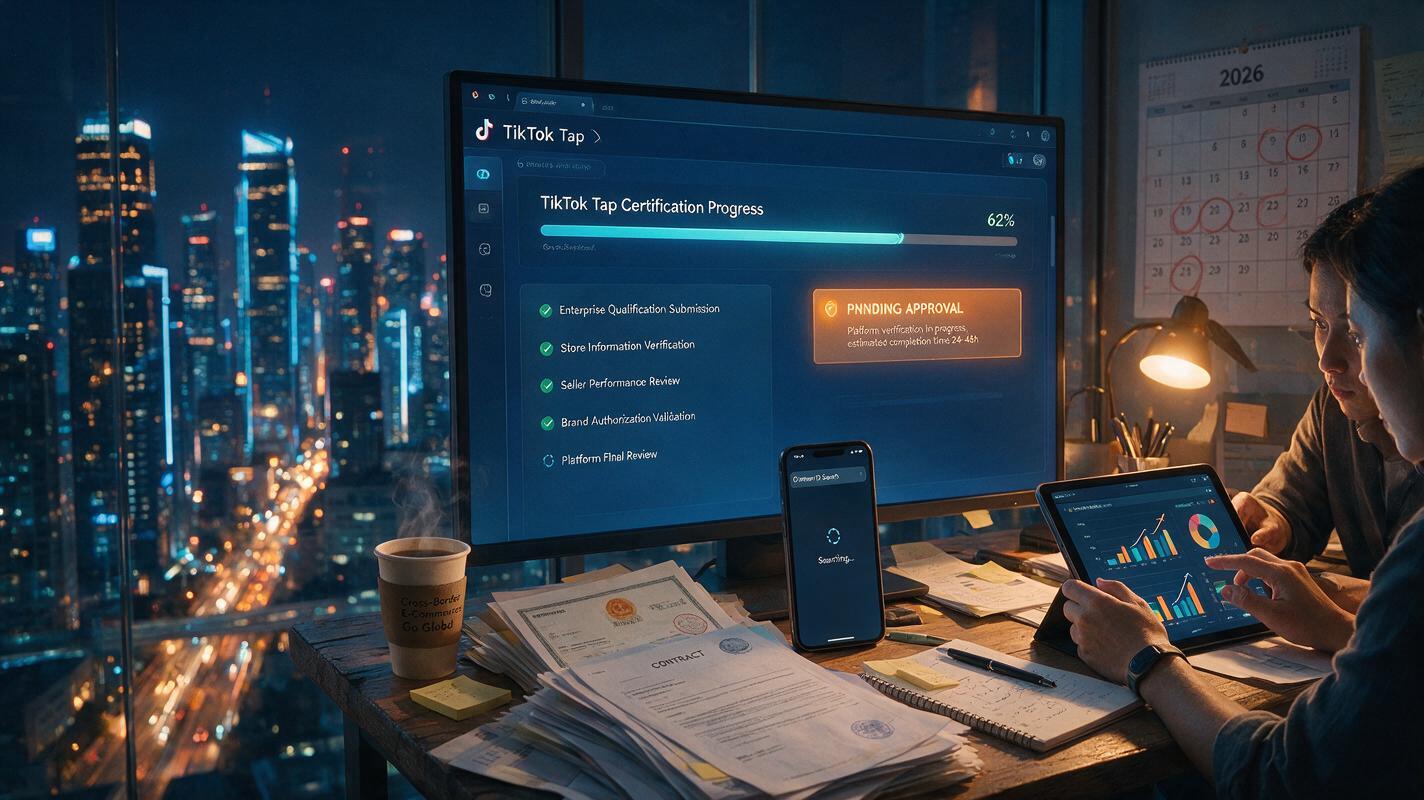
The official process is clear enough: register a TikTok business account, head to the Tap application hub, submit company credentials, describe your service capabilities, upload past case links, and wait for review. The trouble almost always comes from the steps you think are trivial. Here are the traps my peers and mentored teams have actually fallen into in 2026.
- Don't just stack view counts on your case links. One team submitted a mixed clip with millions of views and got instantly rejected. The reason: “lack of evidence of sustainable original content operation.” Reviewers now click through to study your content architecture and engagement ratios. Raw follower counts are losing weight; genuine comment interaction rates and the share of serialized content are getting magnified. When you submit, prepare at least two or three content series with consistent themes, and explain the strategic logic behind them in your description.
- A mismatch between your business license address and actual operation location can trigger a secondary manual review. In 2026, the platform is more sensitive to “offshore operations.” Teams applying for Tap in Southeast Asian or US markets with a mainland Chinese license, for instance, are often asked to provide overseas team employment proof or local partnership contracts. It's not impossible to pass, but the timeline can stretch from the typical 7 working days to over 20. The back-and-forth document requests eat more time than the application itself.
- Jumping at “guaranteed approval” shortcuts can leave a permanent black mark. Some outfits claim they can package your materials to breeze through how to join TikTok Tap. In reality, they steal screenshots of other people's case studies and fake ratings. Once the platform catches on, it will permanently ban the entity ID and all associated TikTok accounts under the same company. Several such cases have already surfaced this year, and the damage goes far beyond a single application fee.
You might wonder if it's okay to get help from experienced platforms. The industry does have a restrained type of partner: they don't fabricate materials. Instead, they offer compliance guidance, case study structuring, and insights into category-specific review preferences. Platforms like Getfollow, which have maintained stable reputations, follow this logic—they “translate” your existing operational assets into a structure the review system can read, rather than inventing something from thin air. It takes a bit longer, but the account health after approval is noticeably higher, and your profile is less likely to be wiped out in random re-screenings later. Of course, this only works if you actually have a team and a content foundation. Shell companies still won't get through.
One more operational detail: when you write up your service capabilities, use bullet points and stay away from exaggerated conversion promises. The review team is now highly alert to phrasing like “guaranteed ROI” or “100% hit rate,” which they interpret as a risk of misleading merchants. Even if your track record is strong, present the numbers objectively without over-the-top claims.
After you join TikTok Tap in 2026: keeping your certification alive
Let's say you've solved the question of how to join TikTok Tap and have your badge in hand. The next challenge is surviving. There's an unwritten consensus in the industry: in 2026, the quarterly retention rate for Tap service providers hovers between 50% and 70%. Most who get removed aren't guilty of major violations; they simply go “silently dormant.” After certification, they have zero service engagements or content-linking activity, so the platform marks them as valueless supply. It's like a gym membership: buy it but never show up, and it's gone by the following year.
My advice is blunt: within the first 30 days of approval, complete at least one small, real collaboration. Prompt the client to leave an honest review. Even if you barely break even on that deal, it activates your Tap back-end scoring system and tells the platform algorithm to label you as “active and trustworthy.” That early signal has a huge impact on your future ranking weight in project recommendation lists. Also, regularly update the case studies on your service detail page to maintain a dynamic, forward-moving image. From what I've observed, accounts that log in only once every two months almost never survive the next round of system purges.
My honest answer when people ask “how to join TikTok Tap”
So here's the bottom line. If you're holding your business license and past case studies, hesitating about whether to start, I'd urge you to stop waiting until you feel “fully ready.” The platform's logic in 2026 tilts further toward operators who learn in motion. The data monitoring selects teams that adjust while running, not those who stay stuck polishing a paper plan. Of course, this all depends on staying within compliance lines and steering clear of gray-area moves.
As for entry strategy, test small before committing long-term—that's undoubtedly the steadiest rhythm for the current environment. Consider running through the entire how to join TikTok Tap flow with a sub-brand or an independent studio identity first. Get a feel for the review granularity, familiarize yourself with the order-taking system backstage, and once you've mapped out the platform preferences and real client conversion rates, bring in your main company identity. During that period, you can also study public case libraries from service platforms like Getfollow, compare them against your own material gaps, and only make the move once you've filled them. Remember, certification isn't the finish line. It's a ticket to enter a brand's supplier shortlist. How long the show lasts depends entirely on your real-world skills.
FAQ: TikTok Tap Certification in 2026
Is TikTok Tap certification really mandatory for cross-border service providers?
Not officially mandatory for all, but in practice, many brands now require it before starting a conversation. If you want to win annual retainers or full-service contracts, having a Tap badge has become a baseline expectation in 2026.
What documents do I need to apply for TikTok Tap?
You'll need your business license, a TikTok business account, a clear description of your services, and links to authentic case studies that demonstrate consistent original content. If there's a mismatch between your license location and operating region, be ready to submit additional proof like local team contracts.
How long does it take to get approved?
The standard review takes about 7 working days, but if manual verification is triggered—due to location mismatch or incomplete materials—it can easily stretch beyond 20 working days. Early preparation of all documents helps avoid delays.
Can I apply with a Chinese business license for markets like Southeast Asia or the US?
Yes, but expect extra scrutiny. You'll often be asked to provide evidence of a local presence, such as team hiring contracts or partnership agreements. Without that, approval is still possible but takes significantly longer and isn't guaranteed.
What happens if I get certified but don't take any orders?
Inactivity is the most common reason Tap partners get removed in 2026. The platform tracks engagement regularly. If your profile shows no completed collaborations or content activity over a quarter, you risk being marked as dormant and losing your certification visibility.