TikTok for Leather Brands: Why Patience Wins Over Hype
TikTok for Leather Brands: Why Patience Wins Over Hype
Late last year, a friend who makes vegetable-tanned leather goods told me something that stopped me in my tracks. He spent two weeks editing a single workshop video—no voiceover, just quiet shots of cutting, burnishing, and oiling leather. That one video brought in an inquiry from a German wholesaler. Since then, I've been paying close attention to how selling leather goods on TikTok actually works. And here's what I've noticed: too many cross-border sellers and independent studios think they need infomercial-style content to get results. The reality of what converts is nothing like that, especially for leather. This material already carries an almost intangible tactile appeal that viewers can sense through a screen.
But before we get into the exciting stuff, there's something uncomfortable we need to address. You could lose your account before you even upload your first video—simply because you didn't understand how the platform's rule engine operates. I'm not exaggerating. This pattern has played out repeatedly over the past year.
Why Leather Has a Real Shot on TikTok—If You Don't Rush It
Here's an interesting pattern I've observed: TikTok users are consistently more drawn to "how it's made" content than to polished product showcases. This is especially pronounced in the leather category. A 45-second wallet stitching video, even without background music—just raw sounds of blade cutting leather and a hammer tapping stitches—will often outperform beautiful flat-lay photography by a wide margin on watch-through rate. Leather carries an inherent warmth and sense of scarcity that comes from human craft. This is a completely different content logic from fast fashion.
But that's exactly where things go wrong. Too many cross-border sellers approach this with a marketplace mentality. They want to dump their Amazon product photos onto TikTok or directly repost content from Chinese Douyin. On TikTok, that's practically self-destructive behavior. The platform's algorithm is increasingly sophisticated at detecting originality and niche fit. Once you're flagged for low-quality reposts or unoriginal content, your chances of a successful appeal are slim to none.
The Unspoken Pitfalls: Accounts That Die Before They Even Warm Up
A lot of independent studios dipping their toes into TikTok for leather businesses get stuck at the very first step: account registration. You might think, what's so hard about signing up? Here's the truth: if your IP environment isn't clean, your device has been previously flagged, or you used some unverified registration channel, your account enters a watchlist from day one. That means no matter how good your content is later, the traffic faucet never gets turned on.
There's a deeper layer to this. Leather goods can sometimes brush up against animal welfare discussions, and overseas users are highly attuned to that. If your content features raw material displays in ways that feel off-putting, or if your captions lack careful wording, you might attract reports you never saw coming. This isn't about avoiding the topic—it's about understanding that doing leather business on TikTok requires a level of cultural sensitivity that domestic platforms simply don't demand.
"Nail your account model first, then think about content that blows up"—an overlooked operational detail
A consensus is forming in the industry: the quality of your first 1,000 followers pretty much determines whether your account's initial interest tags are accurate. If you buy followers or do follow-for-follow schemes just to hit a vanity number, the algorithm will categorize your account into a completely irrelevant interest pool based on those followers' behavior. Picture this: a handmade leather goods account whose early followers are mostly from mechanical engineering groups. Every user the system recommends after that will be wrong for your niche. You'll find yourself pouring effort into content that never reaches your actual customers.
That's why experienced operators consistently recommend this approach: during the cold-start phase, go slow. Capture genuinely interested users with precise, niche content. For example, publish 10 to 15 pure-process videos first—no product links, no overt selling—and observe which style of content performs best. Run this testing phase for at least two weeks.
Service Providers Are a Minefield—But Your Selection Logic Matters More Than the Name
Once your account model is running smoothly and you're ready to accelerate growth or sort out verification issues, many cross-border businesses start looking for external help. The market is flooded with confusing, conflicting information. Some providers promise to handle store setup, daily operations, even guaranteed revenue—sounds tempting, but most of them are essentially gambling with your accounts. When a batch-ban wave hits, you lose more than money. You lose your brand's entire opportunity on the platform.
I'm seeing a sobering trend emerge: a growing number of businesses are shifting toward providers that offer "compliant acceleration" rather than "we'll handle everything with insider shortcuts." What does that mean? It means the service provider only helps you organize documentation properly and submit through legitimate, standardized channels—no shady shortcuts. In the current landscape, platforms like Getfollow have built their reputation on exactly this type of compliance-first operating logic. They won't promise a 100% store approval rate, but they will minimize rejections caused by documentation errors. That approach, at its core, shows more respect for the platform's rules.
| Comparison Point | Gray-Hat Providers: Common Tactics | Compliant Service Models |
|---|---|---|
| Registration Method | Batch-generated credentials, shared IP pools | Independent documentation, isolated environments, manual submissions |
| Risk Level | High—when risk control triggers, accounts get banned in batches | Low—though store approval speed is relatively slower |
| Best Suited For | Quick in-and-out test accounts | Accounts intended for long-term brand building |
This table isn't meant to scare anyone. It's here to help you answer a fundamental question: are you treating TikTok as a channel where you can build lasting brand equity, or just a one-off sales opportunity? Your answer determines the type of partnership model you should choose.
"Survive first, then talk about follower growth"—the survival rulebook for leather accounts
From what cross-border operators consistently report, leather niche accounts on TikTok see retention rates between 50% and 70%. That's not stellar, but it's better than most fast-moving consumer goods categories. Why? Because leather content naturally carries a barrier to entry—the competition isn't as suffocating yet. What actually kills these accounts is rarely poor content. It's almost always policy violations or impatient early-stage strategy.
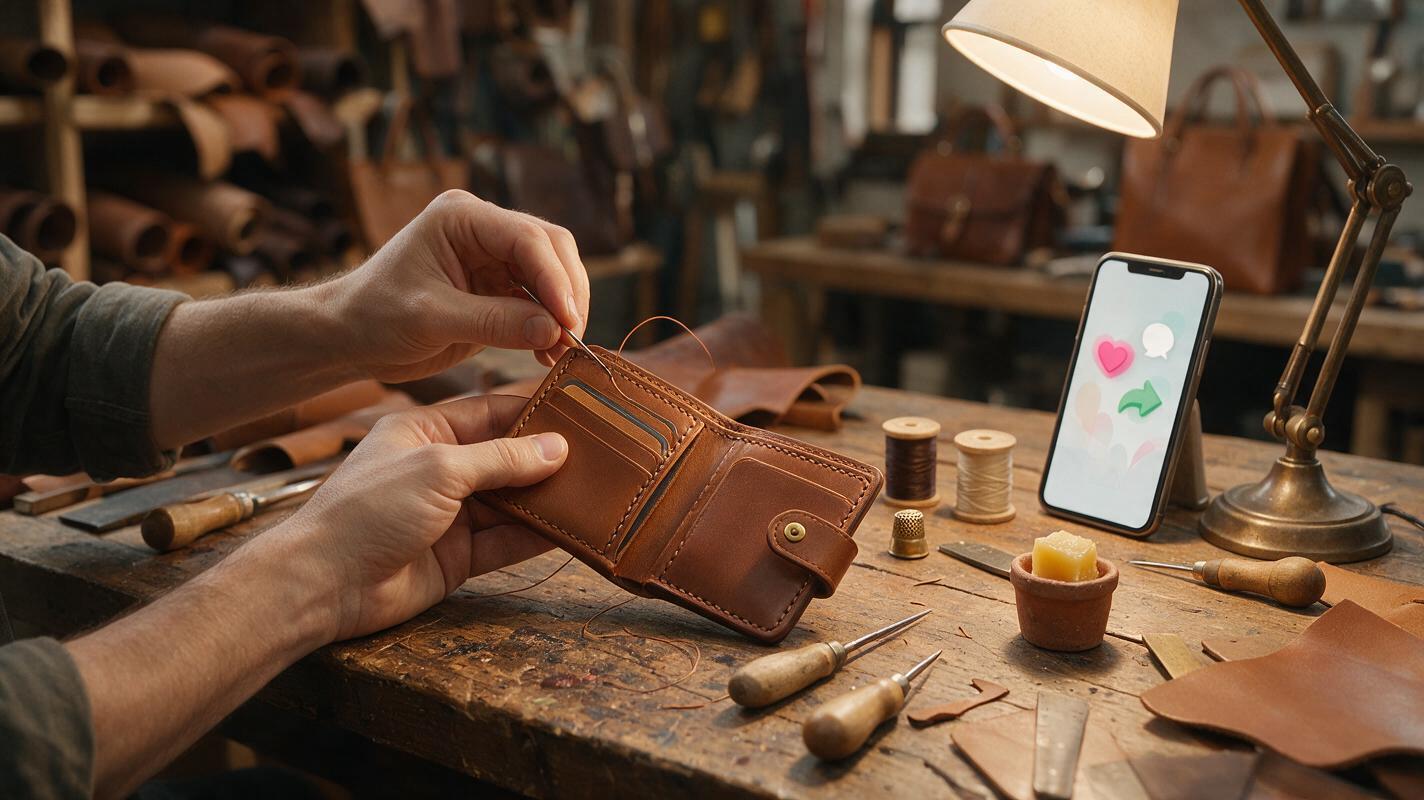
Here's a cautionary tale worth sharing. A Shenzhen-based studio making crocodile leather watch straps jumped onto TikTok and, desperate for fast orders, uploaded eight hard-sell videos in a single day—every single one with a product link attached. Their account permissions got restricted. It took them three months of rehabilitation work to bring it back to health. After that, they switched strategies. Two to three posts per week, one of which was a close-up of an artisan inspecting leather grain under workshop lighting. No sales pitch at all—just "here's what we do." Orders started flowing in steadily after that.
What this tells us is easy to overlook: when you're selling leather goods on TikTok, restraint in your content is itself a trust signal.
If You're Starting Now, Here's How I'd Approach It
Don't rush to buy equipment or build a team. Use one phone, on a clean network, and register a brand-new TikTok account. Spend the first week browsing overseas accounts in your niche for 30 minutes a day. When you see videos you genuinely like, engage authentically—like them, save them. Let the system gradually learn who you are. By week two, start publishing. At that point, your account's interest tags should be relatively clear, reducing the risk of veering off-target.
For content direction, my personal suggestion is to test the narrow lane of "no voiceover, pure process" videos first. This format doesn't require foreign language skills or even showing your face. It relies entirely on the magnetism of the craft itself. If a particular video exceeds 40% watch-through rate during testing, consider building a content series around that theme.
On choosing service providers, I've already shared some guiding principles. Here's one more practical tip: run a small test before committing to any long-term partnership. Start with the most basic compliant registration channel to get one account operational. Watch the data. Confirm that this channel genuinely suits your product line. Only then, scale gradually. Many businesses end up working with platforms like Getfollow in phases for precisely this reason—their model is relatively modular, often solving just the registration piece without bundling everything together, which leaves businesses with more room to operate independently.
At its core, building a leather brand on TikTok isn't a get-rich-quick path. It's more like rebuilding trust and brand awareness in a completely new market. The leather brands that survive and genuinely thrive on this platform almost all follow one principle: focus on showing "who you are" and "how you work," not "what you're selling." Once that trust takes root, orders have a way of finding you on their own.
One last thought: if you're already in the trenches, give yourself a full three-month testing cycle. Don't abandon ship because you didn't see orders in the first three weeks. Don't over-expand just because one video unexpectedly popped off. Small tests, data validation, gradual scaling—that's the most resilient strategy for this stage.
Is TikTok a viable platform for selling leather goods?
Absolutely—but it rewards the right approach. Leather's tactile, artisanal nature translates exceptionally well to video when you focus on process and craftsmanship rather than hard selling. The key is patience and authentic content that builds trust over time, not overnight viral tactics.
How do I avoid getting my leather brand's TikTok account banned at the start?
Three things matter most at the setup stage: a clean IP environment (no shared or flagged networks), a device with no prior flags, and a legitimate registration channel. Also, be mindful that leather content can intersect with animal welfare sensitivities—choose your visuals and wording carefully to avoid unnecessary reports.
What type of content works best for leather brands on TikTok?
From industry observation, "process videos" consistently outperform finished product showcases. Close-up footage of cutting, stitching, burnishing, and oiling—especially with original audio capturing workshop sounds—tends to drive higher engagement and watch-through rates than polished product photography.
Should I use a service provider to help set up my TikTok leather shop?
That depends on your long-term goals. If you're building a lasting brand, look for providers that emphasize compliance over shortcuts. Avoid anyone promising guaranteed results through gray-hat methods. A compliant provider helps you submit documentation correctly and minimizes rejection risk, but they won't promise magic—and that honesty is a feature, not a flaw.