2026 TikTok Shop Registration: The New Compliance Survival Game
Suggested Titles:
- 2026 TikTok Shop Registration: Why It’s Now a Compliance Survival Game
- TikTok Shop Onboarding 2026: Hidden Pitfalls and How to Dodge Them
- The Brutal Truth About TikTok Shop Registration in 2026 (and What Actually Works)
2026 TikTok Shop Registration: The New Compliance Survival Game
If you still think the TikTok Shop registration process in 2026 is a straightforward checklist—upload docs, wait, list products—you’re dangerously out of touch with this year’s reality. What I’ve seen is brutal: even if your store gets approved, fall below the red line on sales activity or shop rating within the first 30 days, and you’re immediately shoved into a low-traffic pool. Climbing back from that is expensive and slow. In other words, “done” no longer means getting a backend login. It means surviving your first wave of genuine, compliant orders.
A lot of cross-border business owners spent early 2026 wondering whether to use a sole trader license for the UK or US market. By midyear, they were shocked to find platform verification had evolved into address proof and operational video submissions. The 2026 review algorithm flags any inconsistent field. Even a slightly retouched utility bill PDF—say, a quick “fix” with your phone’s scanner—can be marked as fraud and lead to a permanent shutdown. Today’s TikTok Shop onboarding challenge isn’t about filling out forms; it’s about staying inside the platform’s shrinking risk tolerance on every single step.
Why six out of ten new TikTok Shop applicants get stuck at step one in 2026
That’s not an exaggeration. Among the dozens of cross-border studios I’ve followed this past year, nearly 60% stumbled on business documents and legal representative verification. The surface reasons always sound like “unclear documents” or “mismatched bank details.” But the real driver was the compulsory global seller verification upgrade rolled out in January 2026. The default now is a three-layer screening: cross-checking against databases, analyzing IP address correlations, and profiling the applicant’s historical behavior.
Let me give you an example. A Xiamen-based outdoor gear company applied for a Southeast Asia site in March 2026 using a Hong Kong entity. Their office was in a shared space. The statement of account showed a floor number that differed from the registered address on the business license—just by one digit. That alone triggered a “document authenticity doubtful” flag. They resubmitted supporting files six times. Every attempt was rejected. Eventually their entire shop ID was placed on a watchlist. Even switching to a different management identity triggered algorithmic correlation. The only way they scraped through was to set up a real local warehouse, generate genuine tenancy proof, and apply from a completely clean computer network. That story drives home the new reality: TikTok Shop registration in 2026 is no longer a simple “I submit, you review” exchange. It’s an ongoing information battle. Any corner you try to cut will bite back.
The “store launch window” most sellers ignore—and why it can break you
Getting approved is just the beginning. The real danger zone is the next 72 hours to seven days. In 2026, the platform is hypersensitive to your first product uploads and logistics fulfillment during what I call the launch window. If you go live and immediately flood your shop with 500 SKUs, or if you scrape third-party product photos and bulk-upload them, the system may tag you as a low-quality store. Your initial shop score can be locked below 4.0 right out of the gate. And once that score starts low, even if you drive solid GMV later, your traffic ceiling will always be lower than competitors who opened strong.
One shift I’ve seen that should make every new seller nervous: the platform now obsesses over first-order behavior. The tracking number must scan within 48 hours and show real movement, and the delivery must meet the promised timeline. Too many beginners think they can game this by sending a dummy package. A single bogus shipment can get your entire store shadowbanned by the next morning under the “fake fulfillment” rule. The 2026 fulfillment algorithm evaluates intent at the individual order level. That’s why the real last step of the TikTok Shop registration flow is surviving your first three orders—with compliant products and traceable, real shipments that tell the system you’re a safe new seller.
A real conversation I keep hearing:
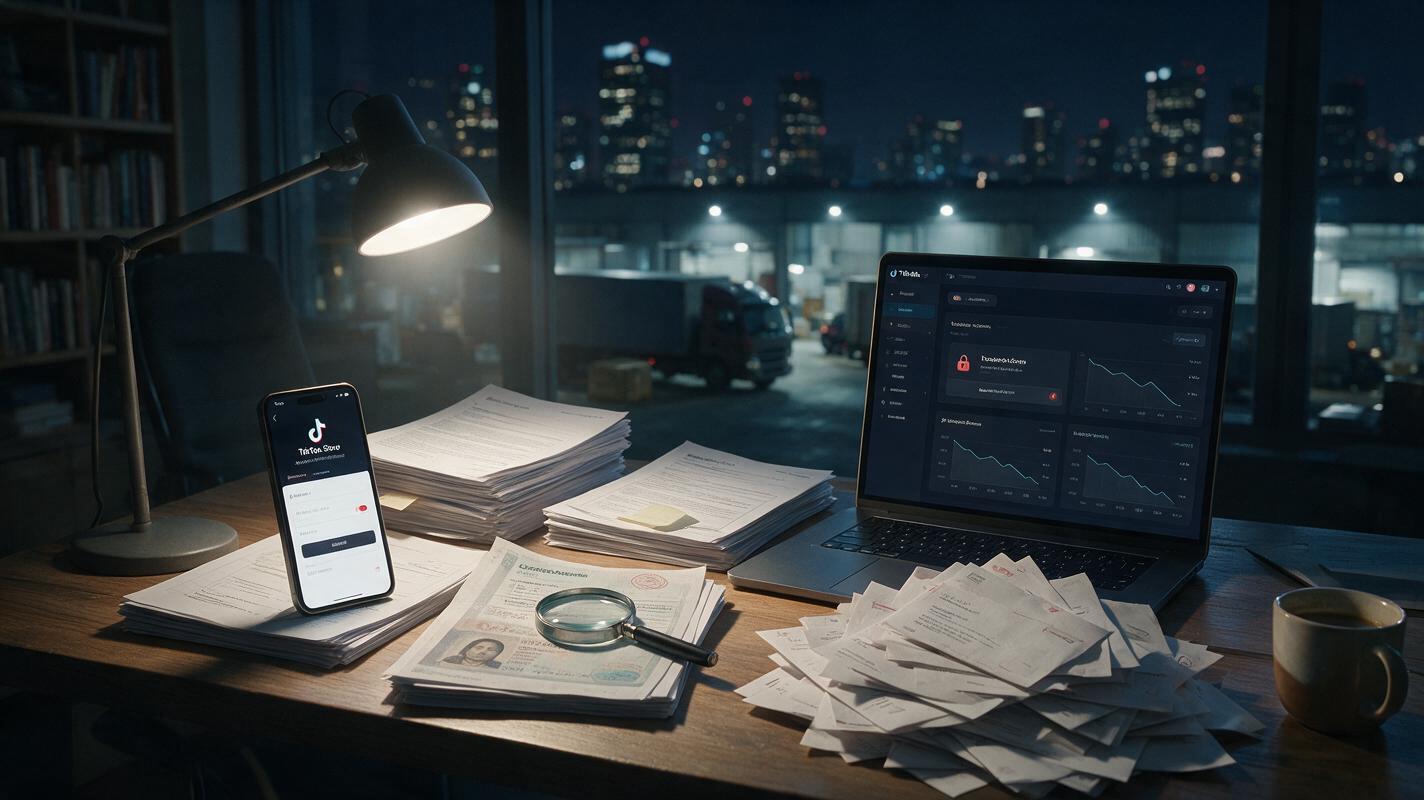
“Why was my UK/US TikTok Shop application rejected even with complete documents?” This is the number one question I got this year. The ugly truth is that what you see as “first review” or “second review” is just the surface. Below that, there’s an invisible but lethal cross-check: the platform traces your registered entity’s history across other major cross-border ecommerce sites. If that same business license has a serious violation record somewhere else, your TikTok application will almost certainly get denied. And here’s the trap—you keep resubmitting tweaked docs, which only deepens the risk. The right move is to stop, go into a quiet period of at least 15 days with zero touching, and only then restart the process with the original entity. I know savvy teams now use platforms like Getfollow to pre-screen their entity’s linked history, clean up weak risk associations, and only then hit “submit.” Their approval rates are noticeably higher.
Can individual studios still register a TikTok Shop as a sole trader in 2026?
Yes, but you have to accept low ceilings and high scrutiny. In 2026, the algorithm gives sole proprietor stores a different traffic model. Compared to properly registered company stores, sole trader storefronts usually get at least 20% less organic exposure in search and recommendations. They’re also routinely blocked from brand support programs and campaign invitations. Even worse, most mainstream payment providers now apply stricter validation to individual businesses. Withdrawal caps are lower, and forex settlement fees are significantly higher than for incorporated entities.
So if you’re a small studio just trying to get the TikTok Shop registration pipeline working, registering as a sole proprietor isn’t the killer. The problem is the ripple effect of that low trust ceiling. My advice: don’t chase sales volume in your first month. Instead, test your initial shop score using three to five steady-demand categories. If the automatic negative review protection isn’t strong enough, immediately switch to fulfillment from your own overseas warehouse so you can boost your rating with better delivery experiences. There’s no shortcut, but once you’ve built a resilient trust model as an individual store, upgrading to a company store later becomes much smoother.
Some operators choose to plug into service providers that have already localized the tricky parts. Platforms like Getfollow, for example, now offer practical pathways for setting up as a local entity abroad, with compliant solutions that solve the core headaches—overseas business identity, address verification, and payment account binding. For teams that don’t want to start from scratch, this can be a test option. But no matter which route you go, my rule is always: validate everything with one small account first. Make sure logistics, payments, and after-sales all close the loop before you scale.
Moving forward: treat the TikTok Shop registration process like a product
The industry consensus is clear: the 2026 TikTok Shop opportunity has shifted from “first mover grabs the market” to “slow and steady wins.” If you view the TikTok Shop registration process as a product, your business documents are the raw material, the submission is your build pipeline, and the launch window is your delivery experience. Any rework at any stage multiplies your costs. Many peers tell me the invisible scoring penalty for repeat submissions is getting harsher. An account that gets rejected three or more times within 14 days is effectively permanently downgraded. Changing your phone number and email won’t save it.
So instead of hunting for the cheapest agent, build an internal risk checklist first: Are all key fields on the business license perfectly consistent? Is your network environment clean and isolated? Does the payout account match the entity’s region? Have you reserved real fulfillment capacity for those first orders? Nail these details, and your registration flow will feel almost effortless. And remember, whether you’re solo or part of a team: test small before you commit. In 2026, the platform only hands out real tickets to sellers who can afford to be patient.
Why does my TikTok Shop application keep getting rejected even with all documents?
Often, the problem isn’t the documents themselves but hidden cross-platform checks. TikTok can trace your business license’s history on other major ecommerce sites. A past violation, even minor, can trigger an automatic rejection. Pausing all submissions for at least 15 days and cleaning your digital footprint before reapplying is the most reliable fix.
Can I still open a TikTok Shop as an individual or sole trader in 2026?
Yes, you can, but expect lower organic reach, limited access to promotions, and higher payment processing fees. The smarter approach is to start small, maintain perfect order fulfillment from day one, and gradually build your shop’s credibility. Once your store’s trust score is established, transitioning to a company entity becomes far easier.