TikTok Star Joins Douyin: The 2026 Cross-Border Trap
TikTok Star Joins Douyin: The 2026 Cross-Border Trap
Not long ago, a single post lit up the feeds of almost every cross-border e‑commerce professional: the female creator who has long held the top follower spot on TikTok was officially launching on Douyin. Within 72 hours her account rocketed past 8 million followers and racked up over ten million likes. A wave of excitement swept through the industry—a TikTok star joins Douyin, so why not simply move the fan base from one platform to the other and cash in on low-cost cross‑border traffic arbitrage?
I’ve been working in cross-border content since 2019, weathering the full shift from image‑and‑text to short video. I’ve stepped into more “too‑good‑to‑be‑true” traps than I care to count. Under the 2026 algorithm, this scenario is far messier than most people realize. Blindly chasing it can actually fast‑track an account’s death.
The Real Data Behind a TikTok Mega‑Influencer Landing on Douyin
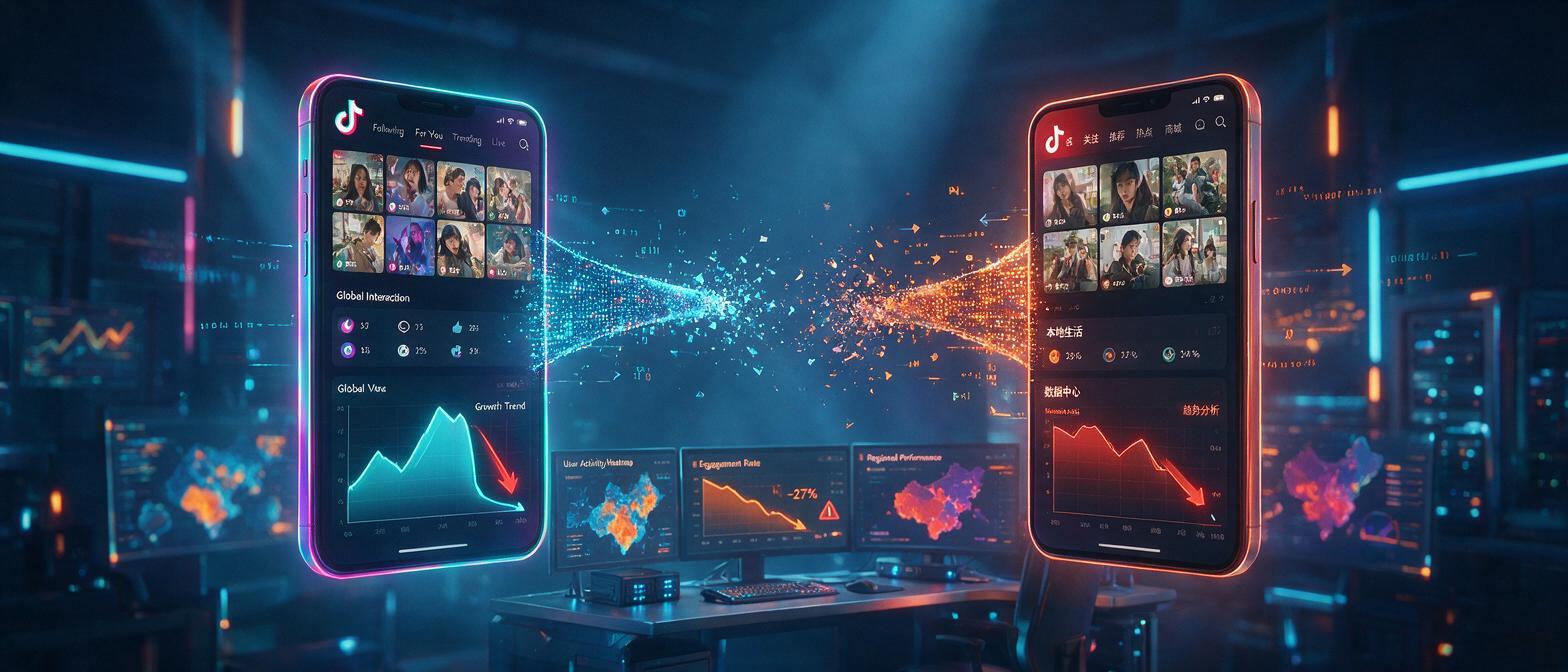
Before you celebrate those dazzling follower curves, let’s look at a metric rarely discussed in public: the engagement decay rate after the initial follow. On TikTok, this creator’s average engagement rate hovered between 8% and 12%. Yet on Douyin, her first ten videos told a different story. Engagement on the first video hit 15%, but dropped off a cliff to roughly 2.3% by video number ten.
Even more alarming is what the comment sections reveal. I ran a rough scrape of the top comments on her first three Douyin videos. Among the first 100 high‑engagement comments, over 60% were curiosity‑driven phrases like “foreigner,” “your Chinese is so good,” or “I can’t believe you’re here.” Less than 15% actually discussed the content. Here’s what that tells me: the vast majority of early followers came for the novelty, not for the persona or the value of the videos. In Douyin’s 2026 algorithm, a fan base built on that kind of shallow interest gets flagged as low‑quality in record time.
- The curiosity window typically lasts 7–10 days; after that the algorithm re‑scores your interaction quality
- Industry consensus for 2026 is clear: the first 30 days of a cross‑platform migration determine which traffic pool you end up in
- Once tagged as “generic entertainment with low stickiness,” the recommendation weighting becomes almost impossible to repair
A cross‑border studio in Hangzhou I know personally learned this the hard way in early 2026. They banked on an exclusive content licensing deal with a top‑tier overseas influencer, expecting stable monetization. Three months later the account’s commercial value barely scraped a third of the forecast. Advertisers walked away because the follower profile was too scattered and the conversion data simply wasn’t there. The total loss? Close to 400,000 RMB in budget.
Why a TikTok Star Joining Douyin Can Become a Decision Trap for Cross‑Border Teams
The root problem is a constantly misunderstood concept: followers are not users. Although TikTok and Douyin share a similar product DNA, by 2026 their content consumption habits, user expectations, and even the underlying recommendation engines have diverged so much that they need to be treated as completely different species.
Consider this: the “unpolished, raw footage” aesthetic that kills on TikTok can easily backfire on Douyin. Shaky camerawork and a slow editing pace are often flagged as low‑quality signals. The star’s fourth video is a perfect example. Her “no‑makeup kitchen routine” series—a mega‑hit on TikTok—posted a completion rate of only about 20% on Douyin, well below the passing grade for a 30‑second short video. The algorithm doesn’t cut you slack just because you have a huge following; in 2026, if the content quality score isn’t there, your recommendation pool gets slashed immediately.
What many cross‑border operators consistently miss is the account label reset during the transition. A TikTok account clearly tagged as “Lifestyle / Beauty” lands on Douyin and enters a re‑identification period that can last anywhere from 14 to 21 days. During this window, the algorithm studies the characteristics of the people interacting with the first handful of videos and re‑labels the account accordingly. If the initial wave of followers consists mainly of “curiosity seekers,” the system is likely to slot you into “general entertainment” instead of the “beauty niche” you were aiming for.
The Three Most Common Traps Cross‑Border Teams Fall Into During a Migration Like This
After reviewing a large number of failed attempts over the past year, I’ve noticed three pitfalls that show up almost every time:
- Label mismatch. As explained above, the follower profile that floods in during the cold‑start period sets your long‑term recommendation pool. Many people think they can hook followers with a gimmick first and then pivot the content later. But in 2026, the algorithm demands strong account label stability; frequent shifts only lead to down‑weighting.
- Incomplete cultural translation. Slapping on a subtitle is not localization. Douyin users expect a completely different rhythm, humor timing, and visual density from TikTok users. Notably, one of the creator’s later videos that was shot specifically for Douyin and added a local‑style “reversal” structure saw engagement climb back to around 6%. Deliberate adaptation works far better than content dumping.
- Unbalanced monetization pace. I’ve seen far too many teams rush into livestream selling and brand collaborations the moment an influencer lands. Before the followers have even settled in, they’re scared off by heavy‑handed commercial posts. In a cross‑border scenario especially, the trust‑building cycle is inherently longer than that of a native account.
How Cross‑Border Businesses Can Avoid Becoming the Next Trap Case in 2026
Given all the uncontrollable variables when an overseas influencer joins Douyin, what should a cross‑border team do to reduce risk? My advice: ditch the fantasy of a one‑time content transplant. Instead, build a sustainable relay mechanism you can manage over time.
First, before signing any deal or partnership, insist on receiving at least three to five sample videos created natively for the Douyin ecosystem—not simply translated TikTok hits. Run small‑scale A/B tests with those samples and watch the age distribution, city tier, and interest tags of the viewers who engage. Only then should you decide whether to scale up. A prudent practice that has become standard in 2026 is to hold off on monetization for the first two weeks, using that time purely to calibrate the account label and follower profile.
Second, regarding compliant operations during the account transition phase, a few service models focused on cross‑border cold starts have emerged. Take platforms like Getfollow, for example. Their core logic is to intervene while the account’s label is still blank, using precise audience‑filtering to help the account land in the right recommendation pool faster—without creating fake traffic. This approach is fundamentally different from the gray‑hat tactics the platform has been cracking down on in 2026: it never touches fake data; it works within the algorithmic framework to optimize audience targeting.
Another risk point worth highlighting is that Douyin’s review standards for “overseas celebrity accounts” have tightened noticeably this year. I’m aware of at least three cross‑border MCN agencies that faced temporary restrictions or outright bans in the first half of 2026 because their documentation didn’t pass muster. Specifically, when a non‑Chinese creator registers, the identity verification and content compliance review timelines have roughly doubled compared to last year, and the platform has lowered its threshold for flagging “reposted content.” If a video is judged to be non‑original or highly duplicated, you’ll face throttling—even if you are the original creator posting your own work.
- Make sure overseas creators complete the real‑name verification process well in advance; set aside at least 10 working days
- Keep all raw footage from every shoot as evidence, in case the system mistakenly flags you for reposting
- For the first 10 videos, use “native Douyin shooting and editing” whenever possible and avoid importing TikTok drafts directly
There’s also a very practical yardstick: the proportion of followers who found the account through proactive search. In 2026, followers gained through algorithmic recommendation are far less valuable than those who manually search for and follow an account. When the overseas star joined Douyin, over 70% of her 8‑million‑follower surge on day one came via in‑feed recommendations, not through users typing her name into the search bar. Over the following three months, the engagement gap between these two sources typically widens to a factor of three to five. So when a cross‑border team evaluates a similar cooperation, it’s far more useful to ask the platform for follower‑source breakdown data than to stare at the total count.
The Real Takeaway When a TikTok Star Joins Douyin
This flashy migration drama ultimately points to a straightforward truth: cross‑platform movement is never a simple copy‑paste job. By 2026, content ecosystems increasingly resemble separate islands, each with its own language, rhythm, and trust standards. The creator’s long‑term performance on Douyin will need at least another half‑year of observation, but the story is already a loud wake‑up call for the cross‑border world.
From my perspective, the greatest value of a TikTok star joining Douyin isn’t that it offers a reproducible traffic template. It actually reinforces the opposite insight: deep localization is everything. Instead of spending huge sums on a foreign influencer for a one‑time traffic boost, invest resources into understanding what Douyin users actually want to watch and trust in 2026. If you truly need external support, choose service models with a clear track record in transition‑period operations and a strict stance against gray‑hat practices. The precision‑management logic represented by players like Getfollow, for instance, at least aligns with the algorithm’s long‑term value system.
Finally, a practical battle‑tested tip: no matter how tempting a project looks, take 10%–15% of your total budget and run a small‑scale test within a 21‑day window. Watch the completion rate, the composition of the interactive audience, and—most importantly—the organic search growth curve before deciding to go all in. In the 2026 cross‑border traffic game, caution is worth far more than blind euphoria.
Frequently Asked Questions
Can I just repost my TikTok hits on Douyin and expect the same results?
Rarely. Douyin’s algorithm assesses video quality and originality aggressively. Even if you own the content, a simple repost often gets flagged as low‑effort or duplicated, leading to severe throttling. Native, adapted content consistently outperforms direct copies.
How long does it take for a new Douyin account to settle into a stable algorithm label?
In 2026, the re‑identification window typically lasts 14 to 21 days. During this period, every piece of content you publish trains the algorithm on what audience to recommend you. Rushing into monetization before the label stabilizes can push you into the wrong traffic pool.
What’s the biggest risk of hiring a TikTok influencer for Douyin in 2026?
The largest risk is audience mismatch. Early curiosity‑driven followers can skew your account label toward “generic entertainment,” making it nearly impossible to later pivot to a profitable niche. Coupled with tightening compliance reviews for foreign creators, a poorly planned launch can do long‑term damage to your traffic quality.