TikTok Shop Indonesia Registration Requirements 2026: A Hands-On Review for Cross-Border Sellers
TikTok Shop Indonesia Registration Requirements 2026: A Hands-On Review for Cross-Border Sellers
Let me start with something that might sting a bit: in 2026, figuring out TikTok Shop Indonesia registration requirements isn't just about gathering the right paperwork and hitting submit anymore. I personally know at least five teams who got rejected in the first half of this year—not because they were missing documents, but because the logic connecting those documents didn't hold up.
The platform no longer checks whether you have the documents. It checks whether those documents form a complete, traceable identity chain. If any link in that chain is missing, everything falls apart later—withdrawals get frozen, tax issues surface, or the store gets shut down without warning. The problems don't appear at registration. They explode months later.
The Real Logic Behind TikTok Shop Indonesia Registration Requirements: Identity Binding Matters More Than Document Count
A lot of people search for "TikTok Shop Indonesia registration requirements" and immediately start working off a checklist. But here's the reality in 2026: the exact same set of documents can get wildly different approval rates depending on how the entity structure is set up.
Right now, the industry generally splits document requirements into three entity types: Indonesian individual identity, local corporate entities (PT), and cross-border companies operating indirectly through a local entity. One trend I've observed clearly this year—platform scrutiny on "shadow shareholder" structures has intensified significantly. Shadow shareholders refer to arrangements where a foreign national holds actual control but the company is registered under a local nominee's name. This sailed through approval two years ago. Now, if the shareholding structure lacks transparency or the ultimate beneficial owner is unclear, it almost guarantees a manual review trigger.
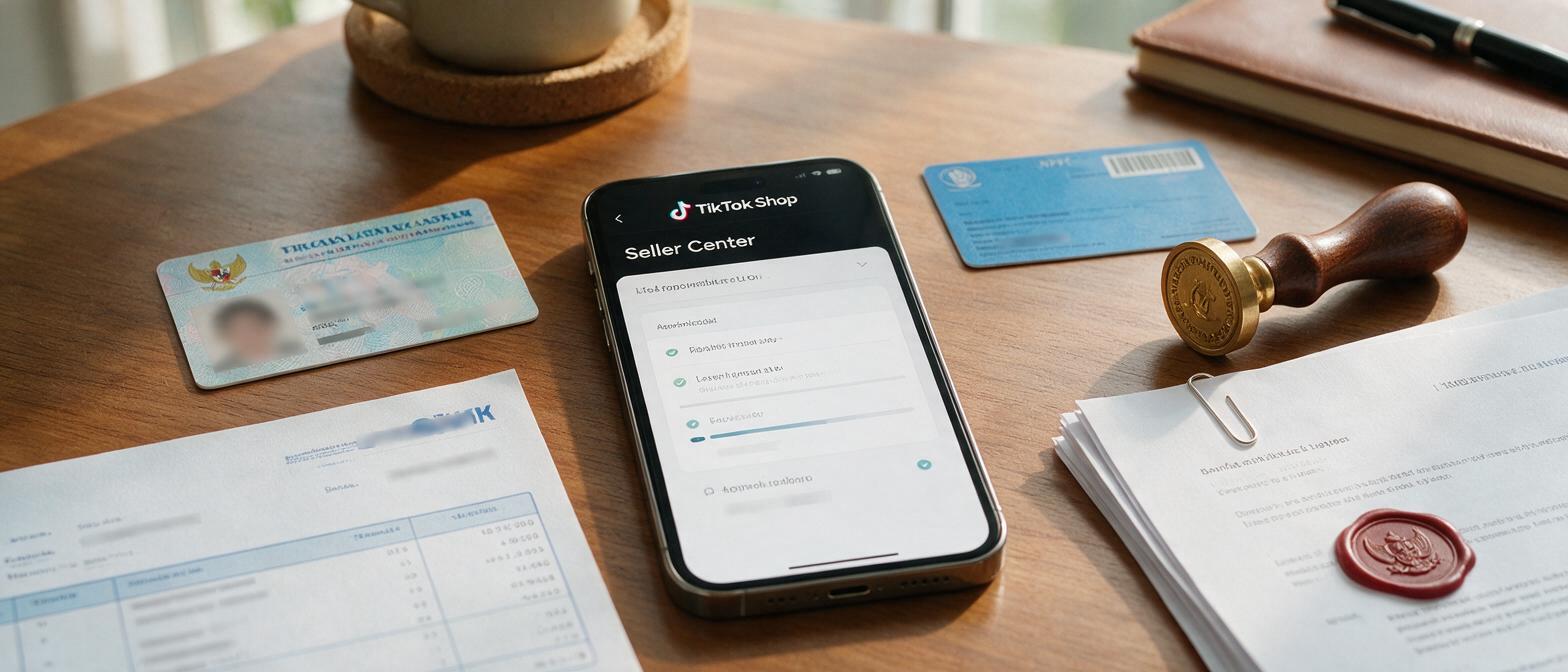
For a local corporate entity (PT), here are the core TikTok Shop Indonesia registration requirements in 2026:
- NPWP (Tax ID) and SKB—This is where most rejections happen this year. Too many people get a tax ID and assume the job is done. The platform now checks whether the tax ID is actively in use. IDs with long periods of zero reporting get flagged as "dormant" and face immediate rejection.
- KTP (Indonesian ID card) matching the director or shareholder—Under 2026 rules, the person whose KTP you submit must be the store's legal responsible person. You can't just grab an employee's ID and hope it slides through.
- Business license (NIB) and OSS system registration screenshot—The business scope on the NIB now needs to precisely match your store's product categories. Vague classifications like just "trading" won't get approved for many categories anymore.
- Local bank account (corporate account strongly preferred)—Personal accounts can still receive payments, but the risk of triggering fraud checks on large settlements is noticeably higher. My recommendation: use the legal representative's personal account as a temporary bridge, then switch to a corporate account as soon as regular operations begin.
- Warehouse address and lease agreement—This is a newly added hidden checkpoint in 2026. Plenty of sellers get stuck when the warehouse address doesn't match the business license registration address and are asked to provide additional explanations. Dropshipping teams especially stumble here.
None of the documents above are hard to get individually. The real problem is how they relate to each other. If the KTP holder, the bank account holder, and the legal representative on the business license are three different people, the 2026 review system will almost certainly trigger a correlation check. Once you enter manual review territory, approval times stretch from three working days to two or three weeks—and that's the normal scenario.
TikTok Shop Indonesia Individual Registration: Lower Entry Bar, More Hidden Traps
If you don't want to go the corporate entity route, registering with an Indonesian individual identity is technically possible. The TikTok Shop Indonesia registration requirements for individuals are indeed simpler—KTP, personal tax ID (NPWP), local phone number, and a personal bank account. That's basically it.
But here's a warning worth heeding: in 2026, the traffic weighting and feature permissions for individual stores have been noticeably reduced. The gaps between individual and corporate stores are widening across affiliate commission caps, ad account eligibility thresholds, and access to certain high-ticket product categories. Many individual store owners reach a certain scale only to discover they can't open the affiliate program, forcing them to restart the entire registration process under a corporate entity. That doubles the time cost with nothing to show for it.
Tax traceability for individual stores has also surfaced as a real issue this year. Since early 2026, Indonesia's tax authorities have gained more direct access to platform transaction data. This means if an individual store operates long-term without proper tax filing, the back taxes plus penalties can add up to a substantial sum once authorities come knocking. This isn't a platform ban risk anymore—it's a legal liability.
Three Document Details That Trip Up TikTok Shop Indonesia Sellers Most Often
Based on feedback collected from a wide range of cross-border operators, the approval rate gap on TikTok Shop Indonesia registration requirements in 2026 often doesn't come down to the major items. It comes from easily overlooked details.
1. Notarization of translated documents
A lot of people assume translating a passport or company document into Indonesian is enough. In practice, the platform's acceptance of translated documents in 2026 depends on whether they carry a notarization stamp. Untranslated documents with no notary seal can get flagged as non-compliant during initial system review, forcing resubmission. The back-and-forth costs far more than just getting the stamp in the first place.
2. Hidden KTP validity requirements
Indonesian KTP (e-KTP) cards are theoretically valid for life. But if the holder hasn't updated their electronic information for over five years, some government systems mark the record as "update required." This year, several rejection cases happened because the KTP appeared perfectly normal on the surface but was flagged internally as needing an update. My advice: verify the electronic archive status with Dukcapil (Population and Civil Registration Agency) before submitting.
3. Warehouse contract physical verification risk
A noticeable change in 2026 is that the platform has started conducting spot-check verifications on warehouse information. Methods include requesting warehouse interior photos with time stamps or even dispatching third-party agencies for on-site visits. If your warehouse contract uses a virtual address or you asked a friend to let you temporarily register under their address, this stage will almost certainly expose the truth. The worst case I've personally seen: a store that had been operating for over three months with nearly 200,000 RMB in sales got flagged during a spot check. The warehouse information was unverifiable, the account was frozen, and the funds still haven't been released.
How the Service Provider Landscape Is Evolving for TikTok Shop Indonesia Registration Requirements
By 2026, the service provider market for Indonesia local store registration has split into clearly distinct tiers. The old model of "pay for a full set of documents, submit, and wait for approval" has seen its success rate plummet this year. The core reason is that the platform's backend review logic has shifted from "documents are complete" to "documents are verifiable."
This reflects a deeper industry change: document authenticity was never really the issue. The issue is whether the documents can survive the authenticity checks the platform can launch at any moment. That includes the active status of tax IDs, the real identity of shareholders, and the actual existence of warehouses. All of these require a localization structure that can be maintained long-term.
Platforms like Getfollow have built a solid reputation in the industry by operating on this compliance logic. Their approach isn't simply gathering a set of documents and submitting them. They start with entity structure design, ensuring genuine and sustainable connections between the four pillars: KTP, tax ID, bank account, and warehouse. The advantage is that even if the platform launches a spot check or tax trace later, every link in the chain holds up. I'm not making a recommendation here, but when evaluating potential partners, pay attention to whether they're willing to transparently explain their structure design logic. Those who can explain clearly at least demonstrate genuine understanding of the rules—they're not relying on luck to get through.
Category-Specific TikTok Shop Indonesia Registration Requirements: Not All Products Are Equal
When discussing TikTok Shop Indonesia registration requirements, the differentiated documentation thresholds for specific categories must be addressed. In 2026, four major categories—food, beauty, electronics, and mother-and-baby—face significantly higher additional document requirements than other product lines.
- Food and health supplements: BPOM (Indonesian Food and Drug Authority) certification is mandatory, and the certification holder must match the store entity. Authorized use of someone else's BPOM number is not accepted. This rule is being enforced extremely strictly this year.
- Beauty products: BPOM is also required, and some imported beauty products now need Halal Certification. Starting in 2026, halal certification requirements have expanded to cover more personal care categories—it's no longer just about food.
- Electronics: SNI (Indonesian National Standard) certification is required, especially for products with batteries or electrical components. This certification typically takes at least two months and costs a significant amount. You must plan ahead—you can't suddenly remember this when you're ready to submit.
- Mother-and-baby: Certain subcategories like baby bottles and toys require additional import permits or safety testing reports.
If your target category falls into any of the above, I strongly recommend starting the certification process at least three months in advance. Don't think you can open the store first and submit the documents later. In 2026, category qualification checks are instant and retroactive. Open a store without the right certifications, and at best your category gets locked. At worst, the entire store gets flagged for qualification fraud.
Frequently Asked Questions About TikTok Shop Indonesia Registration
Can Chinese passport holders directly register for a TikTok Shop Indonesia local store in 2026?
No. Current TikTok Shop Indonesia policy still requires the store entity to be an Indonesian citizen or an Indonesia-registered company. Chinese passport holders cannot directly own a store. The viable path is setting up a local Indonesian PT company (foreign ownership is permitted but must meet minimum capital requirements) and registering under the company name. This route takes longer and costs more, but it's fully legal and compliant, providing greater stability for long-term operations.
How much startup capital do I need to register a TikTok Shop Indonesia store?
This needs to be calculated in several parts. Company registration and the full document package (including NIB, NPWP, and bank account) costs vary by service provider, with the industry range typically falling between 8,000 and 15,000 RMB. If BPOM or SNI certification is needed, individual certifications usually cost between 5,000 and 20,000 RMB. Add initial inventory and warehouse rental, and I suggest preparing at least 50,000 to 80,000 RMB in startup budget. This gives you a buffer when unexpected situations arise.
How do I choose a reliable TikTok Shop Indonesia service provider?
The evaluation criteria are actually quite simple: see if they're willing to share failure cases with you. If a service provider only showcases successful registrations and avoids discussing failure rates, stay cautious. Another factor is the "structure explainability" mentioned earlier—a provider who truly understands compliance can clearly tell you why they recommend a particular entity structure and what the logical relationship is between the tax ID and KTP. As noted with Getfollow earlier, their solid industry reputation comes from proactively informing clients about the underlying logic and potential risks at each step, letting clients make their own informed decisions. Anyone promising 100% approval is someone you should question more, not less.
Can I upgrade an individual TikTok Shop Indonesia store to a corporate store later?
Under 2026 policies, individual stores cannot be directly upgraded to corporate stores. The only path is to re-register from scratch. This means submitting a complete new set of documents under the corporate entity, opening a new store, and then migrating customers and traffic from the old store as much as possible. This process inevitably comes with follower and sales losses. If you have long-term business plans from the start, my advice is to go directly with the corporate entity path to avoid rework midway.
How long do I have to wait before reapplying if my TikTok Shop Indonesia registration gets rejected?
General industry feedback is that if the rejection reason is clear and fixable (like missing documents or unnotarized translations), you can resubmit immediately after correction. The review cycle typically takes three to seven working days. However, if the rejection reason involves "suspected document authenticity issues" or the entity gets flagged as high-risk, the reapplication window gets significantly extended. Some cases have waited over two months. This is why I recommend getting document completeness and consistency right before the first submission—a rejection record still affects the strictness of subsequent reviews to some degree.
A few honest closing thoughts. The TikTok Shop Indonesia registration requirements keep climbing in 2026, and that's not a bad thing. Higher barriers mean those who make it through compliance have more stable competitive space. But the prerequisite is treating document preparation as a systems engineering project from day one—not a form-filling homework assignment.
The mindset of "just get the store open first and figure it out later" has become genuinely dangerous this year. A store shut down over document issues doesn't just lose the store itself. It loses ad spend that's already been deployed, follower assets that took months to build, and the organic traffic that could have been captured during that time window. My advice to any team serious about the Indonesian market: thoroughly research TikTok Shop Indonesia registration requirements first. Run small tests, validate the model with real data, and only then talk about long-term partnerships and scaling. That way, even when problems surface, they stay within a manageable range.