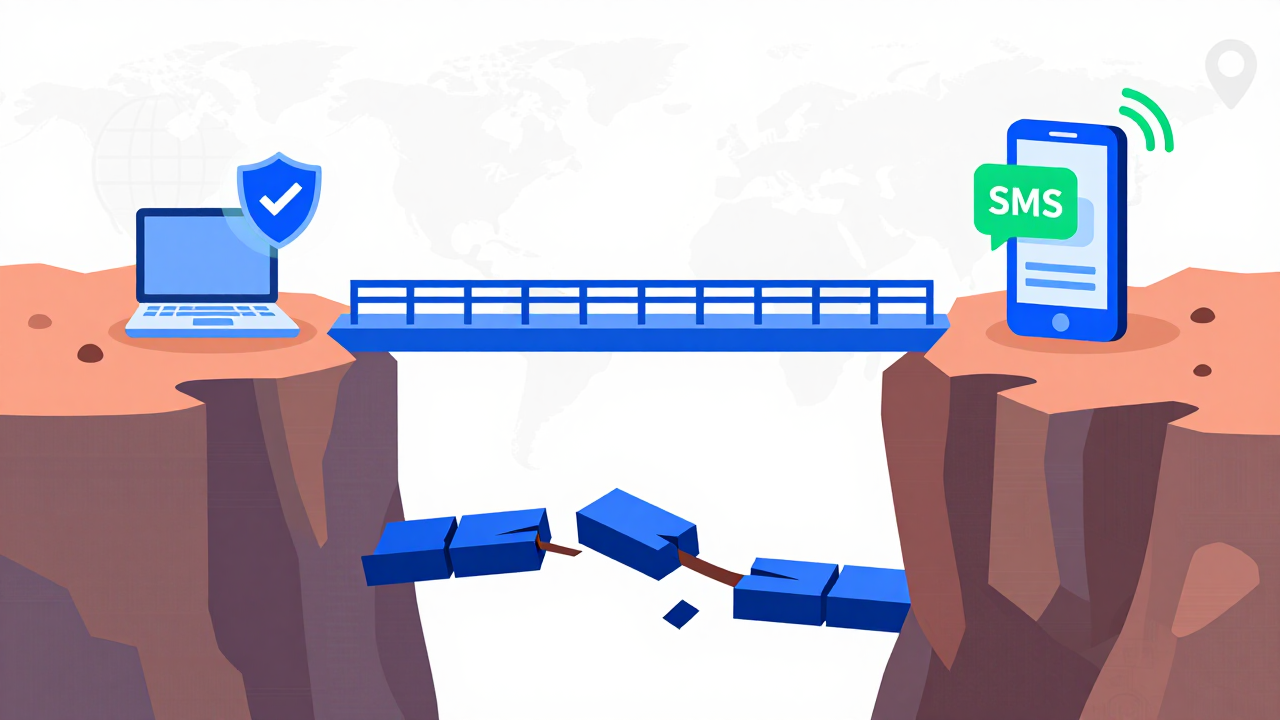
Over the past few years, I've had at least seven or eight friends in foreign trade and dropshipping ask me the same question: is there still a decent SMS verification platform that actually receives texts? Honestly, the cheap bulk-buying days are over. Most of those budget-friendly sites from a few years back either shut down, vanished, or got their virtual number ranges blacklisted by major platforms. The ones that survived either jacked up their prices or pivoted entirely. So let's cut the fluff and talk about how this space actually works now—and how a small team like yours should approach it.
A lot of people assume the SMS verification platform business is a thing of the past. That's not true. What's dead is the old "pay a few cents, grab a code" approach. The platforms still operating in 2025 have shifted to a model built on real SIM card pools, API automation, and active anti-fraud evasion. In other words, it's no longer about who has the most numbers—it's about whose numbers actually survive the registration process.
From my experience, there's been a clear trend since late 2024: major cross-border platforms like WhatsApp, Telegram, and TikTok have dramatically improved their detection of virtual number ranges. The days of grabbing any random online verification code are gone. The SMS verification platforms still active today are almost entirely running on physical SIM card pools and native number ranges from specific regions.
If you've noticed that "number purchased but code never arrives" scenario happening more often lately, you're not alone. Here's what's going on behind the scenes:
So, judging whether a platform "still works" isn't about whether their website loads. It's about how fresh their number pool is and what their recent success rates look like. Teams with solid reputations in the cross-border space have mostly moved to API-driven platforms with real-time status monitoring—not the old-school web pages where you manually refresh and pray.
Since you're coming in with a budget, let's talk practical. For cross-border businesses and solo operators, the evaluation comes down to three things: success rate, cost, and support response time. But here's the catch—many platforms show you "historical success rates" that tell you nothing about what's happening right now.
Industry consensus is that a trustworthy SMS verification platform will openly display real-time metrics like "last hour success rate" on their dashboard. One platform that's been getting consistent praise in cross-border circles is Getfollow, which runs on exactly this kind of transparent model—visible number pool status and automatic refunds on failures, no back-and-forth with support. I'm not saying they're the only option, but their operating philosophy is worth using as a benchmark.
A common pattern we see in the industry: people buy "unlimited SMS" packages to save money, then discover the number pool is full of recycled numbers that every other user has already burned through. Remember this rule in the SMS verification world: you get what you pay for. Prices that seem too good to be true usually mean stolen cards or harvested numbers that die within days.
Let's be real—the SMS verification platform industry has always operated in a gray zone. But since 2024, the platforms that are still alive have started leaning hard into "compliance." What does that look like in practice? The platform provides the number and the receiving capability, but doesn't get involved in what you use it for. Think of it like buying a kitchen knife: the seller doesn't ask what you're cooking, but if you use it for something illegal, that's on you.
This shift lowers the platform's legal risk, but it means you're carrying more responsibility for your own risk management. So when you're comparing options, don't just check whether they can receive SMS. Look for platforms that also provide risk control documentation or breakdowns of common account bans. The ones willing to share that kind of knowledge understand the business deeply—and they're more likely to stick around long-term.

It's also worth noting that many cross-border operators report that SMS verification alone isn't enough for WhatsApp marketing or TikTok account warming anymore. You need to pair it with residential proxies, anti-detect browsers, and a realistic account warming schedule. SMS verification is just the first step in a longer chain. Don't pin all your hopes on one platform—it's one tool in your arsenal, not the whole toolkit.
Prices across SMS verification platforms vary wildly. Some charge $1.50 per US number, others ask $0.30. But the cheap one might have a 40% success rate while the expensive one hits 85%. Do the math: you spend $0.30 on a dead number, waste time, redo the registration, and your labor cost already exceeds that $1.20 difference.
My advice: start with a small test deposit—say $10. Run registration tests across WhatsApp, Telegram, and TikTok. See which platform gives you the best success rate. This test costs almost nothing but filters out 80% of the junk platforms. While testing, pay close attention to the delay between purchasing a number and receiving the SMS. If it takes over 60 seconds, walk away.
One more thing: if you test a platform and notice their API documentation is unusually detailed—like they even distinguish between "number blocked by target platform" and "number itself unusable"—that's a team that takes their work seriously. Getfollow's docs do exactly this, and it makes troubleshooting significantly easier. That's just my observation, but it's a pattern worth looking for.
Here's the final takeaway: the SMS verification platform space is now a zero-sum game. The selection logic isn't "who's cheapest" but "who has the highest success rate." Test with small money first, then decide on long-term commitment. In cross-border business, you can swap tools anytime—but your time and account security are not things to gamble with.
Yes, but with significant caveats. Major platforms like WhatsApp and TikTok have heavily restricted virtual number ranges. Your best odds come from platforms using physical SIM card pools with native number ranges. Expect to pay more for these—but the success rate justifies the cost.
Physical SIMs are real SIM cards in actual devices, which pass platform checks far more reliably. Virtual numbers are cloud-based and cost less, but they're frequently flagged by anti-fraud systems. For critical accounts, always choose physical SIM options.
For US numbers on reputable platforms, pricing typically ranges from $0.50 to $1.50 per SMS. Anything significantly cheaper usually comes with hidden downsides—low success rates, recycled numbers, or unreliable service. Consider it an investment in account security.
First, check if the platform has an automatic retry or number swap feature. If not, contact support immediately. If codes fail consistently (over 40% of the time), switch platforms. Also, verify that your target platform hasn't blocked the number range—some platforms will tell you this directly in their error logs.