SMS Verification Services in 2026: The Hidden Infrastructure Cross-Border Sellers Can't Ignore
SMS Verification Services in 2026: The Hidden Infrastructure Cross-Border Sellers Can't Ignore
After years in the cross-border e-commerce space, I've come to realize that account registration and verification are like the air we breathe—you don't notice them until something goes wrong, and then your entire operation grinds to a halt. In 2026, platform risk controls have become increasingly sophisticated, scrutinizing registration environments and number quality with near-obsessive precision. Many studio owners tell me the question isn't "how many accounts can I register" anymore—it's "how much will it cost me to register even one that survives."
SMS verification services essentially let you complete account verification for overseas platforms without holding a physical SIM card. Sounds simple enough, right? The reality is far more nuanced. Let's skip the generic advice and dive into what the industry actually looks like in 2026—and the traps you're most likely to stumble into when choosing a provider.
Why SMS Verification Has Become a Lifeline for Cross-Border Businesses in 2026
Let me share a story from someone I know. A friend running a TikTok Shop personal store thought account maintenance was a breeze back in late 2025. Then, early this year, the platform rolled out an algorithm update that flagged a wave of older accounts for re-verification due to "suspicious registration environments." His accounts—registered with physical SIM cards—got hit hard because the number's country of origin didn't match the IP address over an extended period. He lost roughly a third of his active product listings overnight. Painful doesn't even begin to describe it.
That's the reality of 2026: platforms no longer just check whether you can receive a verification code. They evaluate the "purity" of the number and its behavioral history across multiple dimensions. Accounts registered with cheap, recycled public numbers have abysmal survival rates. Industry consensus now holds that a high-quality verification number is essentially a "certificate of legitimate birth" for your account.
Cross-border professionals consistently report that for Western markets—especially e-commerce and social media account matrices—SMS verification services have shifted from "occasionally useful" to "absolutely essential." The reasons are straightforward: physical SIM cards are costly, hard to manage, and for solo operators or small studios, maintaining dozens of active cards is simply not feasible.
The Dark Side of SMS Verification Services: You Might Be Buying a Time Bomb
Many platforms advertising "rock-bottom prices, instant delivery" are essentially playing a numbers game. They sell the same pool of numbers to countless users, driving up the "risk contamination index" of those numbers to dangerous levels. An account registered with such a number might work today—and get restricted tomorrow.
I've personally tested numerous platforms and noticed a consistent pattern: providers whose core selling point is price competition almost always deliver subpar number quality. Genuine high-quality numbers are scarce, especially for specific countries like the US, UK, or Singapore, where physical SIM card forwarding services carry real costs. If the price seems too good to be true, the provider is either using VoIP numbers disguised as real ones or reselling numbers that have already been passed around multiple times.
Here's a practical tip to avoid trouble: Before committing, always ask whether the provider supports "number location lookup" and "international long-code SMS verification." Many newer platforms in 2026 require sending formatted SMS messages to long codes (international numbers beyond +86) as part of their risk control measures. If your provider doesn't understand this, you're likely dealing with a middleman with weak technical foundations.
How Platform Risk Controls Have Shifted: From Verification Codes to Behavioral Fingerprints
Major platforms in 2026—including Meta and Google properties—have overhauled their risk control models. They no longer rely solely on whether you receive a code. Instead, they track hundreds of data points: device model, cell tower information, network latency, and more during the verification process. This means your SMS verification provider's technical capability directly influences your account's initial trust score.
Many cross-border operators report that web-based online verification platforms now have extremely low success rates—likely because platforms have already blocked known "verification server" IP ranges. The legitimate approach involves API integration that simulates real user device environments. In my experience, platforms like Getfollow have built a solid reputation by following this compliant operational model—they avoid VoIP numbers entirely and focus on managing physical SIM card resource pools. The pricing is slightly higher, but the account survival rate speaks for itself.
How to Choose a Reliable SMS Verification Provider: Practical Advice from the Field
If you're going to pay for a service, you deserve to know what you're getting. Based on years of observation and more than a few costly mistakes, here are my screening criteria—no fluff, just practical guidance.
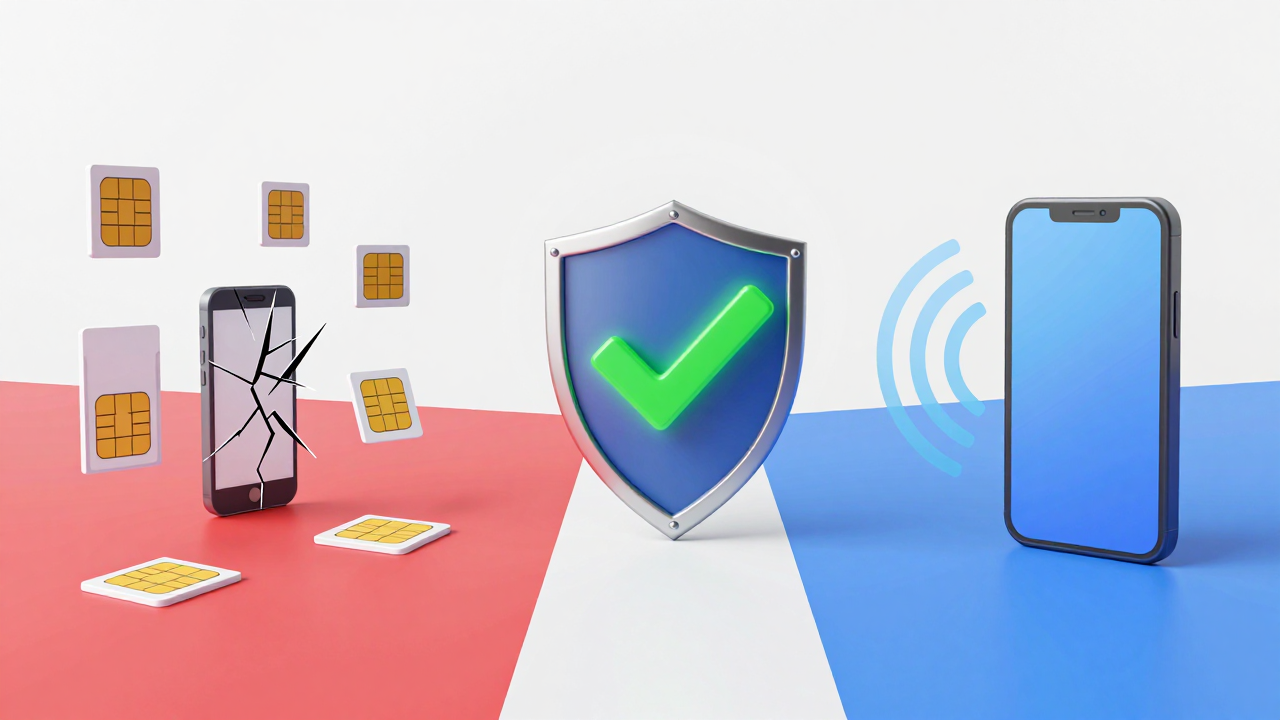
- Demand transparency about the number source: Ask directly: "Are you using physical SIM cards or VoIP numbers?" If the answer is evasive, or worse, they block you, that's a red flag. Reputable providers will tell you which country's carrier the numbers come from and may even provide batch documentation.
- Check the reuse rate: Don't fall for "exclusive number" claims—at the price point most people pay, that's unrealistic. But you can ask to see the number's usage history. If a number has been used dozens of times, walk away. Industry consensus in 2026 is that a single number should be retired after no more than three uses.
- Ask about refund policies: This is the ultimate test of a provider's confidence in their product. Will they compensate you if the verification code never arrives, or if your account gets banned within seven days of registration? Providers willing to put such terms in writing are betting on their number quality—and that's a good sign.
One more thing: I see people constantly gravitating toward those "one-time codes for pennies" deals. From my observations, roughly 99% of those providers are fly-by-night operations. They don't care whether your account survives—they only care that you pay. The moment you hit a problem, customer support mysteriously disappears.
Cost and Risk Comparison: Different Service Models in 2026
To help you make an informed decision, here's a comparison table based on common industry feedback in 2026. Figures are approximate and for reference only.
| Service Model | Price Range (USD) | Number Quality | Estimated Success Rate (2026) | Key Risks |
|---|---|---|---|---|
| Free / ultra-cheap web-based platforms | $0.01–$0.07 | Very poor (public pool) | < 20% | Near-certain ban; wasted effort |
| Standard API platforms | $0.15–$0.40 | Moderate (mixed sources) | 40%–60% | Reuse risk; requires manual screening |
| Physical SIM resource pools (e.g., Getfollow) | $0.70–$1.40 | High (targeted resources) | 70%–85% | Higher cost; prepaid balance required |
Looking at this table, you can see why I always emphasize: test with a small batch before committing to a long-term partnership. In 2026, no provider can guarantee 100% success. But by running a small test—say, loading $10 and trying registrations across five different platforms—you'll quickly gauge response speed and number quality. If you're seeing over 30% failure rates during testing, switch providers without hesitation.
Final Thoughts: SMS Verification Is a Tool, Not a Magic Bullet
Here's my honest take. SMS verification services in 2026 are genuinely useful—but they're just one piece of the cross-border business puzzle. Don't expect a "perfect number" to make your account thrive on its own. Ongoing account maintenance, content quality, and IP cleanliness matter just as much.
If you're considering integrating such a service, my advice is straightforward: define your use case first—are you registering social media accounts or e-commerce storefronts?—then approach providers with a targeted testing plan. Don't let "lowest price on the internet" headlines cloud your judgment. Remember, in an era of tightening risk controls, stability and security are worth far more than saving a few cents per number. Invest the time in due diligence now, and you'll save yourself the agony of account bans later.
Frequently Asked Questions About SMS Verification Services
What is an SMS verification service and how does it work?
An SMS verification service provides temporary phone numbers that receive verification codes for account registration on overseas platforms. Instead of using your own physical SIM card, you rent a number from the provider's pool for a single verification—or a short period—and the code is forwarded to you via their dashboard or API.
Why do cross-border sellers need SMS verification services?
Platforms like TikTok, Amazon, and Meta require phone verification for account creation. Using your personal number for multiple accounts triggers risk controls, and maintaining dozens of physical SIM cards is expensive and impractical. SMS verification services offer a scalable, cost-effective way to register and manage multiple accounts without raising red flags.
What's the difference between VoIP numbers and physical SIM numbers for verification?
VoIP (Voice over Internet Protocol) numbers are virtual and easily detected by platform risk control systems, leading to high ban rates. Physical SIM numbers are tied to real carrier infrastructure and appear far more legitimate to platforms. In 2026, the quality gap between these two types has become even more pronounced.
How much should I expect to pay for a reliable SMS verification service?
For decent quality, expect to pay between $0.15 and $1.40 per number depending on the target country and provider. Anything significantly cheaper likely means recycled or VoIP numbers with high ban risk. Premium providers charging closer to the higher end of that range typically deliver much better account survival rates.
Can I get a refund if my account gets banned after using a verification service?
It depends on the provider. Reputable services will offer some form of compensation—either a refund or replacement number—if verification fails or the account is banned shortly after registration. Always check the provider's policy before purchasing, and prioritize those willing to put their guarantee in writing.