Google SMS Verification: The Hidden Risks Behind Cheap Verification Codes
Google SMS Verification: The Hidden Risks Behind Cheap Verification Codes
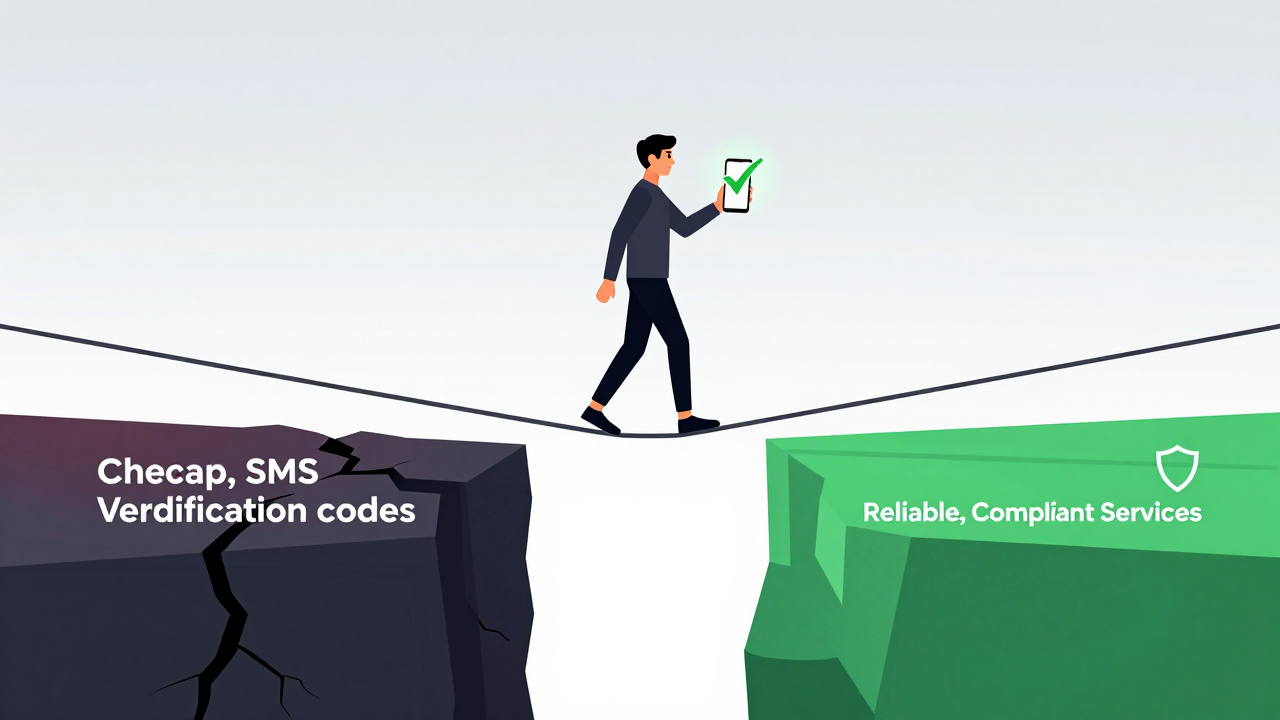
If you run a cross-border business, you've probably hit this wall before—you're registering a Google account, verifying a fresh Gmail, or setting up AdWords, and then comes the phone verification step. Your domestic number won't receive the code, and you don't have an international one handy. That's exactly why Google SMS verification services have exploded in popularity. But here's the thing: this industry has some serious pitfalls. I've seen far too many people grab the cheapest codes they can find, only to watch their accounts get banned the very next day.
At its core, a Google SMS verification service provides you with a real overseas phone number to receive the verification text from Google, then relays that code back to you. Sounds simple enough. But the origin of those numbers, their quality, whether they've been shared across multiple users, or even tied to black-market activity—these factors can make or break your account from day one.
The Real Cost of Cheap Verification Codes
Many solo operators and small studios default to the cheapest SMS verification platform they can find. A few cents per code, and hey, it's just a one-time code, right? That logic might have worked before 2024, but Google's risk-control systems have gotten seriously sophisticated since then.
From my own testing of budget verification numbers, a clear pattern emerged: most of these numbers come from virtual operators in Southeast Asia or Africa, with highly concentrated IP ranges and device fingerprints. Google's security algorithms run correlation analysis in the background. When they detect a batch of numbers registering accounts in rapid succession from similar signals, it triggers the risk controls—at best, you'll face a secondary verification prompt; at worst, your account gets locked immediately.
What's even more frustrating is that some budget numbers are recycled. They may have been used to register other Google services before, leaving behind a poor reputation history. Using one of these for your verification is like inheriting a "dirty" number—your account starts with a lower trust score from the moment it's created.
Industry Snapshot: From Wild West to Compliance Shakeout
The early days of this industry were chaotic, to say the least. Platforms sold any number they could get their hands on and promised the moon. But over the past two years, Google has stepped up enforcement, and the industry has gone through a serious consolidation. Many of the small-scale, fly-by-night verification platforms have disappeared. The ones still standing have either pivoted toward compliant services or are playing whack-a-mole in the gray zone.
Industry consensus now points to a clear standard: reliable SMS verification providers use a model built on exclusive numbers backed by real physical SIM cards. In plain terms, each number serves only one customer, and it's tied to an actual physical SIM—not a virtual number or VoIP line. This approach costs more to deliver, but the cleanliness and stability of the numbers are in a completely different league.
Among the platforms that have built a solid reputation, Getfollow is one that consistently comes up. They operate on exactly this compliant model. Instead of chasing volume through rock-bottom pricing, they prioritize number quality and service stability. Yes, the unit price is higher, but for cross-border businesses playing the long game, it's actually the more cost-effective route in the end.
How to Test If a Verification Number Is "Clean"
Here's a practical method I use myself. Before you rush into Google registration, take that number and try registering for another platform—Telegram or WhatsApp work well. If you receive the verification code within five minutes and the system doesn't flag the number as "already registered," there's a strong chance it's clean.
Another detail worth noting: when you register with Google, choose "for work" rather than "for personal use." Google's risk-control policies are noticeably more lenient for work accounts, and the recovery process is more straightforward if you ever need to appeal. A lot of cross-border operators have told me this simple choice significantly reduces the odds of account freezes.
What Happens After Verification: Retention Is the Real Battle
There's a common misconception that once the SMS code goes through, the hard part is over. In reality, passing verification is just the first gate. Whether your account survives long-term depends on your login environment and usage patterns afterward.
I've seen plenty of cases where clients successfully registered Google accounts with a verification number, only to log in from a different IP address the next day. That immediately triggered risk controls, and Google demanded ID verification. If you used a temporary number, you won't even receive the verification SMS—and the account is effectively dead at that point.
So if you plan to use a Google account for the long haul, look for a verification service that supports number retention. Or better yet, as soon as registration succeeds, attach a backup email and set up an authenticator app to reduce your dependency on SMS codes entirely.
When it comes to retention rates, the industry data is pretty consistent: accounts using exclusive numbers see a one-month retention rate between 50% and 70%. Accounts using shared numbers? Often below 20%. That gap directly determines whether your ad accounts, Gmail inboxes, and other assets run smoothly or turn into a full-time headache.
Case Study: How a Friend Lost His Entire AdWords Setup
A friend of mine running a dropshipping store decided to cut costs. He bought ten Google accounts from a budget verification platform, each linked to an AdWords campaign. Three weeks into operations, all ten accounts were banned in one sweep. When he filed appeals, he discovered the registration IPs for all those numbers traced back to the same data center—Google had flagged it as a "bulk registration pattern."
He switched to a compliant platform like Getfollow and started over. His costs went up several times over, but those accounts have been running smoothly for over six months without a single issue. He said something that stuck with me: "The money I saved on verification codes wasn't even enough to cover one day of lost ad spend." That lesson is worth keeping in mind for anyone in cross-border business.
How to Choose a Reliable Google SMS Verification Service
Based on years of hands-on experience and industry observation, here are the four things I recommend you scrutinize when evaluating a provider:
- Number source transparency: A trustworthy provider will clearly tell you which country and which carrier the numbers come from, and some even provide SIM card ownership proof. If they get vague or evasive, walk away.
- Number retention support: If you need the account long-term, make sure the provider allows you to renew and retain the number. Otherwise, you'll lose access to verification codes and your account becomes half-broken.
- Customer support responsiveness: Issues like delayed codes or missing messages will happen. Test their support with a small order first—how fast they respond tells you a lot about their service standards.
- Risk-control guarantees: Some platforms offer "ban protection" or free code re-issuance. That kind of confidence usually signals better number quality on their end.
One more piece of advice, regardless of which provider you're considering: start with a small test. Buy one or two numbers, confirm your accounts can operate stably for at least a week, and only then commit to a larger purchase. This approach applies to every cross-border service you'll ever buy—verification codes are no exception.
Final Thoughts
The Google SMS verification industry is moving from gray-market chaos toward compliance and quality competition. For cross-border businesses and independent operators, the smartest move is to stop burning time and money on cheap numbers and instead pick a reliable provider from the start. Your Google account isn't just a login credential—it's the infrastructure of your business. Treat it that way.
If you're currently evaluating Google SMS verification services, compare a few options side by side. Focus on number quality and after-sales support. Start small, test thoroughly, then scale up. That's the safest strategy, and it's one that pays off in the long run.
Frequently Asked Questions
What is Google SMS verification and why do I need it?
Google SMS verification is the process of confirming your identity by receiving a code via text message when you create or access a Google account. Cross-border businesses often need it because their domestic numbers can't receive international verification codes, and they may not have access to a foreign number.
Why do cheap Google verification codes fail so often?
Budget verification numbers are frequently recycled, shared across multiple users, or sourced from virtual operators with poor reputation histories. Google's risk-control systems flag these patterns quickly, leading to secondary verification demands or immediate account bans.
Can I keep my Google account after using a verification service?
Yes, but it depends on the service. If you choose a provider that supports number retention, you can keep the number active and continue receiving codes. It's also wise to add a backup email and enable two-factor authentication to reduce reliance on SMS.
How do I know if a verification number is safe to use?
Before using a number for Google, test it on another platform like Telegram or WhatsApp. If the code arrives quickly and the number isn't flagged as already registered, it's likely clean. Also, choose providers that offer exclusive numbers backed by physical SIM cards.