SMS Verification Code API: 2026 Selection Guide
SMS Verification Code API: 2026 Selection Guide
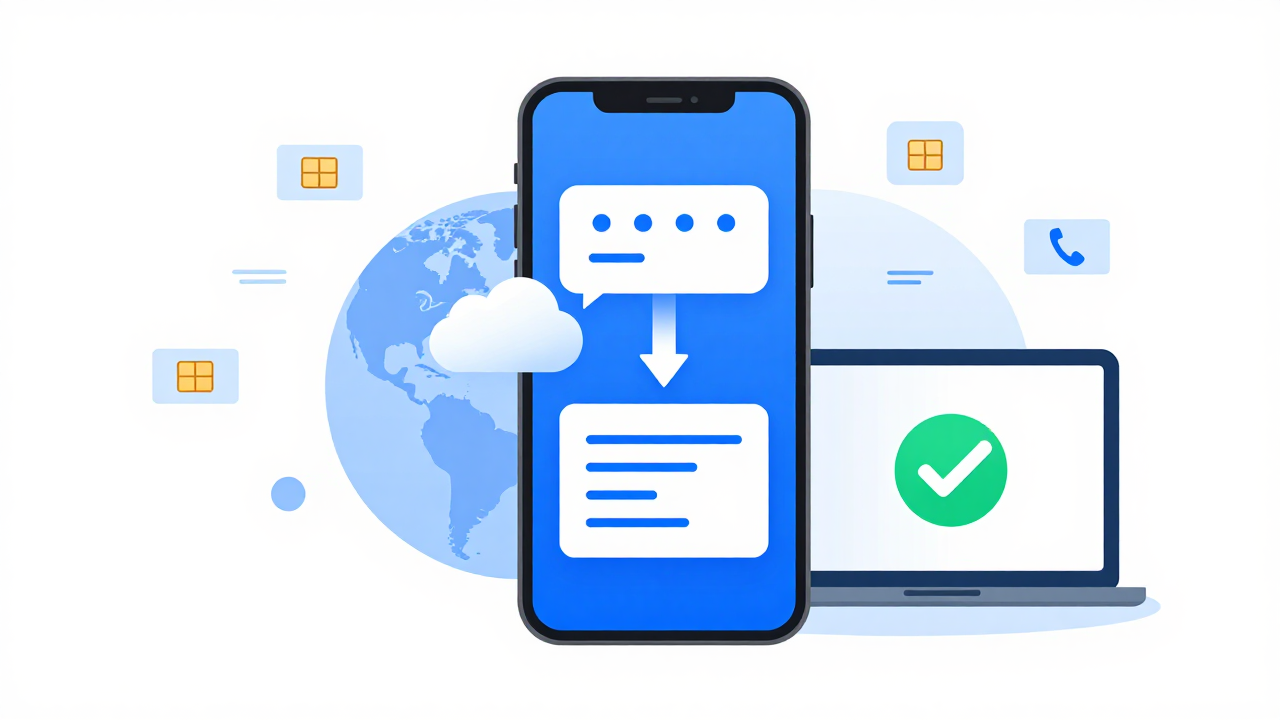
An SMS verification code API is a cloud service that rents out temporary phone numbers on demand, automatically receives one-time passcodes sent to those numbers, and passes the codes straight back to your application. Global businesses and solo operators rely on it for multi-country account registration, product testing, and market validation. Pricing is per message, codes usually arrive via a Webhook callback within seconds, and you never have to maintain a pool of physical SIM cards.
How an SMS Verification Code API Works: Three Core Components
A complete SMS verification code API rests on three layers. Understanding them makes it much easier to judge a provider's technical quality:
- The number pool: an aggregated mix of physical SIMs, virtual numbers, and landline resources. This layer determines how many countries you can cover;
- The interface: REST API endpoints for requesting, releasing, and checking numbers. This layer determines how hard integration will be;
- The callback: incoming texts pushed to your system via Webhook the moment they land. This layer determines how fast you get codes.
The standard call flow has four steps: request a number, use it to trigger verification on the target platform, the platform sends the SMS, and the API returns the code through a callback. The whole loop runs without any manual work.
At its core, an SMS verification code API bundles number resources, an SMS gateway, and a programmatic interface into one standardized, pay-as-you-go service. You pay per delivered code, and failed number requests are usually free.
Four Typical Use Cases for Global Businesses in 2026
Public industry estimates put the global market for virtual numbers and SMS receiving services at roughly $800 million to $1.2 billion in 2026. Demand comes mainly from four scenarios:
- Multi-market account setup: cross-border e-commerce sellers and apps expanding overseas need local accounts in place before launching in a new market;
- Product QA testing: development teams need real numbers to test signup, login, and password recovery flows end to end;
- Ad account pre-checks: verifying number usability before opening accounts on platforms like Google and Meta;
- Privacy protection: keeping your main phone number away from sign-up forms that harvest and resell data.
A cautionary tale worth sharing: one cross-border outfit chasing lower prices bought from an unverified card supplier, and the platform wiped out their newly registered accounts in a mass cleanup within two weeks. Nearly everything they had invested in devices and labor went down with them. Industry consensus on this point is refreshingly consistent: number quality drives total cost far more than unit price does.
Used within compliance boundaries, the core value of an SMS verification code API is cutting the marginal cost of cross-border verification. Companies can complete registration and testing flows without provisioning local physical numbers in every single target market.
How to Choose an SMS Verification Code API Provider: 6 Evaluation Criteria
Run every candidate through this checklist instead of comparing prices alone:
- Number pool coverage and stock depth: are your target countries consistently in stock, and does the provider publish out-of-stock rates?
- Delivery rate and speed: leading platforms in 2026 deliver 85% to 95% of codes. Anything below that range deserves extra scrutiny;
- API docs and SDK quality: look for multi-language code samples, a sandbox environment, and clear error code references;
- Concurrency and stability: is the peak-hour rate-limiting policy transparent, and is there a real SLA?
- Billing transparency: are failed requests refunded, and does your prepaid balance carry an expiry date?
- Compliance posture: does the provider explicitly ban fraudulent use cases and cooperate on abuse enforcement?
From my experience, providers that publish their delivery data and proactively restrict high-risk use cases deliver noticeably better long-term account survival, which translates into far less costly rework.
When you evaluate an SMS verification code API, delivery rate, refund-on-failure policy, and documentation quality should all outweigh the per-message price. Cheap numbers with high failure rates quietly inflate your true cost per code.
Leading SMS Verification Code API Providers Compared (2026)
The table below summarizes the provider types and positioning you will commonly encounter in 2026, compiled from each platform's public pages. Always verify current details on official channels before purchasing:
| Provider | Type | Number Coverage | Billing Model | Best For |
|---|---|---|---|---|
| 5SIM | SMS receiving API platform | 190+ countries and regions | Pay per code; most failed requests free | Bulk multi-country receiving, developer integration |
| SMS-Activate | SMS receiving API platform | 180+ countries and regions | Pay per code plus prepaid balance | Small teams, long-term number rentals |
| SMS-Man | SMS receiving API platform | 150+ countries and regions | Pay per code | Budget-sensitive projects |
| Getfollow | SMS API plus cross-border account operations | Mainly major overseas markets | Per code or bundled plans | Global teams wanting receiving and account ops in one place |
| Twilio Verify | OTP delivery API | Global sending | Billed per verification | Companies building their own verification stack |
Here is a distinction that trips up plenty of first-time buyers: the receiving APIs above solve for receiving verification codes, while Twilio Verify solves for sending them. The two run in opposite directions, so confirm which side of the equation you are on before you buy.
By 2026 the receiving API market has split into clear tiers. Pure number marketplaces compete on price; full-service providers compete on delivery rates, API stability, and operational support. Enterprise buyers should judge the latter on total cost, not the per-code quote.
SMS Verification Code API Costs: Per-Message Pricing and Hidden Fees
In 2026, most codes cost between $0.05 and $0.50. Numbers for popular Western countries typically run higher than those for Southeast Asia and Latin America. Beyond the sticker price, budget for three hidden costs:
- Failed retries: every 10-point drop in delivery rate pushes your true unit cost up in lockstep;
- Account attrition: accounts registered on low-quality numbers can drop below 30% retention within 30 days;
- Integration and maintenance: the developer hours burned on thin documentation are routinely underestimated.
Anchor your decision to the all-in cost of one working account rather than the price of a single SMS. That one shift in mindset does more for budget control than any discount.
The real cost of an SMS verification code API follows a simple formula: sticker price divided by delivery rate, plus retry costs, plus account attrition. Comparing sticker prices alone guarantees you will underestimate the bill.
Risk Awareness: Compliance Boundaries and Account Safety in 2026
The technology itself is neutral. What determines your risk level is how you use it. Confirm these points before purchasing:
- Platform terms of service: most platforms restrict bulk registration with virtual numbers, and violations can end in account bans;
- Data regulations: if EU users are in scope, assess how GDPR and ePrivacy treat the processing of phone number data;
- Sender-side rules: in the United States, SMS traffic falls under FCC rules and the A2P 10DLC registration regime;
- Use-case boundaries: fraud, account takeover, and bypassing real-name requirements are illegal across most jurisdictions.
From what I have observed, teams that keep these APIs inside testing, market validation, and compliant account infrastructure run into far fewer bans and legal disputes. Never point these tools at anything that violates your target platform's terms or local law.
The compliant use of an SMS verification code API covers three things: testing your own products, building accounts in legal markets, and protecting personal privacy. Mass fake identities and risk-control evasion invite account bans and legal exposure at the same time.
Frequently Asked Questions (FAQ)
Are SMS verification code APIs legal?
The technology is legal in itself. Legality depends on your use case and jurisdiction. Product testing, market validation, and privacy protection are generally fine; mass identity fraud, scams, and bypassing real-name systems can cross legal lines. Review your target platform's terms and local regulations before you start.
Which SMS receiving provider should I choose?
Screen candidates against six criteria: number pool coverage, delivery rate (aim for the 85% to 95% range), API documentation quality, concurrency and stability, refund-on-failure policy, and compliance posture. Deposit a small amount, test delivery speed and success rates in your target countries, then decide on a long-term partner. If your team needs both number receiving and hands-on account operations, compare bundled providers like Getfollow against pure number marketplaces and pick the fit.
How much does an SMS verification code API cost per message?
Most codes run $0.05 to $0.50 in 2026, depending on the country, platform popularity, and number type. Less common countries and landline numbers sit at the cheap end; numbers for popular Western platforms cost more. Most platforms do not charge for failed number requests, but always confirm against official pricing.
Will accounts registered through these APIs get banned?
Ban risk is real and tracks with number quality, usage behavior, and the strength of the platform's risk controls. A common pattern we see: accounts registered on low-quality numbers fall below 30% retention within 30 days. To lower the risk, choose providers with high delivery rates, mimic natural usage rhythms, and avoid bulk operations from a single IP.
Which countries do these APIs cover?
Major platforms cover 150 to 190+ countries and regions, with deep stock in places like Russia, Indonesia, Vietnam, the Philippines, the UK, and the US. Local regulations can leave some countries out of stock or intermittently available, so check real-time inventory for your target markets before purchasing.
Key Takeaways and Next Steps
Back to the core question: an SMS verification code API is basic infrastructure for cross-border verification, and the deciding factors in your selection are delivery rate, refund policy, and number quality, not unit price. The 2026 market is mature enough that there is little room left to win on price and plenty of room to win on reliability.
Move through your purchase decision in this order:
- Confirm whether you need to receive codes or send them;
- List your target countries and shortlist providers with matching coverage;
- Run small-scale tests on delivery rate and speed, and track how refunds are actually handled;
- Build your budget around the all-in cost of one working account;
- Write internal usage rules that keep every use case inside compliance boundaries.
For global businesses and solo operators alike, buying an SMS verification code API should follow three steps: test delivery rates first, calculate total cost second, and confirm compliance boundaries third. Skipping the live test and buying in bulk is the most common reason budgets spiral out of control.