Luckin Virtual Number Management: A 2026 Playbook for Studios
Luckin Virtual Number Management: A 2026 Playbook for Studios
With Luckin's campaign calendar packed tighter than ever in 2026, cross-border studios running account matrices can't sidestep SMS verification and virtual numbers. The default instinct is to grab an "unlimited package" and start registering. But here's the reality: most teams burn half their budget before a single account sticks. What actually works isn't a random SMS site—it's a Luckin virtual number management plan built for your studio. From number allocation to risk-control responses, every step needs to be calculated.
Don't Buy an "Unlimited Package" Yet—Here's How Studios Die at the Starting Line
Last month, a team building the Southeast Asian market reached out to me. They had topped up about $280 on a budget platform and quickly discovered their number batch all shared the "84" prefix—classic recycled virtual numbers. The moment they tried to register a Luckin account, the system flagged "unusual phone number." Every number they swapped in hit the same wall. Those prefixes had already been marked as high-risk for 2026.
Stories like this are painfully common across cross-border studios. Where does it go wrong? Most people assume SMS verification is just buying cheap numbers. But Luckin's risk-control logic has shifted. It no longer stops at IP and device checks—it now evaluates prefix credibility, registration frequency, and reuse history. Push the same prefix through too many signups, and the entire segment gets blacklisted.
From what operators across the industry tell me, a large share of SMS platforms rely on public number pools. The number you rent might be shared between several studios at once. If someone else triggers a violation on it, the Luckin account you just registered gets caught in the blast radius. External contamination like this is impossible to control, which is why the first rule of any studio plan is isolation.
2026 Reality Check: Luckin Virtual Number Management Goes Beyond SMS
The industry consensus is clear: a bare-bones SMS service can't carry a studio's bulk needs anymore. What teams actually miss isn't verification codes—it's number lifecycle management, project isolation, and cost allocation. Here's a side-by-side comparison of the two models so you can see which fits your situation.
| Dimension | Traditional SMS Platform | Resource-Management Provider (e.g., Getfollow) |
|---|---|---|
| Number sourcing | Public pool, heavy reuse | Dedicated pools, isolated per project |
| SMS handling | One-time verification codes | Full-lifecycle SMS forwarding |
| Risk-control response | Mostly luck | Real-time risky-prefix database updates |
| Backend tools | Basic and bare-bones | API, billing, and complete logs |
| Best for | Occasional top-ups | Studio bulk operations |
The table says it all. Traditional platforms win on price and pay-as-you-go flexibility, but number quality and follow-up support are hit or miss. Resource-management providers behave more like SaaS tools—they fold isolation, scheduling, and risk control into standardized features, which suits studios that want to institutionalize their workflow. It's not a strict either/or, of course. The right call depends on how deep your operations go and what your budget allows.
On costs, you have to factor in attrition. In 2026, Luckin virtual number survival rates hover between 50% and 70%. Register 100 accounts and maybe 60 will still be alive after a week. That loss gets baked into the real cost per account. An ultra-cheap package might look attractive upfront, but if only 40% of numbers survive, the effective cost per account ends up higher than a premium route.
A Studio-Grade Luckin Virtual Number Management Plan in Four Layers
Breaking the practical workflow down, a solid plan has four layers:
- Number-pool tiering: Fresh numbers go to a registration pool, "cooling" numbers rest in a warming pool, and matured numbers move to a finished pool for future verification codes. The three pools never overlap, which lowers association risk from day one.
- Daily registration caps: More than 20 signups on the same prefix in a day trips risk controls. Set a per-project daily maximum in the backend instead of leaving it to manual discipline.
- SMS forwarding rules: Virtual numbers aren't just for the signup code. Follow-up campaign verifications also need stable forwarding to your work phone or API endpoint so nothing slips through.
- Lifecycle management: Assign each number a survival window. When it expires, retire it automatically so dead numbers stop eating into your budget.
One detail that's easy to overlook: many studios register every account at the same time to "maximize efficiency." Under the 2026 algorithm, that's essentially announcing "I'm a bot." The smarter play is to mimic real user behavior—scatter registration requests between 10 a.m. and 9 p.m., with a few minutes of breathing room between batches.
Another pitfall from the field: a team deliberately picked an "overseas card" package to save money. The prefixes came from a small Eastern European country, and initial registration went smoothly. But in week two, every account tied to that prefix was hit with mandatory face verification. Their entire warming investment evaporated overnight. Overseas prefixes are under heavy monitoring by Luckin in 2026. Unless your target market is actually there, leave them alone.
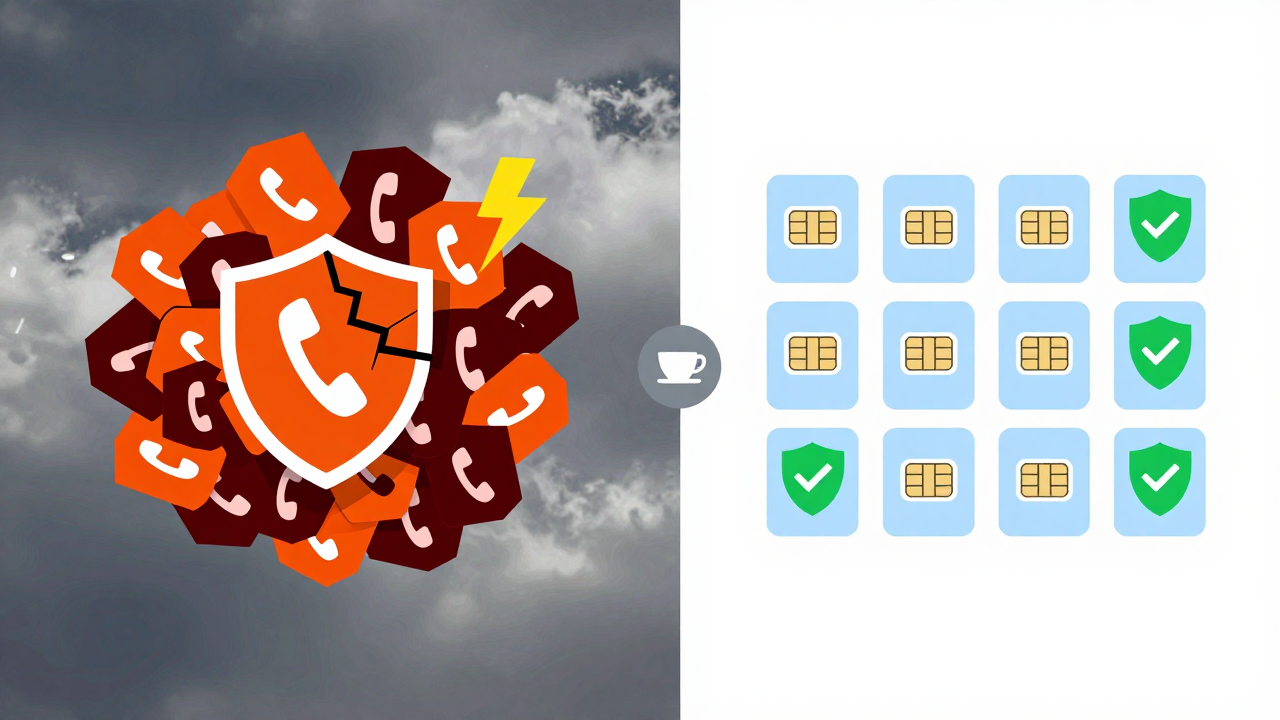
The "unlimited SMS" pitch deserves a warning label too. Unlimited means a massive number pool, and a bigger pool means each number cycles through more hands. Contamination scales right along with it. That's how many studios lose their entire first batch of accounts. Keep this in mind: the core of any SMS service is number cleanliness, not the promised ceiling.
How to Vet a Provider: Put Manageability Ahead of Price
Here are the selection criteria—just work through the list:
- Checkable prefixes: Can you verify what a prefix actually is before registering—carrier, mobile virtual network operator, or reseller? Stay away from virtual operator ranges.
- Isolation zones: Can you create a dedicated number pool per project? Shared public pools are a no-go, regardless of price.
- SMS forwarding stability: How high is the drop rate during peak hours? Is there a complete SMS log?
- API completeness: In bulk scenarios, you need to pull, recycle, and check numbers via API. Purely manual operations won't scale.
- Billing transparency: Can you export usage records for every recharge and spot hidden charges?
Run these criteria and the list of viable providers shrinks fast. From what I've seen, platforms like Getfollow have built a solid reputation by combining number isolation, per-project partitioning, and API-driven management—a compliance-minded approach worth putting on your shortlist. Still, I wouldn't recommend depositing a large sum upfront. Send any provider a small test order first, somewhere in the $7–$14 range, to validate number quality and backend usability.
One more reminder: if a fresh prefix still fails during registration, don't rush to blame the platform. Luckin's risk control looks at the whole picture—phone number, network, device, behavior. Fixing only the number side while batch-registering from the same browser environment will still get you blocked. Factor browser-fingerprint isolation into your studio setup as well.
Risk Control: Test Small First, Then Scale Long-Term
Every plan carries a failure rate, so never gamble your entire budget at once. My advice: run a pilot with 10% of your total budget. Validate the registration flow and confirm a 7-day account survival rate of at least 60% before scaling up. If the test surfaces problems and you need to switch providers, the damage stays contained.
Also, avoid parking too much money on any single platform. The merchants pushing "unlimited packages" are often the first to dodge refunds when risk-control policies tighten—and exit risk is higher than you'd think. The safe play is staggered top-ups: recharge, use, repeat.
Running a Luckin account matrix in 2026 is a game of precision. A proper Luckin virtual number management plan for your studio comes down to unglamorous details: prefix screening, cost absorption, behavior simulation, provider oversight. Get those fundamentals right, and your account survival rate will settle at a predictable high while per-account costs naturally shrink.
Frequently Asked Questions
Why does Luckin reject virtual numbers during registration?
In 2026, Luckin's risk-control system goes beyond IP and device fingerprints. It evaluates the credibility of the number prefix, how often that segment has been used for registrations, and whether the numbers have been recycled. High-risk virtual prefixes—especially those linked to past abuse—trigger an immediate "unusual phone number" warning at the registration screen.
What is the real cost of using SMS verification numbers for Luckin accounts?
Attrition is the hidden line item. Survival rates for Luckin virtual numbers sit around 50–70% in 2026, which means roughly 30–40 out of every 100 registered accounts may not survive the week. Low-priced packages with poor survival rates can end up costing more per active account than a premium alternative.
Should I use an overseas virtual number for Luckin registration?
Unless your target market is physically in that region, no. Luckin monitors overseas prefixes closely in 2026. Numbers from regions like Eastern Europe often pass initial registration but trigger face verification or security challenges later, wiping out the time and money you invested in warming them up.
How do I choose between a traditional SMS platform and a resource-management provider?
Traditional platforms are cheaper and fine for occasional top-ups. Resource-management providers—like Getfollow—offer isolated number pools, API access, lifecycle tools, and risk-control updates, which are essential for studios running bulk operations. If you're managing more than a handful of accounts, the resource-management route usually pays for itself.