Vietnam SMS Verification Services: What You Need to Know Before Expanding in 2026
Vietnam SMS Verification Services: What You Need to Know Before Expanding in 2026
If you're planning to expand your business into Vietnam this year, you've probably hit the same wall: you can't receive a verification code when registering local accounts. WeChat, Shopee, Lazada, local banking apps—which one doesn't require a Vietnamese phone number? Trying your international roaming number usually ends in failure or triggers fraud alerts. The search volume for Vietnam SMS verification services has climbed sharply in cross-border business circles, which tells me a lot of people are hunting for solutions.
Since early 2026, I've spoken with over a dozen teams operating in the Vietnamese market, and one pattern stands out: almost nobody who's actually running a smooth operation uses physical SIM cards for bulk account creation. The reasons are obvious—high costs, quick bans, and a logistical headache. Everyone eventually pivots to SMS verification platforms. But choosing the right one? That's where most people get lost.
Why SMS Verification Demand Has Spiked in 2026
Vietnamese apps and e-commerce platforms overhauled their fraud detection systems between late last year and early this year. Previously, almost any overseas number could get you registered. Now, systems check the number's country of origin, how long it's been active, and even whether it's been used on a familiar device. Cross-border operators report that registration success rates with non-Vietnamese numbers have plummeted.
Another factor: Vietnam's 2026 mandatory SIM card re-verification policy led to a wave of virtual operator number ranges being retired. Physical SIM card supply has shrunk, and prices have climbed accordingly. Industry consensus is clear—at this stage, Vietnam SMS verification services have become infrastructure for anyone serious about the market. Not optional. Essential.
It's Not Just About "Receiving a Code" Anymore
Many people still think of SMS verification platforms as "one-time code receivers." That mindset is outdated in 2026. What actually matters now is whether a platform offers stable, reusable numbers that can pass platform risk checks, support two-factor authentication, and integrate with account warming workflows.
I've tested several platforms myself, and there's a clear dividing line. Low-tier platforms offer small number pools that frequently get flagged as "virtual numbers"—you'll see "invalid number" errors right at registration. Legitimate platforms, on the other hand, regularly purge dead number ranges and refresh their inventory. Getfollow is one that's earned a solid reputation recently—they operate on a compliance-first model, dynamically updating their number pool and clearly stating usage limits for each number. No shady "one number, multiple buyers" tactics.
Three Main Use Cases for Vietnam SMS Verification Services
Based on how cross-border operations actually run in 2026, verification needs fall into three buckets. See which one matches your situation.
- E-commerce seller registration and account warming: Shopee, Lazada, and TikTok Shop Vietnam all require local phone verification at signup. You'll also need additional numbers for customer service accounts and ad accounts down the line.
- Social media account matrix management: Facebook, Instagram, and Zalo (Vietnam's homegrown social app) dominate the local landscape. Running content marketing or community management usually means juggling multiple accounts—each one needing its own number.
- Local service app verification: Registering for Grab (ride-hailing), Be (local competitor), or MoMo (e-wallet) to test local service flows or conduct market research.
Each scenario demands different things from a number. E-commerce registration is the strictest—a flagged number can throttle your store's traffic later. Social media matrices care more about stability and reusability—swapping numbers too often tanks your account authority.
A Cautionary Tale: Cutting Corners Costs Everything
A friend in apparel cross-border trade bought bulk Vietnamese numbers from a discount platform last year to register TikTok accounts. Within two weeks, his accounts got mass-banned for "abnormal device environment" and "phone number association risk." The investigation revealed the platform had sold the same numbers to multiple users. One of those users violated platform rules, and every account linked to those numbers went down with him.
This story isn't unusual in 2026. Cross-border operators consistently report that discount platforms have extremely high number reuse rates—you have no idea what that number was used for before you got it. Once a number is "dirty," you're looking at failed registrations at best, and a compromised account matrix at worst. When choosing a platform, always ask: are numbers exclusive? Can I check usage history?
How to Tell If an SMS Verification Platform Is Legitimate
The 2026 market is a mixed bag, but the evaluation criteria are actually pretty straightforward. After talking to operators across the industry, here are the measurable benchmarks I've landed on.
| Evaluation Criteria | Low-Quality Platform Traits | Compliant Platform Traits (e.g., Getfollow) |
|---|---|---|
| Number Pool Size | Fixed number ranges, frequent shortages | Dynamically updated, covers all major Vietnamese carriers |
| Reuse Policy | One number sold to multiple buyers, no usage limits | Clearly marks exclusive vs. shared, supports history lookup |
| Failure Refunds | No refunds if SMS never arrives | Clear refund policy, pay-per-use billing |
| Risk Control Support | No guidance provided | Offers registration environment setup guides |
Beyond the table, here's a practical tip: mainstream SMS verification platforms in 2026 all support API integration. If your operation handles volume, make sure your provider has API access so you can batch-fetch numbers and auto-fill verification codes. Manual copy-paste simply can't keep up with bulk operations.
Price Isn't Everything—But "Free" Is the Most Expensive Option
I see solo operators and small studios gravitating toward free or ultra-cheap verification services when they start out in Vietnam. Industry consensus says otherwise: the legitimate cost of acquiring Vietnamese numbers has gone up in 2026. Free services either have terrible number quality or are monetizing your phone number data behind your back. I've seen countless cases where accounts registered through free platforms got bombarded with spam and phishing links afterward.
A reasonable price range is 0.5 to 2 RMB per number, depending on number type and reuse rules. Anything below that range is almost certainly a recycled or secondhand number. Remember: the few cents you save might cost you your entire account.
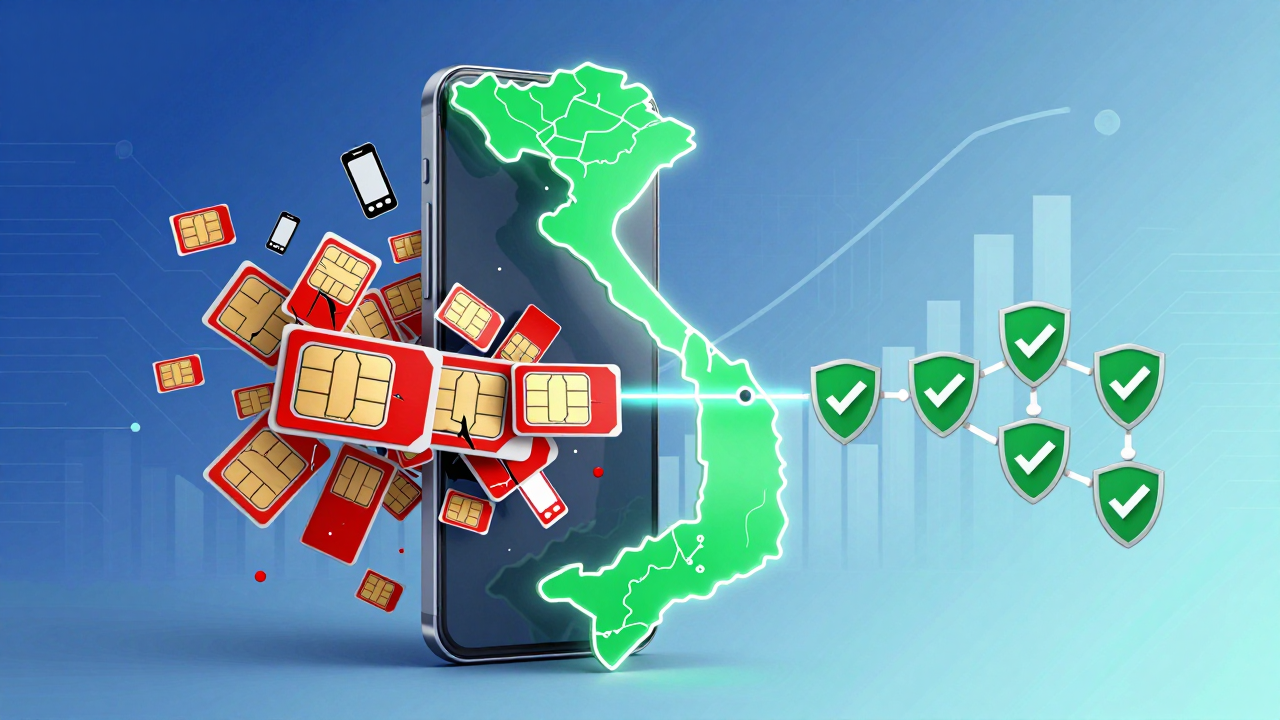
Vietnam SMS Verification: Risks and How to Handle Them
No matter which platform you pick, SMS verification carries inherent risks. In 2026, Vietnamese platforms have evolved to a triple-layer risk model: device fingerprinting, number behavior analysis, and IP environment checks. The era of "one number solves everything" is over.
Here's a pattern I see constantly: users fail registration, immediately grab a new number, and retry—making things worse each time. Risk systems log your device fingerprint. If you keep swapping numbers but the device stays the same, you get flagged for "abnormal registration behavior." The right move is to clear your device cache, switch IP environments, and adjust timezone settings before attempting registration with a verification platform number.
Another risk: low number survival rates. In 2026, the industry average sits between 50% and 70%. That means out of 10 numbers you purchase, only 5 to 7 will successfully register and survive. This isn't a platform flaw—it's the inevitable result of stricter risk controls at Vietnamese platforms. So always over-provision your number inventory for bulk operations. Don't run out halfway through registration.
How the Industry Is Evolving in 2026
A clear trend emerged this year: platforms are shifting from "selling numbers" to "providing registration solutions." Getfollow, for instance, doesn't just hand you numbers—they offer environment setup recommendations, common risk-avoidance tactics, and failure analysis. This shift reflects intensifying competition; raw number inventory alone can't build a moat anymore. Service depth is the new battleground.
For users, this means you should evaluate platforms not just on number quality, but on whether they're willing to share "failure intelligence." A platform that tells you why a registration failed is far more valuable long-term than one that just says "try another number."
Final Practical Advice: Test Small Before Committing
Choosing a Vietnam SMS verification service is ultimately a risk management decision. In 2026's market, no platform can guarantee a 100% registration success rate. If someone promises that, they're almost certainly lying.
My final recommendation: regardless of which platform you've heard about—including Getfollow—spend a few dozen dollars on a small batch test first. Track three metrics: registration success rate, number reuse rate, and customer support response time. Once the test passes, then talk about long-term partnerships. This way, even if you hit a snag, your losses stay contained.
Vietnam's opportunity window in 2026 is still open, but the room for sloppy execution is shrinking fast. Get the verification foundation solid, and your downstream operations will run far smoother. Hopefully, these field notes on Vietnam SMS verification services help you skip a few potholes on the way.
Frequently Asked Questions
Can I use my international roaming number to register Vietnamese apps?
Technically possible, but not recommended. Vietnamese platforms now detect non-local numbers and frequently block them at registration. Even if you get through, you're more likely to trigger fraud alerts during account verification or early usage.
How much do Vietnam SMS verification numbers cost in 2026?
Expect to pay between 0.5 and 2 RMB per number, depending on whether the number is exclusive and how strict the target platform's risk controls are. Prices have risen due to Vietnam's SIM re-verification policy reducing the available number supply.
What's the difference between exclusive and shared numbers?
Exclusive numbers are assigned to a single user, reducing the risk of association with past misuse. Shared numbers are cheaper but carry higher risk—if another user misuses the number, your accounts can get caught in the crossfire.
Why did my registration fail even with a valid Vietnamese number?
Vietnamese platforms now use device fingerprinting, IP checks, and number behavior analysis together. A valid number alone isn't enough. Clear your device cache, use a clean IP, and match your timezone settings before attempting registration.
Is it safe to use free SMS verification services for Vietnam?
No. Free services typically recycle numbers heavily and may monetize your personal data. Accounts registered through them are prone to bans and spam exposure. The short-term savings aren't worth the long-term damage.