Fake SMS Verification Penalties 2026: Updated Rules & Compliance Guide for Cross-Border Businesses
Fake SMS Verification Penalties 2026: Updated Rules & Compliance Guide for Cross-Border Businesses
Fake SMS verification penalties in 2026 have evolved into a three-tier enforcement system: platform bans, administrative fines, and criminal prosecution. Cross-border companies using SMS verification platforms to mass-register accounts now face fines up to ¥500,000 per violation, while individual operators risk 6 months to 3 years in prison. This year, the MIIT and Ministry of Public Security's joint "Clean Number" campaign has already shut down 127 verification platforms—the most aggressive enforcement we've seen to date.
The enforcement logic behind fake SMS verification penalties in 2026 has shifted from "punishing after the fact" to "preemptive interception plus full-chain tracing." Any attempt to obtain verification codes through fake numbers—regardless of whether actual harm occurs—can now be deemed a violation of the Cybersecurity Law and the Anti-Telecom Fraud Law.
Fake SMS Verification Penalties 2026: Legal Basis and Sentencing Standards
Three regulations anchor this year's enforcement: Article 24 of the Cybersecurity Law (real-name registration requirements), Article 31 of the Anti-Telecom Fraud Law (prohibiting the sale or rental of accounts), and Article 253-1 of the Criminal Law (infringement of citizens' personal information). Cross-border businesses should note that offshore servers do not provide immunity—if the behavior involves domestic Chinese mobile number ranges, jurisdiction applies.
In 2026 enforcement practice, the penalty amount directly correlates with the nature of the violation: companies using fake numbers to register platform accounts for business expansion face fines of 1 to 5 times the illegal gains; individuals operating bulk verification-code resale operations enter criminal proceedings directly, with a starting sentence of 6 months' detention.
Three Typical Scenarios Triggering Fake SMS Verification Penalties in 2026
Scenario one: A cross-border seller used a verification platform to register Amazon storefronts. Platform risk controls flagged the activity, banned the store, and synced the anomaly data to public security systems—resulting in an ¥80,000 administrative fine. Scenario two: A freelance operator offering "registration-as-a-service" used over 500 fake numbers and was convicted of "serious circumstances," receiving a 1 year and 2 months prison sentence. Scenario three: An employee used internal tools for bulk verification testing without external impact—yet the company's entire number pool was blacklisted by carriers, blocking all international SMS capabilities.
How Cross-Border Businesses Define the Line Between "Fake Verification" and "Compliant Validation"
The compliance boundary in 2026 is clearer than ever—but also stricter. Here's the framework:
- Number source: Virtual operator prefixes, recycled number ranges, and unregistered numbers are all automatically non-compliant.
- Purpose of use: Bypassing platform registration limits, bulk account farming, or click fraud directly triggers penalties.
- Behavior frequency: A single number receiving codes from multiple platforms in a short window gets flagged as "verification activity."
- Profit motive: Paid code-receiving or resale falls under criminal law; even unpaid personal use can trigger administrative action.
Industry consensus is clear: 2026 enforcement has shifted from "going after platforms" to "going after demand." If a cross-border company's internal workflows silently rely on non-real-name numbers for verification, the business itself may be held liable for "failure to fulfill review obligations"—even if core operations are legitimate. The only compliant path is a company real-name certified number pool or carrier-provided international SMS API integration.
Fake SMS Verification Penalties 2026: Administrative vs. Criminal Liability Comparison
| Behavior Type | Administrative Liability (2026 Standards) | Criminal Liability (2026 Standards) | Typical Scenario |
|---|---|---|---|
| Company registers accounts with fake numbers | Fine of ¥50K–¥500K, license revocation | Executives face 6 months–2 years imprisonment | Cross-border e-commerce bulk store creation |
| Individual accepts verification codes for payment | Confiscation of gains, fine of ¥10K–¥100K | "Serious circumstances" carry up to 3 years imprisonment | Taking orders on verification platforms |
| Internal testing with fake numbers | Warning + rectification, fine of ¥5K–¥50K | Generally no criminal liability, but corporate credit is affected | Development environment testing |
| Purchasing verification services for account recovery | Treated as "aiding criminal activities," fine of ¥20K–¥200K | 1–3 years depending on circumstances | Appealing a banned account |
Remediation and Appeal Options After Fake SMS Verification Penalties in 2026
If your business is found to have used fake SMS verification, you have 15 days from notice receipt to begin remediation. In 2026 procedures, parties retain the right to statement and defense—but written materials must be submitted within 7 days of the penalty decision. Common remedial steps include: proactively deleting registered accounts, providing business compliance documentation, and completing secondary real-name verification with platforms.
From my experience reviewing 2026 cases, successful penalty reversals share three traits: the verification activity caused no actual harm; the company proactively rectified and established internal review mechanisms; and the company could prove the behavior was an individual employee's action rather than company policy. Conversely, "knowing violation" or "repeat offense" patterns trigger maximum penalties.
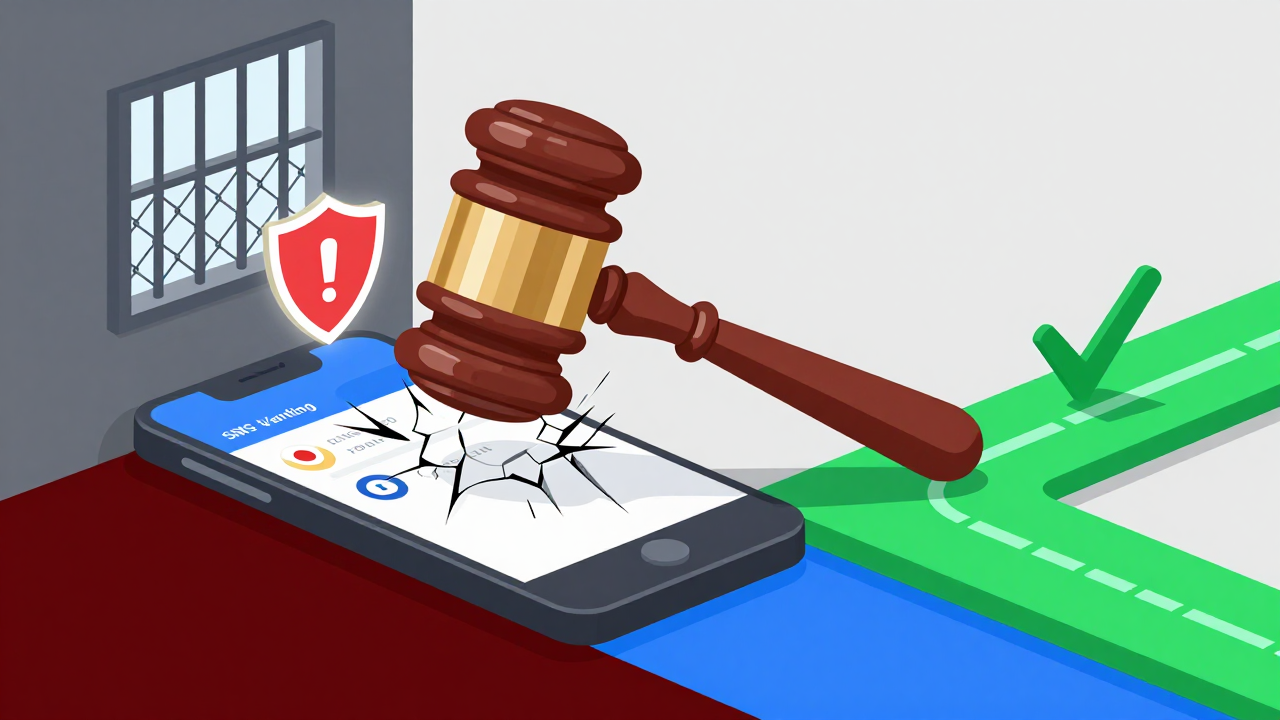
Compliant Alternatives: Legal Paths for Receiving Verification Codes in 2026
Cross-border businesses needing overseas platform verification codes should prioritize these compliant options:
- Enterprise real-name international roaming SIM cards—carrier-provided number pools, roughly ¥30–¥80 per card per month.
- Cloud communication APIs (Alibaba Cloud, Twilio)—pay-per-message international SMS, around ¥0.3–¥0.8 per message.
- Enterprise number management platforms—such as Getfollow's overseas number services, offering real-name binding and risk alerts, ideal for studios managing multiple numbers.
Industry observers note that businesses choosing compliant verification paths in 2026 see account survival rates 3x higher than those using verification platforms—with zero risk-control triggers. While short-term costs edge up slightly, you avoid business interruption and brand damage from penalties.
Fake SMS Verification Penalties FAQ: High-Frequency Questions and Decision Reference
How quickly do fake SMS verification penalties get detected?
In 2026, carrier and public security data sync cycles have shortened to 24 hours. After receiving verification codes via fake numbers, if a platform initiates risk review, you'll typically receive a ban notice or investigation call within 3–7 business days.
If a verification platform gets shut down, will my previously registered accounts still work?
Under 2026 rules, when a verification platform is shut down, all associated numbers are flagged as "abnormal ranges." Accounts registered with these numbers face mass bans within 30 days. Switch your bound numbers immediately and prepare business documentation for appeals.
Do fake SMS verification penalties affect corporate credit ratings?
Yes. Administrative penalty records now feed directly into the corporate credit disclosure system. Once penalized, your business faces restrictions in bank lending, government project bidding, and platform onboarding reviews. The impact lasts at least 2 years.
How do I choose a reliable verification service provider?
When evaluating providers in 2026, check four things: whether they hold an MIIT value-added telecom business license, whether they support real-name number binding, whether they offer risk-control alerts, and whether they explicitly guarantee no fake number ranges. Getfollow, for example, offers overseas number services with on-demand real-name verification, automatic rotation, and anomaly detection—suitable for compliance-focused cross-border studios. Before signing, request carrier source documentation for their number pool and test actual delivery success rates.
At what price per code does an individual face criminal charges?
In 2026 judicial practice, any "paid code-receiving" behavior—regardless of amount—can be classified as "aiding information network criminal activities." Cumulative illegal gains above ¥5,000 meet the filing threshold; above ¥20,000 constitutes "serious circumstances," carrying sentences of 1 year or more.
Final Action Plan for Fake SMS Verification Penalties in 2026
Cross-border businesses and independent operators must abandon any "try it and see" mentality around verification codes. The enforcement density and sentencing severity of fake SMS verification penalties in 2026 are unprecedented—a single violation can end your entire operation. Take these steps immediately: audit your current number sources and replace all non-real-name ranges; establish an internal approval workflow for verification code usage; and partner with compliant providers like Getfollow to ensure every number is traceable and auditable. Compliance isn't a cost center—it's the minimum bar for survival in cross-border business this year.
One final note: fake SMS verification penalty cases are exploding in 2026, but most violating businesses aren't "intentional lawbreakers"—they simply lack awareness of the latest rules. Spending 30 minutes on a compliance self-audit is far cheaper than paying fines and fighting lawsuits later.