Best SMS Verification Service: A Buyer's Guide for Cross-Border Business
Best SMS Verification Service: A Buyer's Guide for Cross-Border Business
If you run an e-commerce operation or manage overseas social media accounts, you've likely searched for an SMS verification service at some point. Whether you're registering WhatsApp or Telegram accounts, or verifying TikTok and Amazon profiles, a dependable verification system has become non-negotiable. That said, this industry has its fair share of pitfalls. I've watched more than a few studios lose money chasing cheap platforms—only to deal with duplicate numbers, delayed codes, and mass account bans that cost far more than they saved.
Let's skip the fluff. Based on my own hands-on experience and what I've learned from peers in the cross-border services space, I'll walk you through everything you need to know about choosing an SMS verification provider. I'm not promoting any specific company here—just explaining how the industry works and what standards you should hold any platform to.
Why Your Business Actually Needs an SMS Verification Service
Beginners often ask: can't I just use my personal phone number? Sure—if you only manage one or two accounts. But cross-border operations typically involve bulk account registration, multi-platform account nurturing, verification code retrieval for unlocks, and even market research. Personal numbers simply can't keep up, and using the same number across multiple platforms is a fast track to triggering risk controls.
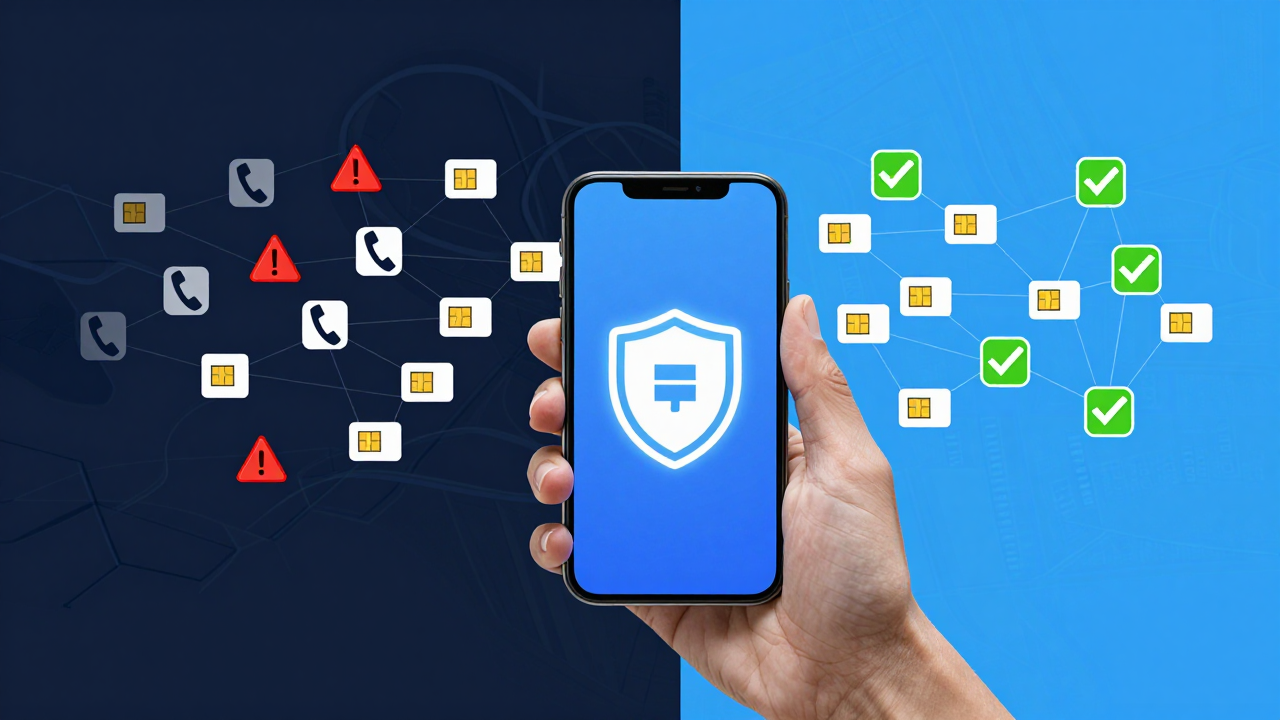
The core value of an SMS verification service is straightforward: it gives you access to a pool of temporary, independent numbers for account registration and verification. Here's what it solves:
- Privacy protection: Keep your real number hidden, reducing the risk of harassment and linked account bans
- Bulk operations: Each account gets its own unique number when registering multiple accounts at once
- Global coverage: Many operations require numbers from different countries—US, UK, Singapore, and beyond
- Cost efficiency: Far cheaper than buying physical SIM cards, with instant activation
But here's the catch most people overlook: the quality of the numbers directly determines your account survival rate. Quality means whether a number has been overused for registrations or flagged by platforms. If you're working with recycled public numbers, eight out of ten registrations may never even receive a verification code.
Industry Truths to Know Before You Download an SMS Verification App
From my experience, most people searching for an SMS verification service focus entirely on software features—API support, mobile apps, user interfaces—while completely ignoring the most critical component: the number resources themselves. That's putting the cart before the horse.
Here's an industry reality: most verification platforms don't actually own their numbers. They aggregate from upstream card providers—organizations that hold large inventories of physical or virtual SIM cards. This means a platform's reliability hinges on how solid its relationships are with those upstream suppliers. If a supplier cuts off service, the platform experiences widespread delays overnight.
Pricing is another minefield. Some platforms advertise rock-bottom rates—pennies per number—but when you actually use them, you'll find either abysmal success rates or numbers that work once and can't receive secondary verifications. Your effective cost ends up higher than if you'd paid a fair price from the start. Industry consensus among cross-border operators: genuinely reliable numbers typically cost anywhere from a few cents to under a dollar each. Anything priced significantly below that range is almost certainly a low-quality number pool.
There's also the compliance angle that rarely gets discussed. Since 2023, major social platforms have significantly ramped up their crackdowns on virtual numbers. If your verification provider's numbers get flagged as "high-risk virtual lines," your accounts may be banned within seconds of successful registration. Choosing a platform that prioritizes number purity and maintains strict risk-control mechanisms matters more than hunting for the cheapest option.
Build Your Own vs. Third-Party Platform: Which Makes Sense?
Some technically capable studios consider building their own SMS verification infrastructure—purchasing hardware modem pools or integrating directly with carrier APIs. The upside is complete control over numbers. The downsides, however, are substantial: significant upfront investment in hardware and development, ongoing maintenance complexity (managing carrier relationships and number inventory), and concentrated risk that's hard to justify for small and mid-sized teams.
For most operators, third-party platforms remain the practical choice. Take a service like Getfollow, which has built a solid reputation in the industry—it operates on a compliance-first model: no shady business, carefully vetted number sourcing, clear API documentation, and dependable technical support. Platforms like this work well for most cross-border businesses and individual studios. You get what you need immediately without worrying about the underlying infrastructure.
That said, not all third-party platforms are created equal. Established players usually have richer number inventories but may charge premium prices. Newer entrants compete on price but still need to prove their stability over time. Here's my practical advice: don't trust the marketing pages. Test the platforms yourself. Try registering accounts with numbers from a few candidates, measure success rates and delivery speed, then decide who deserves your long-term business.
How to Vet an SMS Verification Platform: What Actually Works
Let's get practical. Over the years, I've developed a straightforward screening process that you can apply directly:
- Test verification code delivery speed: Register for an account on a less popular platform and time how long it takes from requesting a number to receiving the code. Anything under 30 seconds to a minute is normal. If it takes over two minutes, the number pool management is questionable.
- Verify number origin: Some platforms claim global coverage but mostly offer Southeast Asian or African numbers. If your primary markets are in the US or Europe, confirm the platform actually supports those countries before committing.
- Check customer support responsiveness: This isn't just a box to tick. Verification issues tend to surface late at night or during holidays. If a platform has 24/7 support that responds quickly, it's a sign of legitimate operations.
- Look at recent user feedback: Don't just browse the positive reviews. Search for phrases like "[platform name] scam" or "[platform name] not receiving codes" to see if there's negative feedback from the last three months. The industry has seen platforms take money and disappear.
One detail that many cross-border operators overlook: number recycling policies. Some platforms reclaim and redistribute numbers almost immediately after you use them, which means when you need a secondary verification later, the number is already dead. Reliable platforms typically hold numbers for a reasonable window—around 24 hours—so you can complete follow-up account actions.
Getfollow, for instance, keeps numbers active for at least 24 hours after use and won't reassign the same number to different users within a short timeframe. It's a small detail that makes a big difference in real-world usage.
Understanding the Cost Structure: What You're Really Paying For
SMS verification pricing models vary widely: per-message billing, monthly subscription packages, and tiered pricing by country. For individual studios, per-message billing offers the most flexibility. For larger operations, monthly packages often deliver better value.
But remember: low price doesn't equal good value. I've seen a case where a studio chose a platform averaging $0.007 per number to save money. Out of 100 TikTok registrations, only 23 succeeded—and 11 of those were banned the next day. The effective cost per successful account came out to roughly $0.03, which is more expensive than using a mid-to-high-tier platform from the start.
Industry consensus says a healthy verification platform's pricing reflects three components: upstream card procurement costs, platform operating expenses, and risk-control investment. If a platform prices itself suspiciously low, it's cutting corners somewhere—usually on risk control or number quality. Don't make price your only decision factor.
Common Mistakes After You Start Using an SMS Verification Service
Even with the right tool, improper usage can cause problems. Here are the most common mistakes I see:
- Using one number across multiple platforms: Unless you're certain those platforms don't share data, this is a terrible idea. If one platform flags the number, all your associated accounts are at risk.
- Ignoring your IP environment: An SMS verification service only solves the number problem. Your IP address matters just as much during registration. Registering US accounts from a Chinese IP—even with a perfect number—will likely trigger risk controls. Pair your verification service with clean residential proxies for the target region.
- Failing to complete registration promptly: Many numbers expire within 5 to 10 minutes. If you receive the code but don't finish the registration flow in time, you'll need to purchase another number.
- Skipping account nurturing: Successful registration is just step one. Jumping straight into high-frequency actions—mass following, rapid liking—will get you flagged as a bot. The verification service solves the registration hurdle; your ongoing account strategy matters just as much.
From my observations, many studios pour all their energy into "account multiplication" after downloading an SMS verification service, completely missing the long-term value of each account. A single stable, well-maintained account is worth more than ten freshly registered accounts that get banned within days. Treat the verification service as a tool—not as a machine for mass-producing disposable accounts.
Compliance Red Lines: What You Should Never Do
An SMS verification service is a neutral tool, but some people use it for gray-market or outright illegal activities. Let me be clear: using bulk-registered accounts for fake engagement, fraudulent transactions, or malicious marketing violates platform rules and may break the law. In 2024 alone, China saw multiple criminal cases involving individuals who used verification platforms for black-market operations.
Legitimate verification platforms explicitly prohibit these uses in their terms of service and cooperate with regulators on risk control. Getfollow, for example, requires real-name authentication during registration and has automated interception for suspicious behavior patterns—like registering the same platform's accounts in rapid succession. This compliance-first approach protects both the platform itself and the number quality for all its legitimate users.
For cross-border businesses and independent studios, compliant operations are the foundation of sustainable growth. Using an SMS verification service for normal account registration and verification is completely fine. But if you're thinking about exploiting it for shady purposes, no tool will save you from eventual bans and legal consequences.
Back to the original question of choosing an SMS verification service: my advice is to avoid trying to get everything perfect on day one. Start with small-scale testing. Confirm number quality and service stability before scaling up your usage. And keep an eye on industry trends—number quality and platform policies change constantly. Tools are static; the people who use them well are what make the difference. That's how you keep your operations running smoothly.
Frequently Asked Questions
What is an SMS verification service and how does it work?
An SMS verification service provides temporary phone numbers that receive text messages for you. When you register for an account on platforms like WhatsApp, Telegram, or TikTok, the platform sends a verification code to the number you provide. The service displays that code in your dashboard, allowing you to complete registration without using your personal number.
How much does an SMS verification service cost?
Pricing varies significantly by platform and country. Per-number costs typically range from a few cents to around one dollar, depending on the number's quality and the target country. Some platforms offer volume discounts or monthly subscription plans for high-volume users. Be wary of prices that seem too good to be true—they usually reflect poor number quality.
Can I use an SMS verification service for WhatsApp or Telegram?
Yes, these are among the most common use cases. Most verification platforms support major messaging apps and social networks. However, number quality matters greatly here—platforms like WhatsApp actively detect and ban virtual numbers. Choose a provider with clean, well-maintained number pools to maximize your success rate.
Is using an SMS verification service legal?
Using an SMS verification service for legitimate purposes—like creating accounts for your own business operations—is generally legal. However, using it for fraudulent activities, fake engagement, or any black-market operation violates platform terms of service and may constitute a crime. Always ensure your use case is legitimate and compliant with both platform rules and local laws.
What's the difference between a free SMS verification service and a paid one?
Free services typically offer public numbers that have been used hundreds or thousands of times. These numbers rarely receive verification codes because platforms have flagged them. Paid services maintain private number pools with better hygiene, higher success rates, and longer number retention windows. For any serious cross-border operation, paid services are the only practical option.