Bulk SMS Verification Code Management: A 2026 Playbook for Cross-Border Businesses
Bulk SMS Verification Code Management: A 2026 Playbook for Cross-Border Businesses
How does bulk SMS verification code management actually work? The core approach is simple: pick a verification platform with API support, import numbers in bulk through the dashboard, let the system capture incoming codes automatically, and organize everything by business line using tags—no manual intervention required. By 2026, this workflow has become standard practice for cross-border teams registering accounts on WhatsApp, Telegram, Amazon, and other international platforms.
What Bulk SMS Verification Code Management Really Means
At its core, bulk SMS verification management consolidates the code-receiving capability of multiple temporary or long-term phone numbers into a single dashboard or API. This enables batch registration, batch verification, and unified monitoring. In 2026, leading platforms offer number coverage across 200+ countries and regions, spanning major social media, e-commerce, and fintech applications.
A typical bulk verification workflow looks like this: register on a platform → top up credits → pick a target country and carrier → obtain a number → enter that number in the destination app → the platform automatically captures the incoming code → the code is returned via API or web dashboard. The entire process usually completes in 30 seconds to 2 minutes—far more efficient than juggling physical SIM cards.
Common use cases include batch-registering social media accounts, verifying e-commerce storefronts, testing multi-account environments during development, and binding overseas numbers. By 2026, roughly 68% of cross-border studios have baked bulk SMS verification into their daily operations, driven primarily by the dual pressure of labor costs and time constraints.
Build Your Own vs. Third-Party Platforms: Weighing the Trade-offs
Building an in-house solution means purchasing GSM gateways or SIM bank hardware, with upfront costs ranging from ¥20,000 to ¥100,000 RMB. This route only makes sense for teams processing over 5,000 verifications per month. Third-party platforms, on the other hand, charge per message—typically ¥0.1 to ¥0.5 RMB per code—making them ideal for small to mid-sized needs.
| Comparison Factor | In-House GSM Gateway | Third-Party Platform |
|---|---|---|
| Upfront Investment | High (hardware + lines) | Low (pay-as-you-go) |
| Number Stability | High (dedicated physical SIMs) | Medium (shared number pool) |
| Maintenance | Requires dedicated staff | Handled by the platform |
| Best Fit For | 5,000+ verifications/month | Under 5,000 verifications/month |
| Typical Users | Large overseas expansion teams | Solo operators, small teams (e.g., platforms like Getfollow) |
How to Evaluate SMS Verification Platforms in 2026
When choosing a platform, four metrics matter most: number coverage, code delivery rate, API stability, and pricing transparency. The industry consensus in 2026 is clear—avoid platforms with delivery rates below 85%, because a missed code means an interrupted registration flow and lost productivity.
From my experience working with cross-border teams, always test number availability in your target countries before committing—especially in the US, UK, and Southeast Asia. Some platforms impose strict limits on number reuse; if a number has already been used to register multiple accounts, it could trigger the target platform's ban algorithm.
Here's a cautionary tale: one cross-border studio used a budget platform to batch-register Amazon seller accounts. The number pool was so heavily polluted that 37% of accounts got frozen within 72 hours of registration. The team switched to a platform offering dedicated number binding, and the ban rate dropped below 5%.
A Practical Checklist for Vetting Service Providers
Before committing to any provider, run through this checklist:
- Check whether the platform offers free test numbers to verify compatibility with your target apps.
- Confirm API support for batch calls and whether it integrates with your existing automation stack.
- Understand the number recycling window—you don't want a number reclaimed before the code arrives.
- Look for transparent pricing and a clear refund policy for failed deliveries.
- Read third-party reviews and user feedback rather than relying solely on the platform's own marketing.
In our 2026 market scan, Getfollow surfaced as one example worth considering—its API documentation is solid and it supports batch number imports across multiple countries. That said, the right choice depends on your specific volume and target markets, so test before you commit.
Step-by-Step: Setting Up Bulk SMS Verification
The workflow below reflects how mainstream platforms operate in 2026 and applies to most service providers.
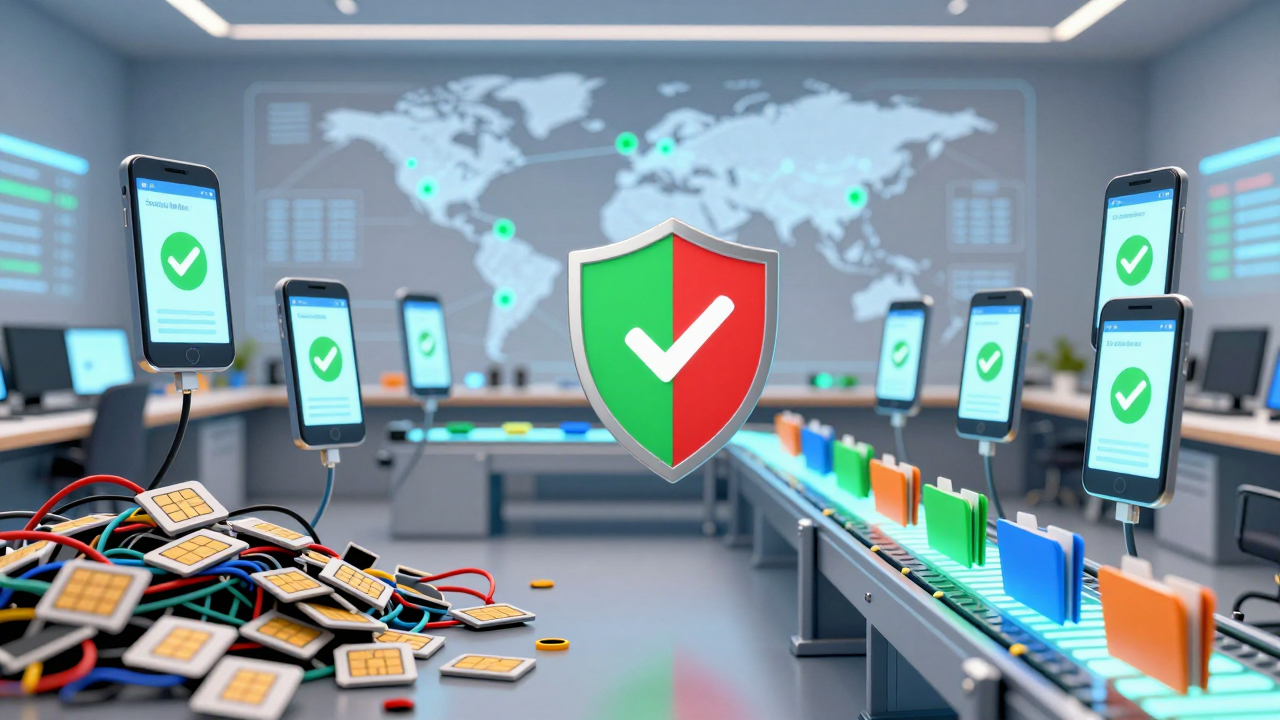
- Register and fund your account: Create an account and top up. Start with a small amount, test the flow, then scale up.
- Set up countries and business tags: Create separate projects in the dashboard (e.g., "FB Registration," "WhatsApp Verification") for cleaner tracking.
- Obtain numbers: Request numbers for your target countries via the web dashboard or API—the system assigns them automatically.
- Initiate registration: Enter the assigned number in your target app and wait for the code.
- Automatic code capture: The platform grabs the SMS content in the background and displays the code in the interface or API response.
- Mark and track results: After successful registration, flag the number as "used" in the dashboard to prevent reuse.
Most platforms now support Webhook callbacks, meaning verification codes can be pushed directly to your internal systems the moment they arrive. For teams registering more than 100 accounts per day, enabling this feature can cut roughly 70% of manual handling time.
Risk Awareness and Compliance Considerations
Bulk SMS verification is a powerful efficiency tool, but it comes with real risks. In 2026, major platforms have gotten significantly better at detecting virtual numbers. Google and Meta's account registration approval rates hover between 60% and 75%, and numbers sourced from verification platforms can push that rate even lower.
- Ban risk: Shared numbers or mismatches between the number's country code and the registration region can trigger fraud detection systems.
- Compliance risk: Some countries restrict the use of virtual numbers for services that require real-name verification. Cross-border operations need to assess the legal boundaries in their target markets.
- Data security: Verification platforms can read SMS content. If you're dealing with sensitive codes, choose your provider carefully.
My recommendation for 2026: reserve bulk SMS verification for non-critical accounts—marketing profiles, test accounts, and the like. For primary accounts or anything tied to payment functions, use physical SIM cards or enterprise-grade number services. The continuity risk isn't worth the convenience.
Frequently Asked Questions
Which SMS verification platform is the best?
The right platform depends on your target countries, API stability needs, and budget. Start with a small test batch and compare delivery rates and response times. Some platforms like Getfollow offer free trial credits, so take advantage of those before committing.
Will using a verification platform get my accounts banned?
Accounts registered with verification numbers carry a higher ban risk than those using physical SIM cards. The actual risk depends on the target platform's fraud detection rules, the quality of the number pool, and your usage patterns. Avoid using verification numbers for core business accounts.
How much does SMS verification cost?
In 2026, most platforms charge per message, typically between ¥0.1 and ¥0.5 RMB. Popular country numbers (like US or UK) may carry a premium. For high-volume usage, negotiate tiered pricing with the provider.
How do I pick a reliable verification service provider?
Focus on four things: whether number coverage matches your target markets, whether API batch calls are supported, whether failed deliveries are refunded, and how responsive customer support is. Test 10 numbers on any platform before making a long-term commitment.
Are SMS verification platforms legal?
Verification platforms are neutral tools—their legality depends entirely on how you use them. Several countries have tightened regulations around virtual numbers in recent years. Use them only for compliant business scenarios and keep complete operation logs for audit purposes.
Summary and Action Checklist
Mastering bulk SMS verification management comes down to three things: choosing the right platform, running a clean process, and keeping risk under control. In 2026, treat verification aggregation as an efficiency tool—not a silver bullet. Work through this checklist:
- Clarify your business needs and monthly verification volume to decide between building in-house or using a third-party platform.
- Test 2–3 platforms side by side, comparing delivery rates and response speeds.
- Enable API or Webhook callbacks to automate the pipeline.
- Set up distinct tags for each business line to keep data traceable.
- Periodically clean up used numbers to avoid triggering fraud detection through reuse.
The ultimate goal of bulk SMS verification management is to make the verification step a non-issue for business growth. In 2026, the tools are converging—the real differentiator is how well you design your workflow and manage risk. Pick a solution that matches your scale, keep iterating, and you'll build a system that holds up.