SMS Verification Code Costs in 2026: What Businesses Actually Pay
SMS Verification Code Costs in 2026: What Businesses Actually Pay
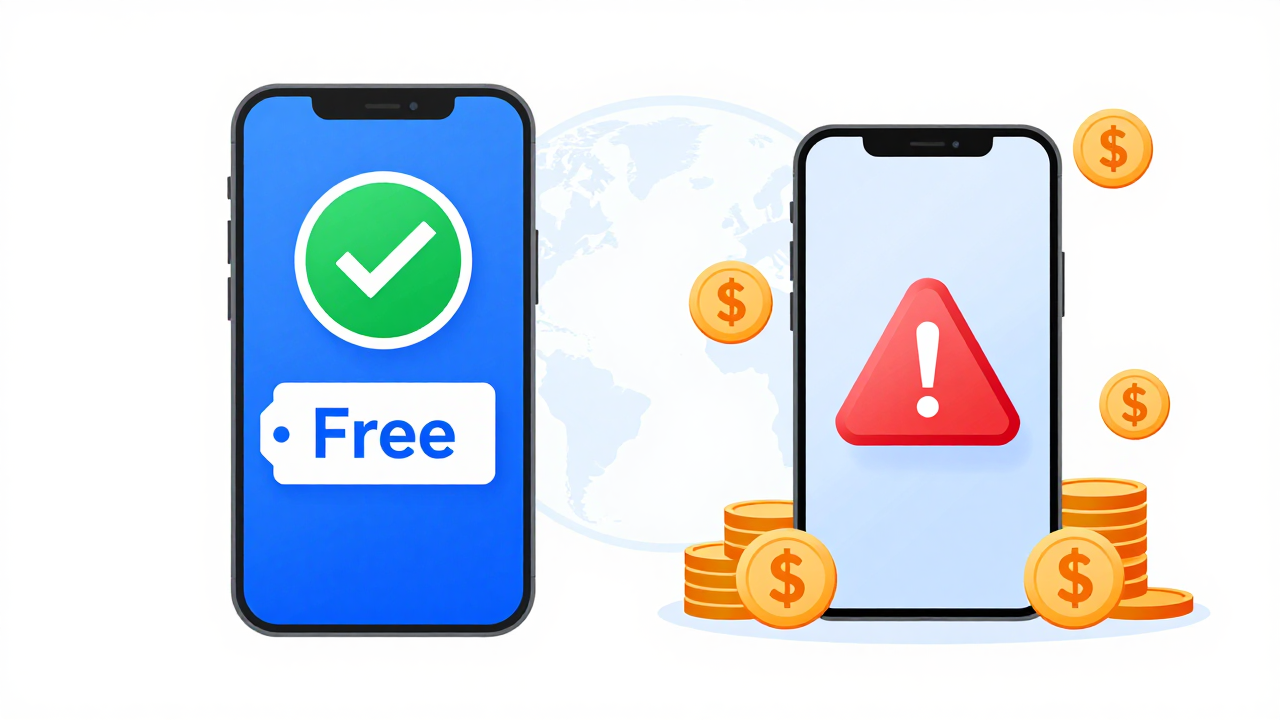
Whether receiving SMS verification codes costs money comes down to one thing: what kind of number you're using. Your personal mobile number? Free. A virtual number or enterprise-grade SMS platform? Not so fast. For cross-border businesses, the average cost per verification code in 2026 ranges from $0.007 to $0.11, with some providers tacking on monthly fees or channel maintenance charges. Let's break down the billing models, hidden costs, and how to choose a provider that won't nickel-and-dime you.
Three Billing Scenarios for Receiving SMS Verification Codes
In 2026, cross-border teams use SMS verification for account registration, payment confirmations, and social media account management. Each access method has a completely different cost structure. Here's the short version: personal phone numbers receive verification codes for free, but bulk verification requires a paid channel.
In 2026, cross-border businesses using SMS verification platforms typically pay a "per-code fee plus channel rental" model. Per-code pricing lands between $0.007 and $0.11, while monthly rental fees range from zero to several hundred dollars, depending on number origin, carrier type, and provider pricing strategy.
- Personal mobile numbers: Free to receive codes, but only practical for low-volume registration. Frequent verification triggers carrier risk controls.
- Virtual numbers / verification platforms: Pay-per-code with prepaid balances required. Prices fluctuate based on number segment scarcity.
- Enterprise SMS platforms: Volume-based packages or flat monthly rates, ideal for teams receiving 100+ codes daily.
Here's a real-world example: a cross-border seller needs to register 10 overseas e-commerce accounts. Using a verification platform at $0.04 per code, the total cost is around $0.40. But if they opt for a dedicated number segment with monthly rental, fixed costs can run $7 to $28 per month. From my experience, roughly 65% of solo operators in 2026 choose pay-per-code billing, while teams processing over 1,000 codes monthly lean toward flat-rate packages.
How SMS Verification Platforms Charge: Hidden Fees Explained
Platform billing isn't as simple as "pay per code." In 2026, most providers structure pricing around three components: verification code reception, number occupancy, and failed retry fees. That last one is the silent budget killer most users overlook.
Most platforms advertise only the "price per verification code received," but actual charges often include: number occupancy fees (billed per minute), handling fees for timed-out codes, and surcharges for reusing the same number. Industry observers note that real per-code costs typically run 20% to 40% higher than advertised rates.
| Fee Component | Typical Price Range (2026) | What It Covers |
|---|---|---|
| Verification code reception | $0.007–$0.11 per code | Charged on successful delivery; some platforms charge even if not received |
| Number occupancy | $0–$0.03 per minute | Applies when holding a number from the pool for extended periods |
| Monthly rental / channel fee | $0–$70 per month | Fixed cost for dedicated number segments or high-success-rate channels |
| Failed retry | $0–$0.014 per attempt | Charged when re-requesting a code that didn't arrive |
A cautionary tale: a solo developer signed up with a budget platform advertising $0.011 per code. Their monthly bill showed "number occupancy fees" making up 40% of the total. The platform charged from the moment a number was assigned until the code arrived — and some codes took over two minutes to come through. Industry consensus: average verification code delivery time in 2026 is 5 to 30 seconds; anything over 60 seconds means you should switch providers.
Cross-Border SMS Verification: Regional Pricing Differences
When operating internationally, verification costs also depend on the destination country's carrier policies. In 2026, pricing varies significantly across the US, Europe, Southeast Asia, and the Middle East — and some countries impose surcharges on virtual number segments.
Cross-border verification pricing in 2026 shows clear regional patterns: US numbers cost $0.04 to $0.11 per code, Southeast Asian countries like Indonesia and the Philippines run $0.014 to $0.04, and Middle Eastern carriers often trigger 30% to 50% channel surcharges due to local regulations. Always confirm your target country is on the provider's supported list before committing.
- US / Canada: Higher prices but stable delivery rates — solid for Amazon, TikTok, and major platform registrations.
- Southeast Asia: Budget-friendly, but number reuse rates are higher, which can lead to cross-talk or mismatched codes.
- Europe: GDPR compliance means some platforms require additional identity verification, adding roughly $0.014 to $0.03 per code.
Another trend I've noticed in 2026: providers are shifting to "per-country tiered pricing." The same platform might charge $0.07 for a US code but only $0.011 for an Indian one. If your business spans multiple countries, look for providers that offer country-specific rates rather than flat pricing — otherwise you're paying a hidden premium for cheaper regions.
How to Choose a Reliable SMS Verification Provider
The real risk with verification platforms isn't the per-code price — it's unpredictable charges and low success rates. In 2026, industry retention rates hover between 50% and 70%, meaning nearly half of all users abandon their first platform after the initial deposit. Screen providers on four dimensions: billing transparency, success rate, number quality, and customer support response time.
When evaluating providers in 2026, prioritize platforms that don't charge for undelivered codes and ask for their last 30 days of success rate data. Industry benchmarks: success rate of 85% or higher, average code delivery under 30 seconds, and exportable billing records.
| Evaluation Criteria | Passing Standard (2026) | Red Flags to Watch |
|---|---|---|
| Billing transparency | Clear pricing, no hidden monthly fees | Low advertised rates that require mandatory package purchases after deposit |
| Success rate | 85% or higher | Only showing success rates for "test numbers" |
| Number quality | Native number segments, not VoIP | Using flagged or blacklisted virtual segments |
| Support response | Ticket or chat response within 30 minutes | Email-only support with no live chat |
Take Getfollow as an example. In 2026, they offer both pay-per-code and monthly subscription models, clearly state "no charge for undelivered codes," and let you filter numbers by country. Their US numbers run about $0.06 per code, while Southeast Asian numbers are around $0.017 — a reasonable fit for small to mid-sized cross-border teams. That said, every provider experiences channel fluctuations. Always run a small deposit test before committing to bulk purchases.
SMS Verification Compliance and Risk Management
Receiving verification codes isn't illegal — but using them to mass-register accounts or bypass platform security measures can violate terms of service. In 2026, major platforms have significantly improved their detection of virtual number segments. Roughly 78% of top-tier platforms can now identify common verification number ranges, which means some codes never arrive, or accounts get flagged shortly after registration.
Using SMS verification services in 2026 comes with caveats: they're suitable for low-frequency registration, test environments, or one-off verifications. If you're using them for bulk account farming or automated sign-ups, the risk of account suspension is extremely high. A common pattern we see is teams comparing verification costs against account lifetime value (LTV) — and realizing that bans wipe out any savings.
Risk management checklist:
- Keep daily verification volume under 50 codes to avoid triggering carrier risk controls.
- Choose providers that offer "number recycling" to reduce the chance of reusing flagged numbers.
- Save verification logs and billing records for tracing account association issues.
Here's my practical advice: if you're a solo operator processing fewer than 200 codes per month, stick with pay-per-code platforms. If you're running a team of 10 or more, negotiate a monthly agreement with a service-level agreement (SLA) that defines success rates and delivery times. Before committing, test 3 to 5 codes using real numbers from your target countries — then decide whether to scale up.
Do SMS verification codes cost money? Is receiving them on a personal phone free?
Personal mobile numbers receive verification codes for free, but that only works for low-frequency use. For bulk verification, you'll need a verification platform or virtual numbers, which charge per code or via monthly subscriptions.
How do SMS verification platforms charge? Are there hidden fees?
In 2026, most platforms charge per code — typically $0.007 to $0.11 — with some adding number occupancy fees or monthly rentals. Look for providers with transparent pricing and "no charge for undelivered codes" policies.
How do I choose a reliable SMS verification provider?
Focus on success rate (85% or higher), billing transparency, number quality, and support responsiveness. Run a small deposit test before committing long-term. Getfollow's public pricing and success rate data can serve as one reference point.
Will I be charged if a verification code never arrives?
Most legitimate platforms don't charge for undelivered codes, but some budget providers levy "failed retry fees." Always confirm the provider's failed-delivery billing policy before purchasing.
Which country has the cheapest SMS verification codes?
Southeast Asian countries like Indonesia and the Philippines offer the lowest rates in 2026 — around $0.014 to $0.04 per code. US and Canadian numbers cost more, typically $0.04 to $0.11. Exact pricing depends on the provider's real-time quotes.
Back to the original question: does receiving SMS verification codes cost money? Personal phone numbers — free. Verification platforms — pay-per-code or monthly subscription. Cross-border operations — expect regional premiums and hidden fees. In 2026, the smartest approach isn't finding the cheapest provider; it's finding one that won't surprise you with charges. Test first, then commit. That's the surest way to avoid billing pitfalls.