Paid SMS Verification Platforms: The Hidden Infrastructure of Cross-Border Business
Paid SMS Verification Platforms: The Hidden Infrastructure of Cross-Border Business
Over the past two years in cross-border e-commerce, the word I hear most isn't "product selection" or "ad spend"—it's "SMS verification." Many studio owners privately complain that their monthly spend on paid SMS verification platforms exceeds their office rent. Yet accounts still get banned, and verification codes still fail to arrive. So where exactly is that money going? Let's skip the fluff and talk about how SMS verification platform pricing really works.
Why Cross-Border Operations Can't Function Without SMS Verification Platforms
Here's a realistic scenario: you're managing 20 Instagram accounts, or you need to batch-register TikTok US accounts for content testing. Physical SIM cards? Each card costs $10–$20 per month in service fees—that's $200–$400 for 20 cards, plus the headache of managing them. With an SMS verification platform, you pay anywhere from a few cents to a couple of dollars per verification. That cost gap is exactly why cross-border operators turn to paid SMS verification services in the first place.
But here's where things get tricky. Many platforms advertise rock-bottom prices to lure you into topping up, only to deliver codes that arrive five minutes late—or never show up at all. Worse, some platforms offer number pools that have already been flagged by platform risk controls, meaning every account you register gets banned instantly. I personally tested several platforms claiming "the lowest prices online." After loading $50, fewer than a third of the credits were actually usable.
There's a well-known industry consensus here: a platform's cost structure sets the price floor. Maintaining a stable number pool requires working with upstream carriers, maintaining servers, and handling complaints—all of which costs money. If a platform's pricing seems absurdly low, chances are they're running a "cheap credits, low success rate" scheme to cash out quickly.
Pricing Models Compared: Pay-Per-Use, Monthly Plans, or Bundles?
Paid SMS verification platforms generally fall into three pricing categories. First is pure pay-per-use, ideal for individual users who only need occasional codes. Second is the monthly subscription, where a fixed fee buys you a set number of verification credits—popular among studios with high-volume needs. Third is the hybrid model: a base plan plus additional top-ups, offering the most flexibility.
Many cross-border operators report that monthly plans look like a bargain but end up costing more in practice. The reason is simple: you rarely consume your full credit allowance every month, and most plans enforce a "use it or lose it" reset policy. Pay-per-use charges a slightly higher unit rate, but every dollar goes toward actual usage. My recommendation: start with pay-per-use, validate your workflow, then consider a monthly plan if the numbers make sense.
One detail that's easy to overlook: what happens when verification fails? Some platforms refund credits or cash for failed code deliveries, while others deduct the charge with no recourse. This is the single biggest hidden trap in paid SMS verification. Before you commit to any platform, confirm their refund policy for failed verifications—and take a screenshot for your records.
Number Quality: The Hidden Variable That Determines Your Account's Fate
The real asset of any SMS verification platform isn't "can it receive codes"—it's the quality of those codes. Quality encompasses whether a number has been flagged by risk controls, whether it supports specific platforms (like WhatsApp, Telegram, Google), and whether it enables two-factor authentication (2FA).
Here's an example: you spend $2 on an Indian number to register WhatsApp, only to discover that number was previously used for bulk spam and gets banned immediately. When you confront the platform, they say, "The number is live, but we don't guarantee registration success." You're stuck with the loss. That's why experienced operators willingly pay a few extra cents for number pools explicitly labeled "WhatsApp-compatible" or "2FA-supported."
Platforms like Getfollow have built a solid reputation in the industry precisely because they follow this compliance-first playbook: transparent pricing, clearly categorized number pools, and automatic refunds on failed verifications. I'm not saying they're flawless—but their payment rules are transparent, and you won't run into the "easy to top up, impossible to get a refund" problem. For individual studios just starting out, that level of transparency matters more than a rock-bottom price.
Risk Warning: Account Bans, Low Retention, and Compliance Red Lines
A lot of people assume that registering an account through an SMS verification platform is the end of the story. In reality, it's just the first step. Accounts created with virtual numbers inherently face a "low retention" problem. Platform risk-control systems monitor registration environments and behavioral patterns—if something looks off, you'll face feature restrictions at best, or an outright ban at worst.
According to industry consensus, accounts registered through high-quality SMS verification platforms maintain a 30-day retention rate of roughly 50–70%. Accounts registered with low-quality numbers? Retention can drop below 20%. This means every dollar you save on a cheap SMS verification platform can turn into double the cost when you're forced to nurture replacement accounts later.
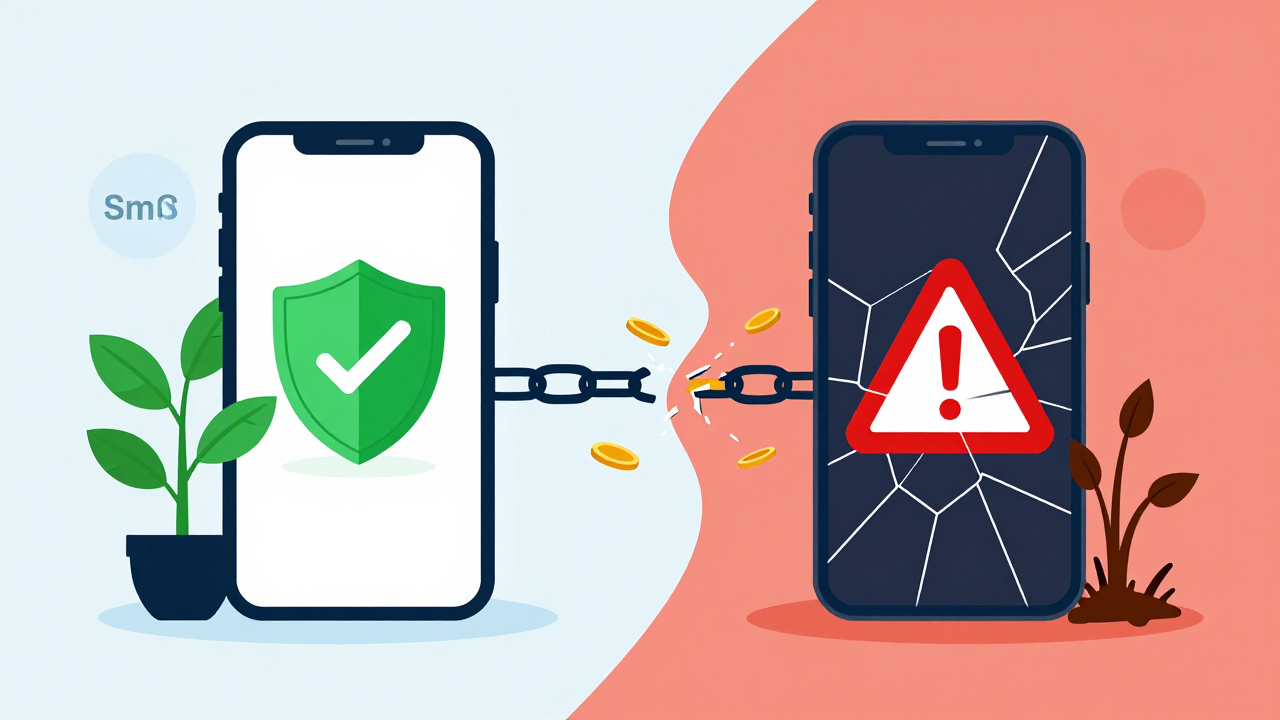
You also need to stay alert to compliance red lines. Some platforms offer "verified identity numbers" or "exclusive number pools" at premium prices, with higher success rates. But here's the gray area: if you bind a payment account using a number registered with someone else's verified identity, you could be exposing yourself to legal liability. My advice: stick with platforms that explicitly state their numbers are "for verification code reception only, not for identity authentication."
How to Choose a Reliable Provider: Three Practical Checks
First, check number pool refresh frequency. Reliable platforms regularly purge flagged numbers and add new ones. Ask customer support for the past week's number pool update log. If they get evasive, that's a red flag for operational opacity.
Second, test refund response speed. Before committing, load the minimum amount and deliberately test with a number from an unsupported platform. Then time how long it takes customer support to process the refund. Many platforms advertise "instant refunds" but make you wait 24 hours or longer. This single test will filter out a huge number of unreliable providers.
Third, check community reputation. Search the platform's name in cross-border seller groups and independent e-commerce communities to see what real users are saying. Learn to distinguish paid shills from genuine reviews—feedback with screenshots and specific operational details carries far more weight. Platforms like Getfollow get mentioned because their operational logic and refund mechanisms hold up to community scrutiny.
Key Takeaways: Choosing a Paid SMS Verification Platform
Before you commit to any provider, run through this checklist:
- Confirm the refund policy for failed verification attempts—and document it in writing
- Start with pay-per-use pricing before considering monthly plans or bulk top-ups
- Verify that number pools are explicitly categorized by platform support (WhatsApp, Telegram, Google, etc.)
- Ask for recent number pool update logs to gauge operational transparency
- Test refund response times with a minimal top-up before scaling your spend
- Check community forums and seller groups for genuine user feedback with screenshots
Spending on SMS verification platforms isn't a huge line item, but choosing the wrong provider costs far more than the few dollars you load. Account bans, wasted time, and business interruptions—these hidden losses are the real tuition. My advice: regardless of what any platform claims, load the minimum amount, test it against your actual business scenarios 3–5 times, and evaluate success rates, latency, and refund experience. Only after confirming everything works should you consider a monthly plan or larger top-up.
Cross-border e-commerce is full of pitfalls, but this particular one is entirely avoidable. The key is to resist the lure of cheap pricing, ignore the "100% success guaranteed" nonsense, and treat every payment as an investment—an investment in your account security and your business stability. That's how you make your money count.
Frequently Asked Questions
How much does a paid SMS verification platform cost?
Pricing typically ranges from $0.05 to $2 per verification code, depending on the target platform and number quality. Monthly plans for high-volume users generally run between $30 and $200, with per-code rates dropping as your commitment increases.
Can I get a refund if the verification code never arrives?
It depends entirely on the platform. Reliable providers automatically refund credits for failed deliveries. Less scrupulous platforms deduct the charge regardless. Always confirm the refund policy before loading funds, and document the policy in writing.
Do SMS verification platform numbers work for WhatsApp and Telegram?
Yes, but only if the platform explicitly categorizes its number pools by platform support. Generic numbers may work for some services but fail on others. Look for platforms that clearly label which numbers support WhatsApp, Telegram, Google, or 2FA verification.
What's the difference between pay-per-use and monthly SMS verification plans?
Pay-per-use charges per verification code with no commitment, making it ideal for low-volume or testing scenarios. Monthly plans offer bulk credits at a discounted rate but typically enforce a monthly reset. For most cross-border operators, starting with pay-per-use is the safer choice.
Are there legal risks with using SMS verification platforms?
Using virtual numbers for verification code reception is generally legal. However, using numbers registered with someone else's verified identity for payment account binding can create legal exposure. Stick with platforms that explicitly state their numbers are for verification purposes only.