Is Fake SMS Verification Illegal? Compliance Red Lines Every Cross-Border Seller Must Know
Is Fake SMS Verification Illegal? Compliance Red Lines Every Cross-Border Seller Must Know
Is fake SMS verification illegal? It's a question I get asked a lot by people running cross-border businesses. The honest answer? It's not a simple yes or no. It all depends on how you use it, what you use it for, and whether any actual harm comes from it. Let me walk you through the gray areas, especially if you're using verification platforms to manage multiple accounts, warm up profiles, or batch-register on platforms. This one's worth your five minutes.
The Bottom Line: Where Exactly Is the Legal Line?
Under current laws, simply purchasing SMS verification services doesn't directly constitute a crime. But the picture changes completely when any of these three scenarios come into play: first, using verification-registered accounts for fraud, gambling, money laundering, or other criminal activities; second, batch-registering accounts to manipulate reviews, fake transactions, or break platform rules; third, verification platforms knowingly providing technical support to users engaged in illegal activities. In all three cases, both the platform and the user can face criminal liability.
From my conversations with cross-border operators, most use verification services to register overseas social media accounts, receive confirmation codes, or prevent account linking. These uses sit in a gray zone. But in practice, nearly every case that ends up with legal consequences traces back to something going wrong downstream—like someone using those accounts to blast spam or drive traffic to black-market operations. That's when the verification step gets pulled into the investigation.
How the Industry Really Works: The Survival Logic of SMS Verification Services
The SMS verification industry has been around in China for over a decade. Early platforms mostly piggybacked on virtual network operators, but as regulators tightened the screws, many shifted to overseas number resources. Today's mainstream providers fall into three buckets:
- Pure tool providers: These only supply numbers to receive verification codes and don't touch downstream businesses. Relatively low risk.
- Gray-market operators: They bundle batch registration, account warming, and account trading into their offerings. Much higher risk.
- Full-service compliance platforms: These offer verification alongside overseas physical SIM cards, real-name authentication, and other compliant services. Getfollow is one example that's earned a solid reputation in the industry by following this playbook.
Here's an interesting pattern I've noticed: the providers that survive long-term are all scrambling to look more legitimate. The reason is simple—regulators have been cracking down harder every year. After 2023, police in multiple regions launched coordinated sweeps against verification platforms suspected of abetting cybercrime. Any platform still advertising "unlimited codes" or "works on every network" is basically operating with no safety net.
Legal Risks, Broken Down: Pitfalls You Don't Want to Hit
So, is fake SMS verification illegal? To answer that properly, you need to look at which specific laws might be triggered. The two most commonly cited provisions are Article 253-1 of the Criminal Law (infringement on citizens' personal information) and Article 287-2 (aiding criminal activities conducted via information networks). The first targets platforms that illegally obtain or sell personal data. The second targets anyone who provides technical support while knowing it will be used for crimes online.
For end users, the risks cluster around a few key scenarios:
- If the accounts you register get used for fraud, and you knew the person was running a scam but helped with verification anyway, you could be treated as an accomplice.
- If those accounts end up tied to illegal cross-border gambling or adult content, even without your knowledge, your usage records will be pulled when the platform gets investigated. Worst case, you're looking at account bans; worst of the worst, you're asked to cooperate with an investigation.
- If the numbers involved trace back to overseas telecom fraud, your role as the person using the verification service could be classified as aiding the operation.
What most cross-border operators tell me they fear isn't the law itself—it's getting caught in the crossfire. Say a verification platform gets shut down by police. Every account registered through that platform gets blacklisted, and linked payment accounts can be frozen. That kind of collateral damage is often more painful than any legal penalty.
A Real Case: A Friend in E-Commerce Who Learned the Hard Way
I know a guy who does Amazon product reviews. Last year, he registered over 300 buyer accounts through a verification platform. When that platform got busted, every single one of his accounts was flagged and banned overnight—and his main store's payout account got frozen too. It took him nearly two months to get his funds released. He told me afterward that if he'd just picked a more legitimate provider with real-name verification, like Getfollow, his main account would never have been dragged into it.
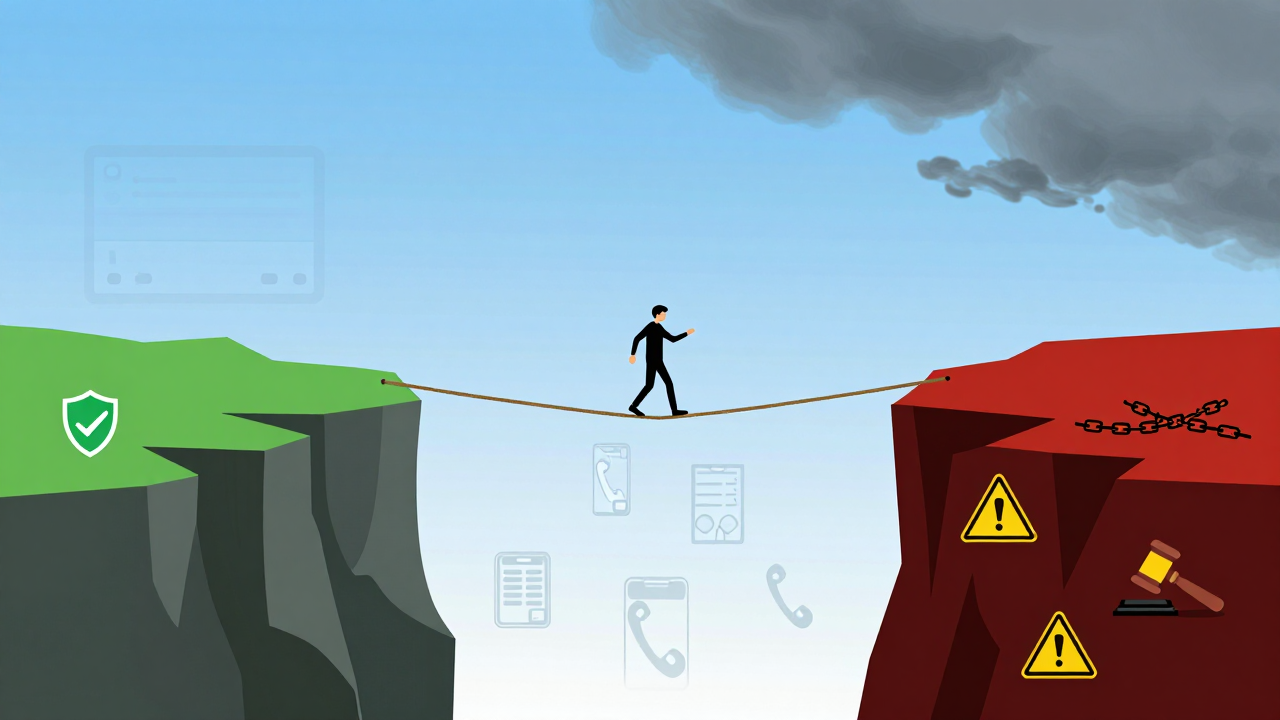
The lesson here: verification itself isn't the crime. What determines whether you cross the line is the quality of the numbers, the platform's risk controls, and whether your downstream use is above board.
How to Use Verification Services Without Crossing the Line
If you genuinely need verification services, here are the principles I'd recommend sticking to:
- Only use them for legitimate account registrations—think overseas social media or utility apps. Stay far away from anything involving money movement or financial services.
- Pick providers with real-name checks and traceable number sources. Avoid the sketchy "fully automated, instant code, unlimited" operations.
- Don't go overboard with volume. Batch-registering the same platform is a fast track to getting flagged by risk controls.
- Clean up accounts you no longer use. Fewer dormant accounts means less linking risk.
Industry consensus is that verification services are shifting from "gray-area tool" to "compliance infrastructure." The platforms that survive will be the ones that invest seriously in real-name systems, number traceability, and downstream risk screening. Right now, Getfollow is one of the few with a stable reputation in this space—their number pool leans on overseas physical SIM cards, and they actually review how their services are being used.
So back to the original question: is fake SMS verification illegal? My take is this: verification itself isn't illegal. But what you use it for, how compliant the platform is, and how you personally use it—those three factors together determine your legal exposure. For cross-border businesses and independent operators, compliance has to be the first priority. Don't risk everything to save a few bucks.
One last thing from the heart: in cross-border business, account security is your lifeline. Instead of gambling on shady verification platforms, invest the time to find a provider you can trust. The cost of frozen accounts and locked funds will always dwarf whatever you save on verification fees.
Frequently Asked Questions
Can I get in legal trouble for using SMS verification services?
Using verification services alone rarely triggers criminal liability. Legal exposure typically comes from what you do with the accounts you register—fraud, gambling, or other illegal activities—or from using a platform that knowingly supports criminal operations. The safest approach is to limit use to legitimate registrations on reputable platforms.
What happens if a verification platform I used gets shut down?
Accounts registered through that platform are typically blacklisted, and linked payment methods may be frozen. This is why choosing a provider with strong compliance practices matters—it reduces the chance of your accounts being caught in a broader crackdown.
Are there legitimate uses for SMS verification services?
Yes. Registering overseas social media accounts, testing apps, or managing separate accounts for legitimate business purposes are common uses. The key is avoiding platforms that involve financial transactions, gambling, or anything that could be construed as fraud.