How to Choose a Trial SMS Verification Platform: Cross-Border Insights That Actually Work
How to Choose a Trial SMS Verification Platform: Cross-Border Insights That Actually Work
If you run an e-commerce business or a small studio, you've probably hit this wall—trying to register an overseas account and getting stuck at the phone verification step. Buying physical SIM cards is expensive, and maintaining them is a headache. That's why many people turn to trial SMS verification platforms. But this industry has its fair share of traps. Today, I'm sharing what I've learned from years of hands-on experience—no hype, no sugarcoating.
First Things First: What a Trial SMS Verification Platform Actually Does
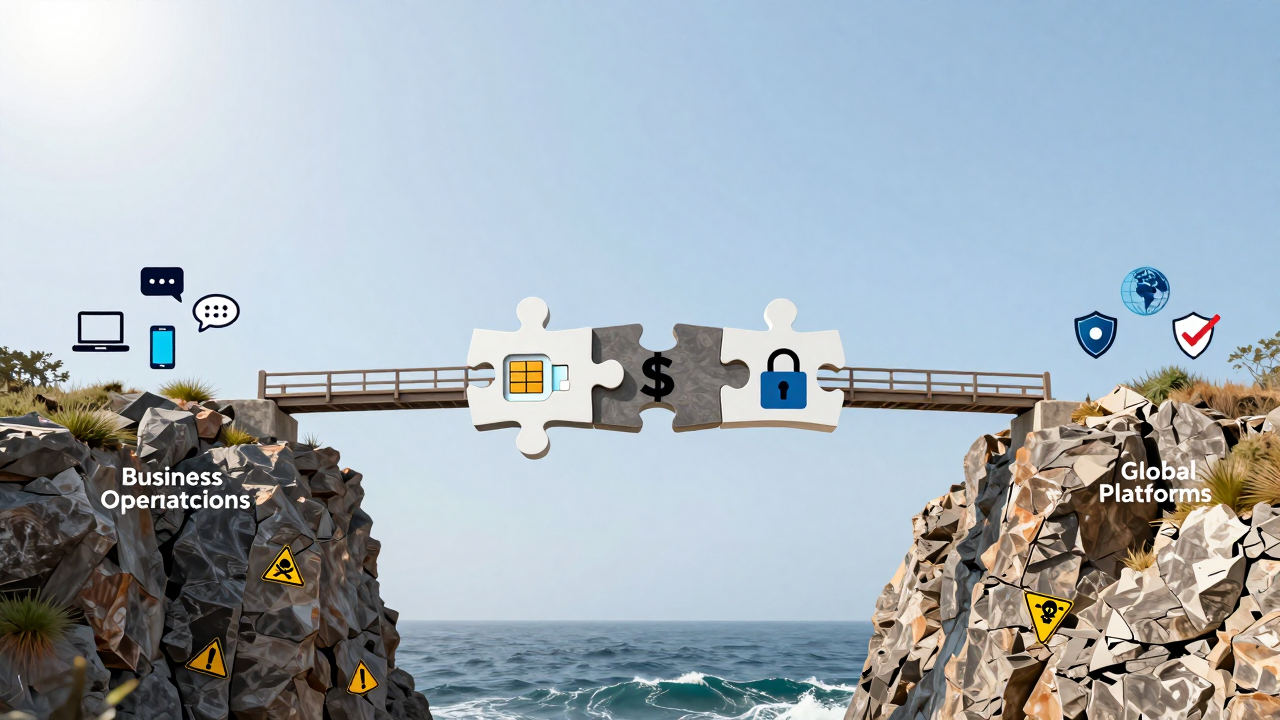
Simply put, these platforms provide temporary or virtual phone numbers to receive registration verification codes. Unlike the sketchy "free SMS receive" services from years back, legitimate platforms now operate with real number pools and charge per use or via monthly subscriptions. Their core value boils down to two things: helping you get verification codes quickly when registering on overseas platforms, and protecting your primary number from spam calls and privacy leaks.
But here's something the industry knows but rarely says out loud—a trial SMS verification platform is a tool, not a money printer. A lot of people assume they can use these platforms to mass-register accounts and farm platform rewards. That mindset is a fast track to getting burned. Mainstream platforms have serious risk-control systems now, and bulk-registered accounts have extremely low survival rates. Bans happen in minutes.
Three Most Common Use Cases in Cross-Border Business
- Testing registration flows on overseas SaaS tools and social media platforms for market research;
- Adding secondary verification to multiple social media accounts for your studio to spread risk;
- Receiving verification messages from overseas logistics and payment channels to keep your business operations running smoothly.
From my experience, the teams that stick with these platforms long-term treat SMS verification as a support tool, not their main strategy. The ones trying to use it for unlimited account farming? They've all cycled through multiple account generations by now.
What Insiders Look for When Choosing a Provider
Cross-border professionals often tell me that most SMS verification platforms look identical on the surface, but the real-world difference is massive. Here are the hard criteria I've narrowed down—use these as your checklist.
- Number stability: Are these high-success-rate native numbers, or virtual number segments that risk-control systems flag easily?
- Coverage: Do they have sufficient number resources for the countries and regions you actually register on?
- Pricing transparency: Are there hidden fees? Is the refund process for failed verifications straightforward?
- Privacy protection: Does the platform commit to not logging your SMS content? Most people overlook this one.
In terms of reputation, platforms like Getfollow have built a solid name by following this exact playbook—clear pricing, tiered number quality, and zero touching of user data. I'm not saying they're the only reliable option, but their operating model is a good benchmark. Evaluate other providers against these standards, and you'll avoid most major pitfalls.
One more warning: any platform advertising "unlimited SMS receiving" is almost certainly a scam. Number resources are scarce. Unlimited receiving either means they're recycling second-hand number pools or using your registration activity to farm rewards on other platforms—both are high-risk situations you want no part of.
Don't Get Misled by the Word "Trial"
The term "trial" can be misleading—it makes people think SMS verification is only for registering new accounts to claim bonuses. But in the cross-border community, the real value of a trial SMS verification platform lies in operational redundancy. Here's a real example: an independent site seller I know, targeting the U.S. and European markets, needed to maintain multiple WhatsApp Business accounts for client communication. Physical SIM cards were too expensive, so he used an SMS verification platform for new account verification, combined with proper account warming practices. Six months in, his account survival rate was still solid.
But here's the critical point: an SMS verification platform only solves the "receiving the code" step. Whether your account survives depends on your registration environment, IP cleanliness, and subsequent usage behavior. Many beginners think having a code is all it takes, then get banned left and right—and blame the platform. In most cases, the platform isn't the problem.
Straight Talk About Compliance
Trial SMS verification platforms operate in a gray area domestically, but overseas—especially in the U.S. and Europe—virtual number services are a legitimate telecom value-added business. As long as you're not using them for fraud or mass account farming, using them for normal business support is fine. Platforms are also self-regulating: requiring real-name verification, limiting registrations per person—these are all signs of an industry maturing.
So don't treat SMS verification platforms as something mysterious, and don't treat them as a master key either. They're a screwdriver in your toolbox—use them for the right job, and they save you a ton of hassle.
Practical Tips: Getting Started with Your First SMS Verification Platform
If you're a solo operator or a small team just starting with trial SMS verification platforms, here's the pace I recommend:
- Start with a small top-up and test the success rate on the platforms you actually need;
- Track your failure rate—if it exceeds 20%, switch providers without hesitation;
- Don't tie all your accounts to a single SMS verification platform—spread the risk;
- Keep an eye on platform announcements and adjust your strategy when number resources are upgraded or changed.
And one more thing: stay away from platforms that price too low. A verification code has a real cost. If someone's selling below cost, they're either subsidizing to harvest your data or the numbers are of questionable origin. In the industry, transparent pricing for a single verification code typically ranges from a few cents to a couple of dollars, depending on the region and number type.
Frequently Asked Questions
Are trial SMS verification platforms safe to use?
Legitimate platforms that follow compliance practices—clear pricing, number quality tiers, and no data logging—are generally safe for business support use. The risk comes from shady providers that recycle numbers or use your activity for their own gain. Stick with providers that have transparent operations and a track record in the industry.
Why do my accounts keep getting banned even with a verification code?
The verification code is just one piece of the puzzle. Account survival depends on your registration environment, IP cleanliness, device fingerprint, and how you behave after registration. If you're registering from a flagged IP or behaving like a bot, no SMS verification platform can save you.
Can I use a trial SMS verification platform for mass account registration?
Technically possible, but practically a terrible idea. Mainstream platforms have sophisticated risk-control systems that detect and ban bulk-registered accounts quickly. Using SMS verification for mass registration is a fast track to losing both your accounts and your investment in the codes.
What's the difference between free SMS receive sites and paid verification platforms?
Free SMS receive sites typically use recycled public numbers that are already flagged by most platforms, so success rates are low. Paid verification platforms maintain fresh number pools, offer better stability, and usually provide refunds for failed attempts. For any serious cross-border business, the paid route is the only practical option.
Stepping back to the bigger picture: the trial SMS verification platform industry has moved past its wild-west phase. The providers that survived are competing on stability and service details. Your job is to find the platform that fits your business rhythm, use it as a tool—and don't let the tool run your operations. In cross-border business, details decide outcomes. SMS verification is just one link in the chain, but if that link breaks, everything downstream falls apart.