Android Emulators and SMS Verification Services in 2026: The Compliance vs. Efficiency Debate Every Cross-Border Business Can't Ignore
Android Emulators and SMS Verification Services in 2026: The Compliance vs. Efficiency Debate Every Cross-Border Business Can't Ignore
Let's be honest—if you're in the cross-border game, you've got a few SMS verification apps on your phone and at least one Android emulator installed on your PC. By 2026, these tools have become standard equipment for countless cross-border studios. But just because everyone's using them doesn't mean everyone's using them right. The pitfalls run deeper than most people realize.
From my conversations with folks running Amazon stores, TikTok Shop campaigns, WhatsApp broadcast operations, and independent site traffic funnels, a clear pattern emerges: people pick tools carelessly and then get banned unfairly. This isn't another listicle of "seven pro tips." This is about how the industry actually operates in 2026—the real risks, the logic behind them, and how to run low-cost tests before you commit.
Why Emulators and SMS Verification Tools Are Still Essential in 2026
Here's the reality: managing cross-border accounts has become exponentially more complex. One operator juggling multiple platform accounts is the norm. Phones run out of storage, SIM slots run out of space—that's where emulators and SMS verification services step in as your "virtual devices" and "virtual number pools."
Industry observers note that platform registration safeguards have been upgraded multiple times by 2026, yet there's still massive demand for bulk verification codes. Think social media matrix traffic, multi-store layouts on e-commerce platforms, and app download rewards for overseas launches. Without verification tools, these operations simply wouldn't function.
But here's the catch: the tools themselves aren't the problem—how you use them is. Too many studios treat emulators and SMS verification like a master key. Meanwhile, platform algorithms in 2026 have gotten scarily good at detecting device fingerprints and number pool patterns. Far better than most people assume.
Device Fingerprinting: The Emulator's Biggest Weakness
I've personally tested the major emulators on the market—LDPlayer, MuMu, BlueStacks, and others. Under 2026's detection mechanisms, default-configured emulators are almost instantly recognizable. Platform backends can easily spot virtualized environments through CPU instruction sets, GPU rendering paths, and abnormal sensor lists.
One friend running a TikTok Shop operation shared a painful lesson with me: he used a free emulator to batch-register 50 buyer accounts. By day three, every single one was flagged, and his main account got throttled as collateral damage. The reason? All accounts shared nearly identical device fingerprints, triggering the association algorithm.
So if you're serious about using an emulator, never run default settings. At minimum, change the device model, resolution, and IMEI (if supported). Ideally, simulate gyroscope and light sensor data too. Many third-party tools in 2026 offer "one-click random fingerprint" features, but honestly, the free versions deliver mediocre results at best.
SMS Verification Services: Real Use Cases and Hidden Costs
SMS verification tools solve the "receive a code" problem. In 2026, most platform registration codes still come via SMS, but the cost of acquiring overseas number segments keeps climbing. Cross-border operators report that Indian and Indonesian number segments—once dirt cheap—have tripled in price with increasingly unreliable success rates.
Here's a crucial distinction: there are two types of verification platforms. First, "crowdsourced shared number pools"—cheap, but numbers get reused constantly and quickly flagged as high-risk. Second, "dedicated number segment leasing"—pricier, but much cleaner and better suited for long-term account nurturing.
I've watched solo operators try to save a few cents by using shared pools to register PayPal or Amazon buyer accounts. Sure, they received the verification code, but the account triggered manual review the very next day. In 2026, platforms execute "register-then-ban" policies with far more decisiveness than ever before.
Also, "success rate" is something of a myth. Many platforms advertise 99% success, but real-world factors—carrier gateway fluctuations, number pool contamination, platform-level interception—all cause failed deliveries. Industry consensus puts the actual success rate of mainstream platforms in 2026 at 80–90%. Anything below that isn't worth a long-term partnership.
A Real-World Pitfall Case
A WhatsApp marketing studio landed a big contract in early 2026 requiring 100 WhatsApp Business account registrations. Looking to save money, they bought an "unlimited verification" package from a forum. Within two days, WhatsApp blacklisted the entire number pool—not a single code came through.
They eventually switched to a per-message billing platform with number status lookup, and managed to finish registrations. But the wasted time and lost small-account costs far exceeded whatever they'd saved on verification fees. The lesson? Verification services aren't disposable consumables—they're infrastructure. Choose the wrong infrastructure, and your whole operation suffers.
When it comes to compliant service providers, platforms like Getfollow have built a solid reputation in 2026 for number segment management and verification services that prioritize number purity over rock-bottom pricing. That doesn't mean it's right for every scenario, but it's a useful benchmark when evaluating providers.
The Combined Risk of Emulators + SMS Verification: It's Not Just About Bans
Most people think the only risk is getting banned. In 2026, the risk chain is far more complex: device fingerprint correlation, number correlation, payment method correlation, and network IP correlation. A failure at any single point can trigger a chain reaction.
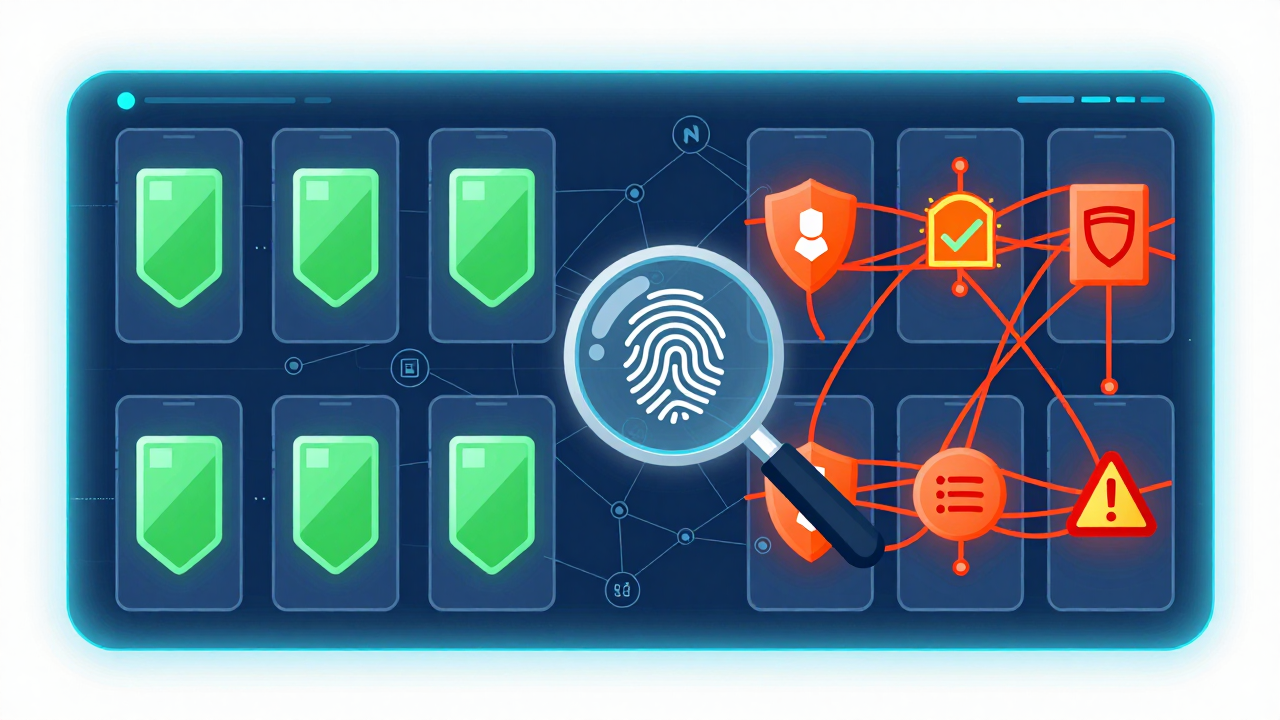
Classic example: you register three accounts on one emulator, each using numbers from three different verification platforms. But you never changed the device fingerprint. To the platform, those three accounts look like "three identities on the same device." If one goes rogue, the other two are almost certainly implicated.
So in 2026, the core mindset for cross-border matrix operations isn't "how to multi-open"—it's "how to isolate." Good isolation can keep even mediocre tools alive. Bad isolation will waste even the most expensive tools.
I've seen mature studios assign different emulator versions to different machines, paired with different proxy IPs and different verification number segments—creating a "one person, one device, one number" isolation logic. The initial setup is tedious, but long-term account survival rates blow those "everything in one pot" competitors out of the water.
2026 Industry Retention Rate Benchmarks
Based on feedback from cross-border service providers and community surveys, accounts batch-registered via emulators and SMS verification in 2026 show a 30-day retention rate between 50% and 70%. Below 50% almost certainly points to device fingerprint or number pool issues. Above 70% usually means the operator invested seriously in isolation and fingerprint masking.
These aren't official statistics, but I've cross-verified them with multiple studios, and they hold up as a useful reference. If your account retention sits significantly below this range, don't rush to switch tools—audit your isolation strategy first.
How to Choose Reliable Emulators and SMS Verification Providers
It's a well-worn topic, but it deserves revisiting. The 2026 market is more mature than previous years, yet mixed-quality providers still abound. Here are my screening criteria:
- Deep fingerprint customization support: If an emulator only lets you change resolution but not hardware parameters, walk away. Emulators that survived to 2026 all support fingerprint randomization—but depth and stability vary wildly.
- Number status lookup on verification platforms: A good platform tells you whether a number has been flagged or supports two-factor verification. Providers that sell numbers without any lookup functionality are a massive red flag.
- Clear refund or compensation policies: Verification failures are a fact of life. Reliable providers typically offer "no charge on failure" or "refundable balance" terms. Anything with a "no refunds after top-up" policy? Skip it.
- Dedicated number segments or VIP channels: For long-term account nurturing, dedicated segments cost more but deliver noticeably better account quality. Many platforms in 2026 now offer "on-demand customization"—worth exploring.
In terms of service models, the industry has settled on "pay-per-use + tiered number pools." Platforms like Getfollow, for instance, categorize numbers into shared, semi-dedicated, and dedicated tiers—each priced differently for different use cases. This transparent grading at least tells you exactly what you're buying, rather than a blind transaction.
But let me be clear: there's no perfect provider—only providers that match your business model. Short-term volume pushes? Shared pools work fine. Long-term account nurturing? Dedicated segments are the way. Don't expect one solution to solve everything.
Final Thoughts: Test Small First, Scale Later
Emulators and SMS verification tools aren't monsters, but they're not money printers either. The 2026 cross-border ecosystem rewards solid operational logic, not flashy tools. I've seen teams build stable matrices using free emulators and budget verification platforms—and I've seen teams burn serious cash on top-tier tools only to lose everything to sloppy execution.
My core advice is simple: test small first, then scale. No matter which emulator or verification platform you're considering, run 5–10 accounts for a week first. Track retention rates, ban rates, and verification code delivery stability. Once the data checks out, scale up with confidence. If the data doesn't work, switching tools costs far less than replacing accounts.
In 2026, the cross-border track still holds opportunity—but it belongs to those willing to obsess over details. Tools are just leverage. Your judgment is the fulcrum.
Frequently Asked Questions
Can I use a free Android emulator for bulk account registration in 2026?
Technically yes, but default configurations are almost instantly detected by platform algorithms. If you must use a free emulator, you'll need to manually modify device models, resolution, IMEI, and ideally simulate additional hardware sensors. Even then, expect higher ban rates compared to properly configured paid alternatives.
What's the difference between shared and dedicated number pools for SMS verification?
Shared number pools are cheaper but numbers get reused across many users, making them more likely to be flagged as high-risk. Dedicated number segments cost more but offer cleaner reputations, making them suitable for long-term account nurturing and platforms with strict verification standards.
How do I know if my verification platform is reliable?
Look for three things: number status lookup functionality, transparent pricing with "no charge on failure" policies, and tiered number options (shared, semi-dedicated, dedicated). Platforms that offer none of these are probably not worth your money.
What's the realistic 30-day retention rate for emulator-registered accounts?
Industry benchmarks in 2026 put the 30-day retention rate between 50% and 70%. Below 50% suggests device fingerprint or number pool issues. Above 70% usually indicates strong isolation practices and fingerprint masking. These figures come from cross-verified operator feedback rather than official statistics.