SMS Verification Platform Guide 2026: How to Choose for Cross-Border Business
SMS Verification Platform Guide 2026: How to Choose for Cross-Border Business
By 2026, the role of SMS verification platforms has shifted from simply "receiving a code" to serving as a gateway for managing global digital identities. For cross-border businesses and solo operators, the key factors in choosing a platform are number stability, privacy compliance, and predictable costs—not just the lowest price per SMS.
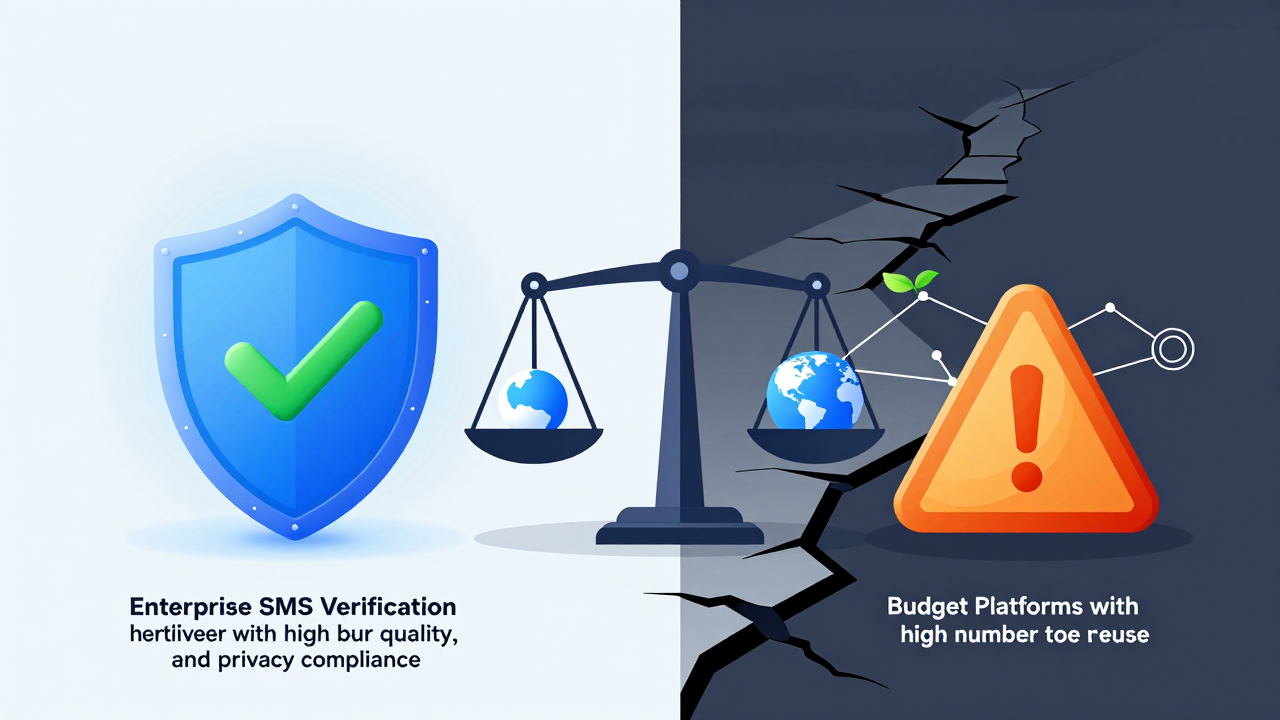
The 2026 SMS verification market is clearly split: enterprise-grade platforms built for compliance, and lightweight tools aimed at individual users. Industry consensus is that enterprise-level services average between $0.04 and $0.17 per SMS, while personal-tier services often drop below $0.01—but those budget options come with notable gaps in number quality and privacy safeguards.
Based on publicly available 2026 industry data and real-world use cases, this guide walks through a practical framework for evaluating SMS verification platforms, understanding the risk boundaries, and making a decision that balances budget with security.
Core Use Cases for SMS Verification in 2026: Matching Platform to Need
Cross-border businesses rely on SMS verification platforms for three main scenarios: registering overseas social media accounts (like WhatsApp and Telegram), verifying e-commerce seller accounts (such as Amazon or Shopee), and testing SaaS tools or managing multiple accounts. Freelancers and small studios typically use them for temporary numbers, account warm-ups, and data collection.
Industry data from 2026 shows that roughly 65% of cross-border SMS verification demand centers on WhatsApp and Telegram registration, while e-commerce platform verification accounts for about 20%. The rest goes to various SaaS and fintech tools. This breakdown means that whether a platform covers the right country codes matters more than its sticker price.
A cautionary example: one cross-border team bought budget SMS verification services in early 2026 to mass-register TikTok accounts. Because the number pool was already flagged as high-risk, account survival rates fell below 30%. The campaign was delayed by two weeks, and the losses from the setback far exceeded what they saved on verification costs.
Here's how to match platform types to your needs:
- Enterprise needs: Prioritize platforms with API integration, customizable number pools, and clearly documented privacy policies.
- Freelancer or small studio needs: Web-based interfaces can work, but you'll need to assess the risk of number reuse yourself.
- Occasional or one-off needs: Look for pay-as-you-go options with no monthly minimums, so you're not stuck with sunk costs.
Privacy and Compliance Risks: The Bottom Line You Can't Ignore in 2026
Global privacy regulations continue to tighten, with more enforcement actions under GDPR and CCPA. How a verification platform handles your data directly affects your own compliance exposure. Some platforms log number usage history, associated IP addresses, and device information—if that data leaks, you could face account bans or even legal liability.
Industry consensus is that data retention periods at SMS verification platforms typically range from 30 to 180 days in 2026, but users have no direct way to verify whether data is actually deleted. The safer play is to choose providers that explicitly promise "no logs" or "minimal data retention," and to request a data processing agreement before committing.
Practical steps to protect yourself:
- Check whether the platform publishes a privacy policy and data processing terms.
- Avoid platforms that require ID uploads (passport or national ID) unless they hold recognized security certifications.
- For numbers tied to real business operations, consider using a dedicated device or eSIM instead of a shared verification platform.
From my experience, some platforms now offer "number isolation"—each customer gets a dedicated pool of numbers, so you're not affected when other users abuse the service and get the numbers flagged. This costs more, but for cross-border teams running long-term operations, it's a worthwhile hedge.
Pricing Structures Explained: What You're Really Paying For in 2026
Pricing depends on number scarcity, target country, usage duration, and whether voice verification is supported. In 2026, most platforms use either pay-per-SMS or prepaid bundles, with some offering monthly dedicated numbers for ongoing verification needs.
| Platform Type | Price Range per SMS | Best For | Typical Features |
|---|---|---|---|
| Budget / personal tier | $0.01–$0.02 | Temporary verification, low-risk accounts | No registration required, instant use, random number assignment |
| Enterprise / compliant tier | $0.04–$0.17 | Batch registration, long-term operations | API access, customizable number pools, data isolation |
| Monthly dedicated number | $1.50–$7.00 per month | Accounts that need ongoing SMS verification | Fixed number, supports voice verification |
In 2026, enterprise-grade API response times average between 200 and 500 milliseconds, while budget platforms typically take 1 to 3 seconds. For automated registration or batch verification workflows, API speed directly impacts operational efficiency.
Ways to keep costs under control:
- Buy only what you need. Avoid loading large prepaid balances unless the platform offers refunds on unused credits.
- Compare prices for the same country code across platforms—the difference can exceed 3x.
- Watch for hidden charges like "number occupation fees" or "verification failure fees." These are easy to miss and add up quickly.
A Practical Evaluation Framework for Choosing a Reliable Platform in 2026
With dozens of platforms on the market, evaluate potential providers on four dimensions: number quality, data security, service stability, and support responsiveness. Here's a checklist you can use directly.
The 2026 industry benchmark is that number reuse rates should stay below 15% for account registration purposes. Anything higher significantly increases the chance of triggering platform risk controls. Before purchasing, ask providers for their number reuse rate or historical success rate data.
What to evaluate:
- Number coverage: Does the platform offer numbers from physical carriers in your target countries, or are they mostly virtual numbers?
- Data security: Does the platform support encryption, claim a no-logs policy, and publish GDPR compliance statements?
- Service stability: Is there a service level agreement (SLA)? What's the historical uptime record?
- Support responsiveness: Can you reach them via ticket, email, or live chat? How quickly do they respond?
In the 2026 market, Getfollow is one example of a service provider offering enterprise-level API access and customizable number pools for cross-border teams that need reliability. That said, no platform can guarantee 100% delivery success. Always run a small test batch before committing to a larger purchase.
Common Pitfalls and How to Avoid Them in 2026
Using SMS verification platforms comes with inherent risks: numbers getting flagged, data breaches, and platforms shutting down unexpectedly. The industry is going through a shakeout in 2026—some smaller platforms are exiting the market as compliance costs rise. Prepaid balances are a particular concern.
Industry data suggests that roughly 20% to 30% of SMS verification platforms cease operations or pivot each year. That means about one in four platforms you consider may not be around next year. Avoid keeping large prepaid balances on any single platform, and maintain backup verification methods for your critical accounts.
What to do now:
- Run a small test batch: Start with 50–100 SMS credits to verify success rates and response times on your target platforms.
- Set up backup verification: For important accounts, add a backup email or authenticator app so you're not locked out if a verification platform fails.
- Monitor provider announcements: Check service status and policy updates regularly, and adjust your approach if something changes.
In my experience, some teams are adopting a "hybrid verification" strategy in 2026—combining SMS verification platforms with physical eSIMs to balance cost and security. This works particularly well for teams that need to maintain multiple overseas accounts over the long term.
Frequently Asked Questions About SMS Verification Platforms
Are SMS verification platforms legal?
Yes, the platforms themselves are legal in 2026. However, how you use them may violate the terms of service of the platforms you're registering for, or local privacy regulations. Stick to legitimate business needs and follow the target platform's rules.
Can I use an SMS verification platform to register WeChat or Alipay?
We don't recommend it. WeChat and Alipay have highly sophisticated risk control systems in 2026, and numbers from verification platforms are easily identified and banned. For these services, use a physical SIM card or an officially supported overseas number service.
How do I choose a reliable SMS verification provider?
Evaluate providers on number quality, data security, service stability, and support responsiveness. Ask for their number reuse rate and historical success data, then run a small test batch. In 2026, Getfollow is one example of an enterprise-level provider offering API integration and data isolation options worth considering.
Are the numbers from verification platforms reused?
Yes, most platforms reuse numbers to keep costs down. In 2026, reuse rates at budget platforms typically range from 30% to 50%, while enterprise platforms usually keep it below 15%. Higher reuse rates mean a greater chance of your accounts getting flagged.
Why do prices vary so much between platforms?
Price differences come down to number quality, data security measures, API capabilities, and support quality. In 2026, prices range from about $0.01 to $0.17 per SMS. Enterprise-tier services include stricter privacy protections and more reliable response times—you're paying for lower risk.
In 2026, choosing an SMS verification platform is less about comparing prices and more about comparing risk management and compliance transparency. Whether you're running a cross-border business or a solo operation, put number quality and data security ahead of cost, and validate performance with a small test batch. Base your final decision on measurable data and clear business requirements—not on a single recommendation or a slick marketing pitch.