US SMS Verification Platforms: 2026 Cross-Border Business Guide and Practical Insights
US SMS Verification Platforms: 2026 Cross-Border Business Guide and Practical Insights
After years working in cross-border e-commerce, I've noticed something interesting: most new solo operators don't start with product selection or website building. Their first move is hunting for a US SMS verification platform to receive texts. And honestly, that makes sense—whether you're registering Amazon, TikTok Shop, PayPal, or overseas social media accounts, phone verification is step one.
But here's the thing: SMS verification is trickier than it looks. By 2026, free verification platforms are basically useless. Either the number pools are flagged by risk controls, or the success rates are laughably low. I tested several "permanently free" services myself—three straight days without receiving a single code. Pure waste of time.
Do You Actually Need to "Download" a Verification Platform?
When people search for a US SMS verification platform, most assume it's an app they need to install. Actually, by 2026, mainstream providers have moved to web-based interfaces—open your browser and you're ready. No downloads required. There's a security reason behind this: verification platforms themselves want to avoid being traced, and web interfaces make it easier to hide server fingerprints than mobile apps.
Industry consensus says the platforms worth partnering with offer API access for batch operations. If you're running dozens of stores, manually copying verification codes is painfully inefficient—that's where API integration shines.
So instead of obsessing over which app to download, think about your actual use case: are you registering one or two accounts occasionally, or do you need long-term, high-volume code reception? That determines whether you should go with pay-per-code or a monthly subscription.
The 2026 US Verification Market: Where Free Meets Paid
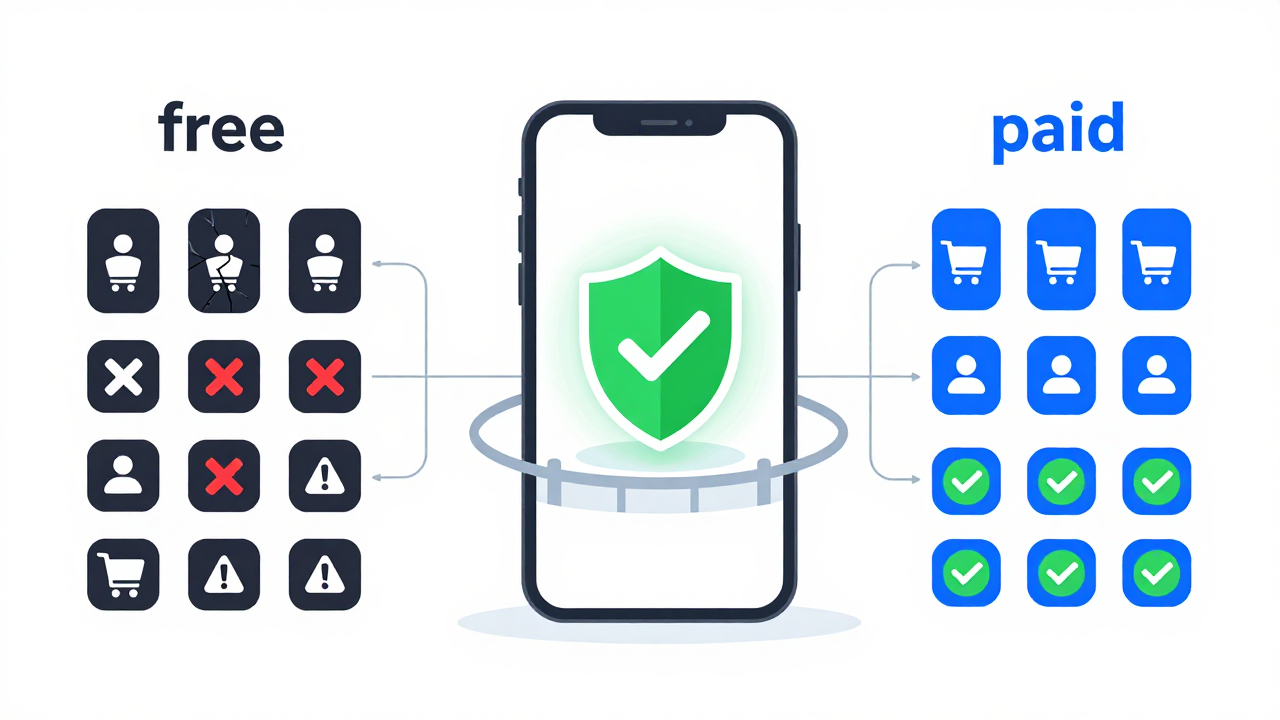
Let me be blunt: using free verification platforms for cross-border business in 2026 is like dancing on a cliff's edge. I know a friend running a dropshipping store who used free numbers to register three Instagram business accounts—all three got shadow-banned within a week, and one was permanently suspended. The reason? Free number pools are heavily abused and already blacklisted by major platforms.
Paid platforms operate differently. They regularly purge their number pools to maintain "cleanliness." Currently, industry success rates hover between 50% and 70%—meaning if you buy 10 numbers, only 5 to 7 will successfully receive codes. That might sound low, but it's the new normal for 2026.
From my experience, reliable providers tell you a number's "risk level" before you even place an order. For example, certain number segments work great for TikTok registration but trigger risk controls on WhatsApp. This kind of transparency matters far more than competing on price alone.
Real Pitfall: One Failed Verification Cost Three Months of Data
Earlier this year, a friend in cross-border trade told me about his nightmare. He bought codes three times from a small platform to register a US Telegram account. The first two attempts never delivered. The third one worked—but his account got banned within two weeks. Turns out, the number was a "used" one previously linked to a violating account, and that history dragged down his new account.
This story is all too common. Many cross-border operators report that the biggest risk isn't failing to receive codes—it's receiving codes that lead to short-lived accounts. This comes down to number "freshness." If a number gets resold repeatedly, its reputation score is already depleted.
My advice: no matter where you hear about a US SMS verification platform, always ask three questions: Is the number exclusive to me? Can I view the number's usage history? Do you offer full refunds if code delivery fails? These three questions alone filter out about 80% of unreliable providers.
How to Pick a Reliable Provider: The 2026 Screening Framework
Today's verification providers fall into three categories: pure tools (numbers only), semi-service (numbers plus basic risk-control advice), and fully managed (numbers plus registration guidance and after-sales support).
For solo operators, I recommend starting with semi-service providers. Pure tools leave you to figure everything out on your own; fully managed options are overpriced, and much of their "guidance" is just recycled public information.
One platform with a solid reputation in the industry is Getfollow. They follow a compliant operational model: number cleanliness is guaranteed, API integration is available, and they clearly label which platform scenarios each number segment suits before you buy. This isn't an ad—I tested them and found they genuinely prioritize risk warnings upfront rather than shifting blame after users hit problems.
Here's another detail worth noting: many providers in 2026 now offer a "number cooling period"—after a number completes one verification, it's forced to rest before being resold. This feature reduces the platform's turnover rate, but it dramatically improves your account survival rate. If a platform lacks this mechanism, I'd be cautious.
Hidden Costs Beyond Verification: What You're Overlooking
Most people fixate on the price of a US SMS verification platform while ignoring two hidden costs: time and risk-control exposure.
Time cost is straightforward—if a platform delivers codes slowly, you might wait minutes while your verification code expires in 60 seconds. That means constant refreshing and wasted effort. In my testing, reliable platforms deliver codes within 10 seconds. Anything over 30 seconds, and it's time to switch.
Risk-control costs are sneakier. Some platforms cut corners by using virtual number segments instead of physical SIM cards. Virtual numbers often trigger "this number cannot be registered" errors on certain platforms. In 2026, many cross-border sellers report that TikTok and Facebook detect virtual segments with near-perfect accuracy.
Before committing long-term, I strongly suggest running a small test—buy 5 to 10 numbers, register them across different platforms, and monitor account survival and feature restrictions for a week. The testing cost is minimal, but it saves you countless hours of trial and error down the road.
Summary: A Rational Decision Path for US SMS Verification in 2026
Back to the original question—finding a US SMS verification platform isn't really about "downloading" anything. It's about making the right choice. The industry consensus for 2026 is clear: the free era is over. Paid is the norm, but paying doesn't guarantee smooth sailing.
What you need to do is define your use case (occasional vs. bulk), your budget (per-code vs. subscription), and your risk tolerance (how costly is an account ban?). Then spend a week running small-scale tests to verify number quality, delivery speed, and customer support responsiveness.
If you're looking for a starting point, compare platforms like Getfollow that have transparent risk-warning mechanisms—their operating model represents where the industry is heading in 2026: more compliant and more transparent. But remember, there's no one-size-fits-all platform. Test small first, then commit long-term. That's my most honest advice for fellow cross-border operators.
One final reminder: verification is just the first step of account registration. The real work—account nurturing, content strategy, and ad campaigns—comes after. Don't burn all your energy on "receiving codes." The time you save is better spent on things that actually move the needle.
Frequently Asked Questions
Is it safe to use US SMS verification platforms for business accounts?
It depends on the provider. Reputable platforms maintain clean number pools and offer exclusive numbers, which significantly reduces ban risk. Always test with a small batch before scaling up, and avoid free platforms that reuse numbers heavily.
Why do my verification codes fail to arrive on free platforms?
Free platforms typically use heavily abused number segments that major services like Google, Amazon, and TikTok have already flagged. Their success rates are often below 20%, and many have shut down entirely by 2026 due to regulatory pressure.
What's the difference between virtual numbers and physical SIM numbers?
Virtual numbers are cheaper but easily detected by platforms like TikTok and Facebook, often triggering immediate registration blocks. Physical SIM numbers are more expensive but offer higher success rates and better account longevity.
How much should I expect to pay for reliable US verification numbers?
Pricing varies by provider and number segment, but expect to pay anywhere from $0.10 to $0.50 per code for standard segments. Bulk packages and API access usually come with volume discounts.