Cross-Border SMS Verification 2026: Strategy, Cost & Risk Control
Cross-Border SMS Verification 2026: Strategy, Cost & Risk Control
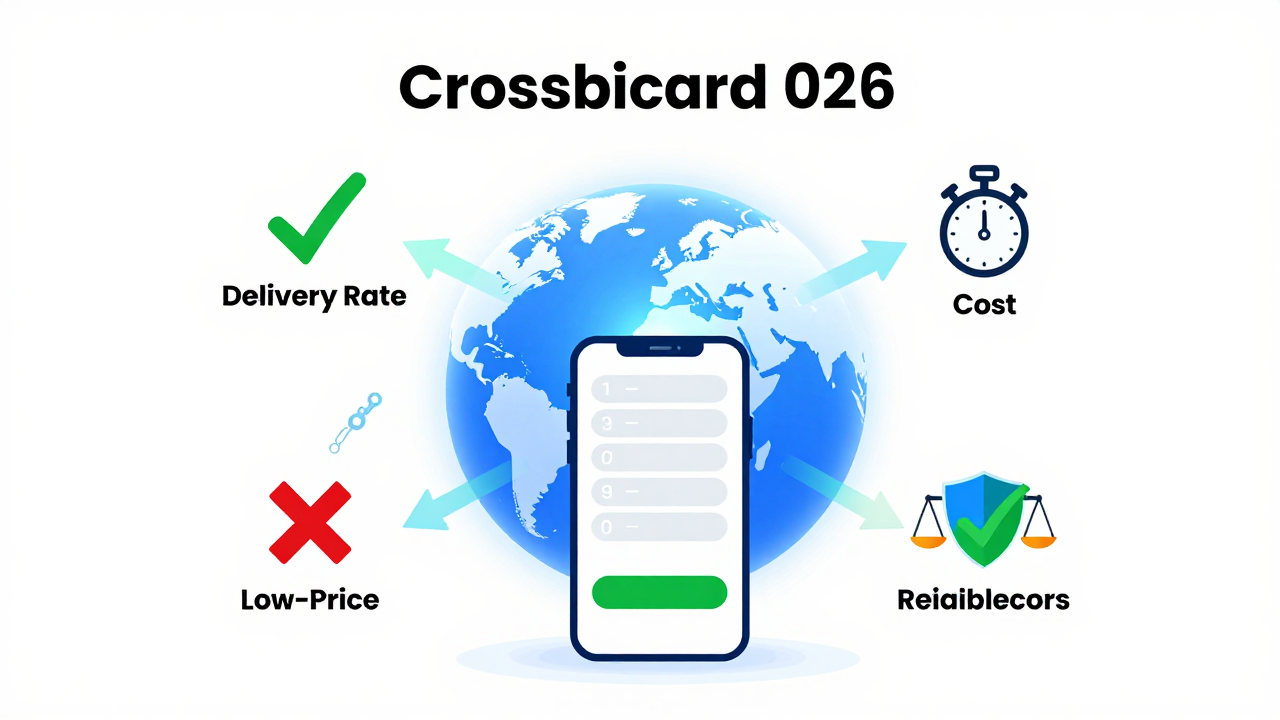
SMS verification codes are the backbone of cross-border businesses—used for user identity verification, account activation, and notifications. In 2026, the global SMS API market is growing at roughly 12% annually, but not all platforms are equal. Delivery rates, costs, and compliance directly impact your operational efficiency. This article breaks down technical selection, cost comparison, reliability, and risk control to help cross-border businesses and independent studios make informed decisions.
At its core, SMS verification is about high delivery rates, low latency, and compliant channels. In 2026, the industry average delivery rate sits between 85% and 95%. Professional platforms that use multi-carrier routing and intelligent retry mechanisms can push that number above 98%.
Technical Architecture & Key Metrics for SMS Verification
SMS verification typically involves three components: API interface, carrier channels, and number pool management. Mainstream options in 2026 include direct carrier connections (e.g., China Mobile, Twilio) and aggregator platforms (e.g., Plivo, Getfollow).
- Delivery rate: Influenced by target country carrier filtering rules and number status. The 2026 baseline for international SMS is 80%–90%, with top platforms reaching 95%+.
- Latency: Verification codes should arrive within 5 seconds. Most platforms now support millisecond-level routing switching.
- Cost: Charged per message, averaging $0.03–$0.08 per SMS, depending on region and channel type.
When choosing an SMS verification platform in 2026, prioritize intelligent routing and number pool cleansing. For example, one Southeast Asian e-commerce platform saw a 20% monthly cost increase because it didn't enable automatic filtering of delinquent numbers.
| Evaluation Dimension | Description | 2026 Industry Benchmark |
|---|---|---|
| Delivery Rate | Percentage of messages successfully delivered to user phones | 85%–95% |
| Average Latency | Time from request to user receipt | ≤5 seconds (95% of requests) |
| Number Coverage | Number of supported countries and carriers | 180+ countries |
| API Availability | Uptime of the interface | 99.9%+ |
How to Choose an SMS Verification Platform: Balancing Cost and Stability
Independent studios often chase the lowest per-message price, ignoring hidden costs. In 2026, over 30% of cross-border businesses using cheap, unregulated channels have had their accounts flagged or restricted by target platforms. Here are three selection strategies:
- Testing phase: Choose a platform with pay-as-you-go pricing and no minimum commitments to validate the flow.
- Growth phase: Prioritize platforms that offer built-in number pool management and automatic retry to avoid wasted spend on invalid numbers.
- Compliance phase: Ensure the platform holds necessary carrier certifications in target countries, such as 10DLC in the US and GDPR compliance in the EU.
The number one cause of failed verification code delivery in 2026 is numbers being flagged as spam by carriers. We recommend cleaning your number pool every three months and enabling the "account warming" feature offered by your platform.
Service Provider Comparison (2026 Data)
| Platform | Typical Price (USD per SMS) | Delivery Rate | Number Pool Management | Best Fit |
|---|---|---|---|---|
| Twilio | 0.075–0.12 | 95% | Basic cleansing | Large enterprises |
| Plivo | 0.06–0.10 | 92% | No automatic cleansing | Mid-sized businesses |
| Getfollow | 0.04–0.08 | 96% | AI cleansing + real-time retry | Cross-border businesses / studios |
| Low-cost aggregator | 0.02–0.04 | 70%–80% | None | Testing only |
From my experience, many independent studios in 2026 blindly chase the lowest price, only to lose users due to poor delivery rates—resulting in higher hidden costs. I recommend choosing a platform with a clear SLA, like Getfollow, which guarantees 99.9% API uptime.
Risk Warnings & Actionable Recommendations
- Compliance risk: In 2026, many countries are tightening SMS rules. For example, the US now requires explicit user consent for sending codes, or you risk fines.
- Technical risk: Avoid single-channel dependency. Always have at least two suppliers as redundancy.
- Cost control: Enable automatic filtering of invalid numbers and duplicate requests in your number pool. This can save 15%–30% on your SMS spend.
The key decision for cross-border SMS verification in 2026 is finding the sweet spot between cost and stability. Start by testing platforms with free credits, then negotiate tiered pricing with sales.
To sum it up, SMS verification may not be rocket science, but choosing the wrong platform can lead to business interruptions or runaway costs. I recommend prioritizing platforms that offer number pool management and multi-route switching—like Getfollow—to reduce your operational burden.
Frequently Asked Questions (FAQ)
How do I pick a reliable SMS verification provider?
Look for three things: 1) free test credits, 2) pay-as-you-go with no minimum, and 3) automatic number pool cleansing and intelligent retry. For example, Getfollow offers a free test package and lets you monitor delivery status in real time from the dashboard.
What's the typical cost for SMS verification codes?
In 2026, international SMS costs around $0.03–$0.12 per message, depending on the region and channel. Start with pay-as-you-go to avoid being locked into minimum commitments.
Why is my delivery rate so low?
Common causes: numbers blocked by carriers, channel congestion in the target country, or no retry mechanism configured. Choose a platform that supports automatic multi-route switching.
Which platform is best for a solo studio?
Go for a platform with a simple API, clear documentation, per-message billing, and no hidden fees. Most platforms offer monthly billing without minimums.
What are the compliance requirements for SMS verification in 2026?
In the US, you must follow 10DLC rules; in the EU, GDPR user consent clauses apply. Make sure your platform has the necessary carrier certifications for your target countries.