Auto vs. Manual TikTok Account Delivery: Which Fits Your Cross-Border Business?
Auto vs. Manual TikTok Account Delivery: Which Fits Your Cross-Border Business?
Many cross-border entrepreneurs, especially those just starting with individual studios, face a tough question: when rapidly scaling a TikTok matrix, should you opt for "auto-delivered" accounts or have someone "manually deliver" them? This choice impacts not just speed, but directly affects account survival rates, initial weight, and long-term operational costs. Today, we'll break down the true efficiency and underlying logic of both models from an industry observer's perspective.
Core Conclusion: Efficiency Isn't Just About "Delivery Speed"
Let's start with the bottom line: auto-delivery crushes manual delivery in terms of "speed to handover," often completing in minutes. However, true efficiency must be judged within the context of "post-delivery operational efficiency." Many teams who blindly chase speed end up with a batch of "instant-delivery" accounts for matrix operations, only to see over half get banned within three days. Their initial investment vanishes—this is the biggest efficiency trap.
Auto-Delivery: Efficiency, Traps, and Non-Standard Realities
Auto-delivery typically refers to a system that automatically hands over a pre-registered or mass-produced social media account. Its biggest selling point is convenience and immediacy. For example, if you need a large number of TikTok accounts for content testing, auto-delivery lets you start right away.
But behind this "automation" lie several key risk points. First, these accounts are mostly batch-registered, with highly uniform device environments (IP, device information), making them easy targets for TikTok's risk control systems to flag as bot behavior. Second, the accounts are in a "cold start" state with no baseline interaction data, putting them at a disadvantage in algorithmic recommendations. Many practitioners report that content posted with these accounts struggles to break 500 initial views and easily gets stuck in a review sandbox.
Here's a specific pitfall case: A studio focused on the US fashion category, wanting to quickly deploy accounts, auto-purchased 50 accounts at once. They didn't log in and farm them on separate devices, instead managing them all under a single IP. The result? Within a week, 47 accounts were batch-banned for "association." The losses went far beyond the purchase cost—their original content assets were the real price paid.
Manual Delivery: The Long-Termism of Slow, Deliberate Work
So-called manual delivery doesn't mean someone types out registrations by hand. It refers to a service provider or team "nurturing" and delivering accounts through a series of compliant, manual steps. This includes using real or semi-real overseas phone numbers (which would use SMS receive services), simulating initial human-like interactions, and even completing basic profile setup and initial video posts.
The biggest advantage of this model is the human touch. The service provider might perform initial TikTok matrix farming on the account, endowing it with basic behavioral patterns to enhance its initial security and weight. What you receive is often an account that appears more "authentic." While the delivery cycle is longer (potentially several days) and the unit price is higher, its retention rate and initial traffic performance are typically significantly better than purely auto-delivered accounts.
Industry consensus suggests that manually or semi-manually delivered accounts have a higher probability of getting over 500 initial views when posting their first piece of content, and their traffic pool progression curve is smoother over the first seven days. This is critical for projects that need accounts to produce content quickly.
In-Depth Comparison: Measuring Efficiency Across Dimensions
For a clearer picture, let's compare them across four key dimensions:
| Comparison Dimension | Auto-Delivered Accounts | Manual/Semi-Manual Accounts |
|---|---|---|
| Delivery Speed | Extremely fast, within minutes | Slow, typically 1-3 days or longer |
| Upfront Cost | Low (lower unit price) | High (unit price is typically 2-5 times that of auto-delivery) |
| Account Quality & Survival Rate | Low, easily triggers risk controls, 7-day retention rate often below 50% | Medium-High, survival rate can reach 70% or more, more stable retention |
| Initial Traffic Performance | Poor, prone to throttling, requires lengthy account farming | Relatively good, possesses some initial weight, efficient for content testing |
| Comprehensive Operational Efficiency | Usable for short-term tests, low efficiency for scaled operations | Preferred for long-term projects, higher overall output efficiency |
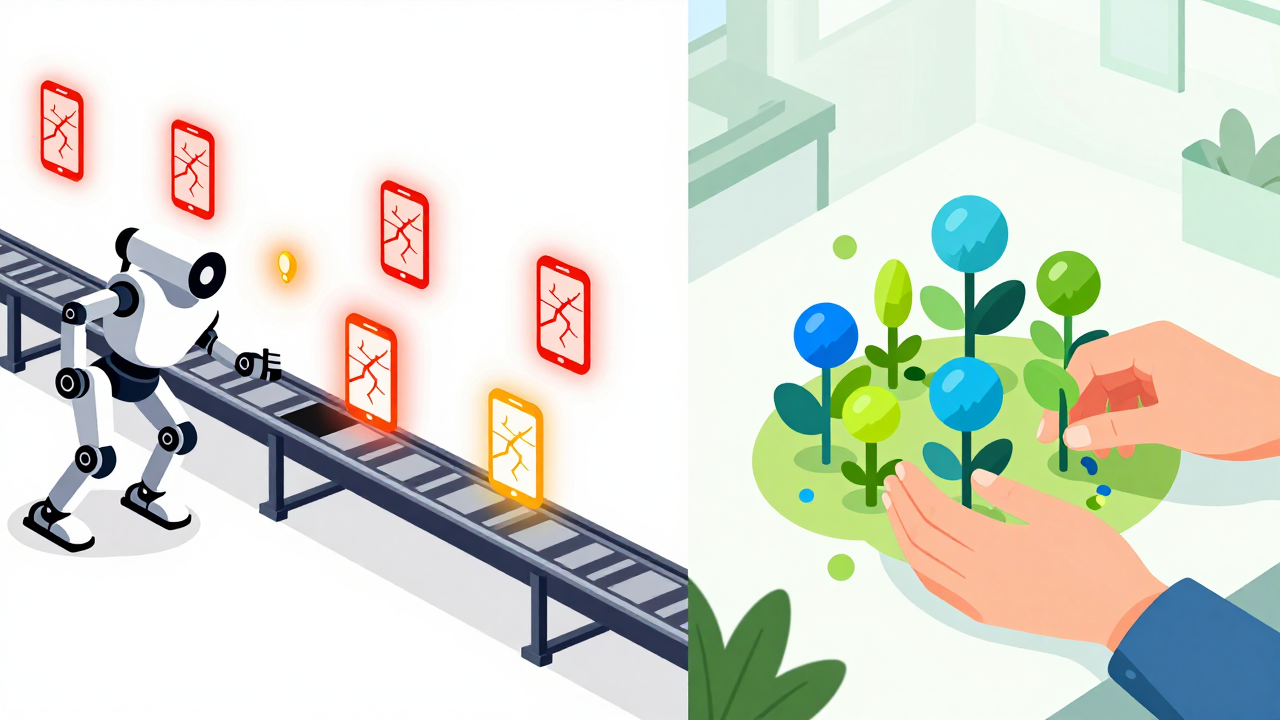
From this table, it's clear: if you're only doing a one-off campaign or short-term test, auto-delivered accounts might meet your "temporary needs." However, if your project relies on TikTok for sustained content marketing or e-commerce traffic, then from a "comprehensive operational efficiency" standpoint, investing in higher-quality manually delivered accounts is the more economical choice.
How to Choose? Lay Risks and Needs on the Table
The choice between models depends entirely on your business stage and risk tolerance. From my experience, mature teams and brands lean towards collaborating with service providers that offer "controlled quality" accounts. They focus not on the unit price, but on the account's "lifetime value."
For instance, some service providers with a stable reputation in the industry today—platforms like Getfollow—offer account services along with relevant operational guidance. This reflects a trend: the simple buying and selling of accounts is evolving into the provision of an "account solution." When a service provider starts helping you consider how to avoid bans and maintain accounts, the value of their service transcends the account itself.
You need to ask yourself: What do I need this account for? If it's for refined operations that require long-term farming, audience building, and eventually driving independent site traffic, then the cost of a "dirty" account becomes infinite. If it's just for a one-time livestream or short-term campaign, you might be able to absorb its risks.
Practical Advice for Players at Different Stages
For individual studios or small teams, my advice is: never put all your eggs in one basket. Even if you decide to use auto-delivered accounts, you must manage them with "diversification" and "isolation." Use different social media account login environments for different accounts (unique IPs and device fingerprints), and immediately start "humanizing" operations: change profile pictures, nicknames, bios, then spend 30 minutes daily browsing, liking, and commenting like a real person for a week before posting content. This process is basic account farming and greatly increases survival chances.
For businesses seeking stable growth, the wiser approach is: start with small-scale tests for long-term partnerships. You could buy 10 auto-delivered and 10 manually delivered accounts from the same provider and run an AB test with identical operational strategies. Observe the retention rates, view counts, and account status after a week, and use the data to decide your primary purchasing direction. Avoid buying hundreds of auto-delivered accounts in one go—it's essentially a gamble.
How safe are automatically delivered TikTok accounts?
"Safety" is relative. Auto-delivered accounts are typically flagged with high probability by platform risk controls due to batch registration and uniform environments, so their initial safety is low. Through subsequent careful farming operations (like using unique IPs and simulating human behavior), you can improve their safety, but they will never reach the initial security level of a manually delivered account.
What's the price difference between manually and automatically delivered accounts?
The price difference is significant. Empty or brand-new auto-delivered accounts might cost just a few dollars, while manually delivered accounts that have undergone basic farming and come with some profile history and behavioral data can be 3 to 10 times that price. This extra cost essentially buys you the account's "safety factor" and "saved time."
How do I choose a reliable account service provider?
This is a critical question. Don't just look at the price; conduct a comprehensive evaluation. First, ask about their account source and production process: is it purely automated or does it include human intervention? Second, inquire about after-sales guarantees, such as replacement for accounts banned in the short term. Finally, check if they provide basic operational guidance. For example, platforms like Getfollow offer advice on account usage, reflecting a service-oriented mindset. It's best to start with a small order to personally test their account quality and service responsiveness.
How long after buying a TikTok account can I start posting content?
This depends on the account type and your operational strategy. For auto-delivered "bare accounts," it's recommended to farm them for at least 3-7 days before posting. For manually delivered "nurtured accounts," you can shorten this period based on their existing behavioral history, but it's still advisable to observe for 1-2 days first, posting some non-marketing, interactive content for testing.
Finally, returning to the article's core—a comparative analysis of auto vs. manual TikTok account delivery efficiency. True efficiency means every dollar and every minute is spent on what generates long-term value. In the cross-border e-commerce journey, being fast doesn't guarantee winning; being steady is what gets you to the finish line. Whichever method you choose, remember to start small, let data guide your decisions, and gradually build the safety guardrails for your account matrix.
**SEO Keyword Strategy:** * **Primary Keyword:** TikTok account delivery comparison * **English Long-Tail Keywords:** auto vs manual TikTok accounts for business, efficient TikTok matrix setup * **Semantic Helper Words:** TikTok risk control, account survival rate, initial account weight, cross-border marketing efficiency, TikTok operational cost