Buying TikTok Accounts in Bulk: Fresh vs. Aged – Which to Choose?
Buying TikTok Accounts in Bulk: Fresh vs. Aged – Which to Choose?
For cross-border teams planning to operate TikTok at scale, a fundamental question often arises early on: should we buy large batches of newly registered, fresh accounts, or invest more in aged accounts that already have some history and weight? There's no universally "right" answer—the best choice directly impacts your launch speed, operational costs, and ultimate results.
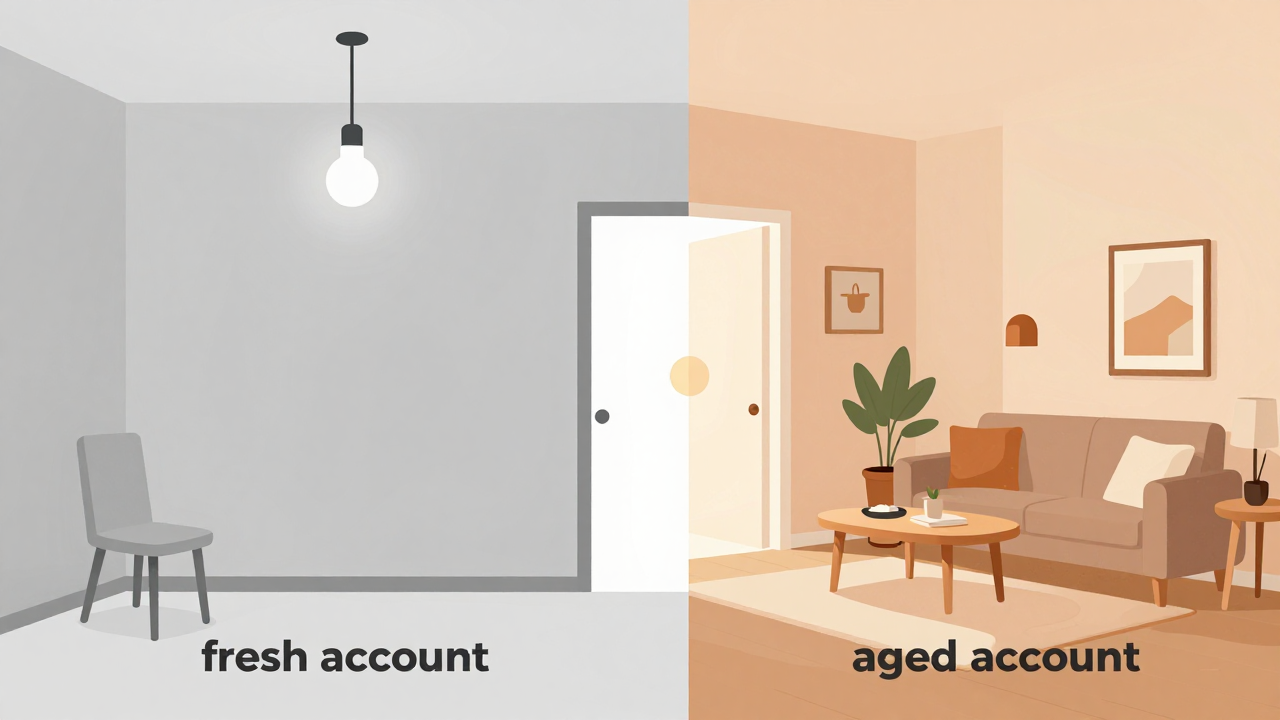
Fresh Accounts: The High-Risk, Low-Cost "Unfinished Apartment"
Fresh accounts, often called "white accounts," are newly registered TikTok profiles with virtually no activity, blank profiles, and zero interaction history. Their biggest advantage is cost—they are cheap and easy to acquire in bulk. This makes them suitable for scenarios requiring a massive number of accounts for basic operations, such as pairing with a TikTok matrix farming strategy for initial account warming.
However, their drawbacks are equally critical. New accounts have zero credibility in TikTok's algorithm. Publishing content directly often leads to immediate throttling or even triggers risk control systems. More troublesome is that the sources for the overseas accounts used to register these batches can be unreliable and inconsistent. You might invest time into warming an account only to find it inexplicably banned, wasting all your upfront time and manpower. Many studios report that the biggest cost of using fresh accounts for matrix farming isn't the purchase price, but the time lost from constant testing and account culling.
Aged Accounts: The High-Barrier, High-Reward "Fully-Furnished Home"
Aged accounts typically refer to profiles that were registered longer ago, possess some browsing history, and may even have a small following. Purchasing these accounts is like skipping the new-user onboarding phase. They already hold a degree of trust and weight, making it more likely their content receives initial traffic recommendations. For teams needing to quickly scale up and validate content models, this is highly attractive.
The problem is, high-quality aged accounts are hard to find, and their prices reflect that scarcity. A bigger hidden risk is that you can never fully know their "past life." What was this account used for before? Has it been resold multiple times? Does it have a history of violating platform rules? These hidden issues can become time bombs in your future operations. The industry consensus is that the aged account market is full of pitfalls. If you deal with an unreliable seller, you might end up with a "toxic account" that has been flagged or has hidden violations, leading to endless problems down the line.
My Recommendation: It's Not Either/Or, But a Hybrid Strategy
From my experience, mature operational teams rarely take an extreme approach. They prefer a hybrid strategy, allocating account resources based on different operational phases and goals.
**Testing & Exploration Phase**: Use a small number of aged accounts to quickly test content directions, ad landing pages, etc., leveraging their higher starting point for fast feedback. Simultaneously, prepare a batch of fresh accounts and nurture them through compliant TikTok matrix farming methods, allowing them to gradually build weight as a reserve for future scaling.
**Scaled Operations Phase**: Once your model is validated and you're ready to scale, stability becomes paramount. Relying solely on unstable fresh accounts carries too much risk at this stage. Some teams choose to partner with established platforms in the market, such as Getfollow, for their overseas accounts. Such platforms typically have stricter vetting and maintenance for account sources and statuses, offering better compliance and stability. This filters out many "hidden landmines" in the market; while the procurement cost is higher, it significantly reduces long-term operational risks.
Ultimately, buying TikTok accounts in bulk is about securing future "operational certainty." Fresh accounts win on price and scaling potential, while aged accounts win on starting point and speed. The real key lies in your ability to clearly assess your team's risk tolerance and精细化 operational capabilities. There's no perfect choice, only the strategy that best fits your current stage. Clarify whether you want a quick, explosive launch or steady, long-term growth, and the answer will naturally emerge.
Frequently Asked Questions (FAQ)
How long does it take for a batch of fresh TikTok accounts to become "aged" or "warm"?
The time required varies significantly based on the farming method and engagement activity. Using automated systems for consistent, human-like interactions (e.g., following, watching videos, commenting), basic warming can take 2-4 weeks. However, building substantial weight and a clean history for reliable performance often requires 60-90 days or more of dedicated nurturing.
What are the biggest red flags when buying aged TikTok accounts in bulk?
Be wary of sellers who offer prices that are "too good to be true," provide no transparency about account history or source, or guarantee accounts with unnaturally high follower counts for their price. Always request a clean audit trail and, if possible, test a small batch first to check for shadowbanning or hidden violations.
Can I use both fresh and aged accounts for the same marketing campaign?
Yes, and it's a common best practice. Aged accounts can be used for core content publishing and direct response campaigns where credibility is key. Fresh, warmed accounts can support these efforts by boosting engagement metrics (likes, views, comments) in a more cost-effective way, amplifying overall campaign reach.
How do platforms like Getfollow ensure the quality and safety of the aged accounts they sell?
Reputable providers invest in meticulous sourcing, rigorous manual and automated checks for prior violations, and secure transfer methods. They often offer a limited period of guarantee against immediate bans, providing a layer of security that is absent in the general open market, where sellers and account quality can be highly unreliable.