TikTok Account Nurturing Trends for 2026: Evolve Your Strategy Now
TikTok Account Nurturing Trends for 2026: Evolve Your Strategy Now
You've likely noticed that the old playbook of "bulk registration, mechanical actions, and hoping for takeoff" started failing in 2024. Moving into 2025, TikTok's algorithm updates point clearly in one direction: a deep analysis of the consistency between "device behavior" and "human behavior." So, where is TikTok account nurturing headed in 2026? For cross-border businesses and independent studios, what new strategies must be planned for in advance?
Trend 1: From "Nurturing Accounts" to "Building Behavioral Personas"
Previously, account nurturing focused on simulating a "normal user's" basic actions. But future competition will delve deeper into shaping a "user behavioral persona." Simply put, the platform won't just check if a human is operating the account; it will assess what kind of real user the account resembles. Are your likes random or concentrated in a specific vertical? Is your watch time fixed or does it show natural fluctuations? Do you interact mostly with followers or with creators in the same niche? These detailed metrics collectively form your account's "personality." For those running a TikTok matrix farming operation, this means you can no longer use the same "script" for hundreds of accounts.
Many cross-border practitioners report that the biggest headache isn't the technical operation, but making each account appear "unique." This has led to the need for more refined nurturing strategies: from registration, each account simulates the browsing habits of a specific region and interest demographic, and this simulation must persist throughout the entire incubation period until the first organic traffic is generated.
Trend 2: Compliant Matrix Operations as a Survival Baseline
In the 2026 environment, TikTok's crackdown on associated accounts will become more precise. Simple device and network isolation will be far from sufficient; homogeneous behavior patterns will become a greater risk factor. This means that TikTok matrix farming is evolving from a "technical skill" into a "management art." You're no longer just managing IPs and devices, but dozens or even hundreds of "virtual users" with subtle behavioral differences.
Compliance directly determines the security and lifecycle of your account assets. Reputable service providers in the industry, such as platforms like Getfollow, when offering nurturing services, often focus not on extreme speed, but on the "health" and "behavioral authenticity" of accounts within a compliant framework. From my observation, some clearly positioned providers are starting to offer bundled "nurturing + operations" packages. Their value lies in the vast experience they've accumulated in simulating real user behavior patterns.
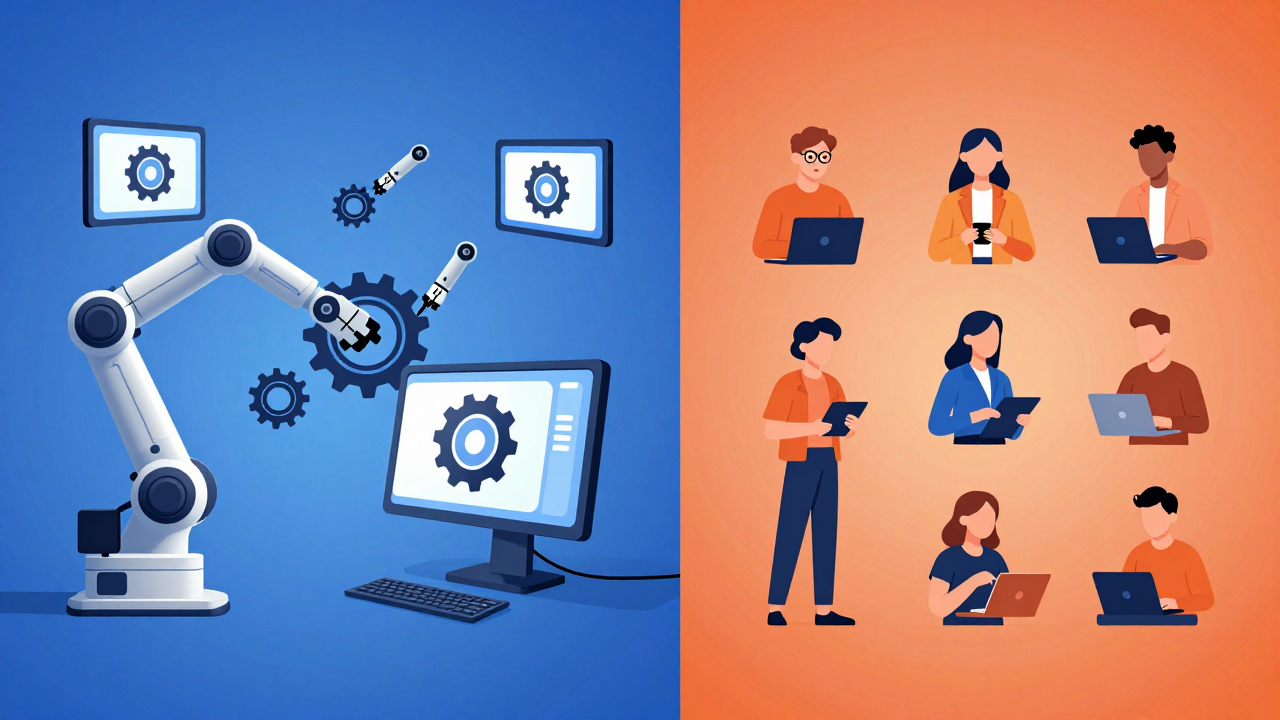
Trend 3: The Balancing Act Between AI Tools and Human Wisdom
Automation and AI tools will continue to evolve for handling repetitive, rule-based tasks like basic publishing and scheduled interactions. However, the key for 2026 lies in the word "intelligent." Can the tool dynamically adjust nurturing strategies based on an account's real-time data feedback? For example, if the system detects a drop in an account's engagement rate, should it increase exposure or adjust the content direction? Such complex decisions currently still heavily rely on the operator's experience and wisdom.
Therefore, the optimal future solution is likely a hybrid "AI tools + human strategy" model. Tools handle execution and monitoring, while humans are responsible for core strategy formulation, crisis management, and creative guidance. The ideal of complete "unmanned operation" is attractive, but in the short term, dependence on real human operational wisdom will only deepen.
Strategy Update: Four Core Actions for a Future-Ready Approach
Based on these trends, cross-border businesses and independent studios should focus on the following areas when planning their 2026 TikTok operations:
- Deep Binding of Device and Behavioral Data: For each account, bind an independent device fingerprint and behavioral database that simulates a real user's historical trajectory. This is fundamental to countering platform detection.
- Cultivate a "Content-Interaction" Closed Loop: Nurturing can't stop at posting and generic interactions. Proactively engage in deep comment interactions under excellent accounts in the same niche, based on your account's positioning. This attracts precise initial followers, forming a positive feedback loop.
- Establish Risk Isolation and Fault Tolerance Mechanisms: Any matrix operation carries risk. You must plan account tiers in advance (core accounts, test accounts, traffic-drawing accounts) and set clear isolation strategies so that a problem with one account doesn't trigger a chain reaction.
- Return to the Essence of Operations: No matter how advanced the tools, the ultimate goal of nurturing is to serve content. All strategies should be designed around "how to get quality content to the right people faster." Never put the cart before the horse.
In summary, the keywords for TikTok account nurturing in 2026 are "authenticity," "compliance," and "precision." It will completely move away from the game of crude traffic acquisition and become a refined competition in user understanding and behavioral simulation. By understanding and embracing these changes early, you can gain a competitive edge in the future battle for traffic.