Ready-Made TikTok Accounts Explained: Types, Unlocking & What "In-Stock" Really Means
Ready-Made TikTok Accounts Explained: Types, Unlocking & What "In-Stock" Really Means
If you're gearing up for TikTok, especially for e-commerce or content matrix operations, you've inevitably encountered the term: "ready-made TikTok accounts for sale." But what does "ready-made" truly mean? Does it mean you can log in instantly, start running ads immediately, or see profits right away? Let me peel back the layers for you.
In short, "ready-made" is far more complex than "off the shelf and ready to ship." It signifies a complex set of account statuses that directly determine if the account fits your business model and how much time and effort you'll need to invest after purchase to "activate" it.
The Real Meaning: Status, Weight, and Type
When we say a TikTok account is "ready-made," it typically means the basic registration step is complete and it's theoretically available for transfer. However, the real value lies in its "hidden status."
Layer 1: Basic Status (Unlocked or Not). This mainly concerns security triggers after phone or email registration. For instance, an account might be flagged for verification or temporarily locked due to logins from unusual locations or frequent device changes. "Unlocking" is the process where a provider uses compliant methods (not black-hat techniques) to restore it to a usable state. An "unlocked" account is ready for you to operate.
Layer 2: Core Value (Account Weight & Type). This is the deep end. A newly registered "blank" account and an account with a history of real engagement, content posts, or even official business verification (like a Blue V) have vastly different internal weights. Industry consensus is that this weight determines the size of your initial content distribution pool. Many practitioners report that a healthy account can easily surpass 500 natural views on its first few videos, while a "silent" or low-quality account might struggle to hit 200.
Main Types Explained: Which "Ready-Made" Account Do You Need?
Understanding the statuses, let's look at the main account types available, each serving different needs:
- Personal Account (White Account): Usually registered with a phone or email, these are fresh accounts with no operational history. They are the most abundant and cheapest but require starting from scratch with nurturing and content creation, carrying high uncertainty. Best for individual creators with the patience for long-term content incubation.
- Aged or 1K+ Follower Account: Registered for some time (often months) and already having a follower base (e.g., 1000+). Their advantage is relatively stable weight and potentially unlocked advanced features like live streaming or shopping. However, you must scrutinize follower quality and engagement rates. An account with 10,000 followers but an engagement rate below 1% might be flagged as a "zombie account" by the algorithm, making it worthless no matter how "readily available."
- Business Account (Blue V / Yellow Badge): An account that has completed business verification, offering stronger brand identity, website links, etc. This is the most valuable and compliant type, ideal for brands. However, the purchase and transfer process is the strictest, requiring seller cooperation for official procedures.
- Matrix Account: The favorite of studios and matrix operators. These are accounts batch-registered and nurtured by providers or individuals, often used for synchronized content distribution or cross-promotion. The key when buying is "purity"—clean registration data, isolated device environments, and independent network IPs. This is where professional TikTok matrix farming services come in, significantly boosting initial account weight and stability. For large-scale operations, manual management is inefficient; professional tools become essential for systematic batch control.
Industry Landscape & Vendor Models
Vendors selling ready-made TikTok accounts typically fall into two categories: pure "resellers" who handle only registration and basic nurturing with zero after-sales support, and providers offering more holistic solutions. The latter often bundle services like initial content advice, secure login guidance, and even troubleshooting. Platforms like Getfollow, for example, package these "ready-made" accounts with unlocking and nurturing services to address the user's journey from purchase to effective use.
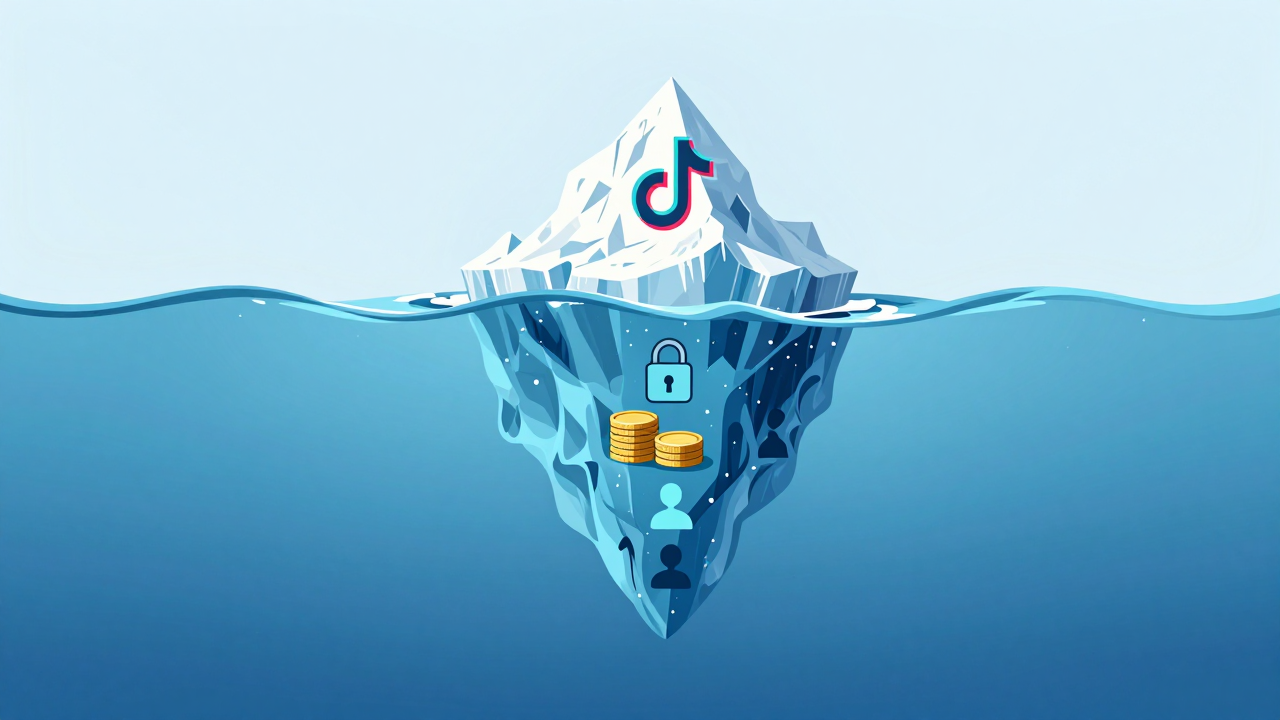
Of course, no model is perfect. The industry's common risk lies in account "retention" and "stability." Even a compliantly operated account can face platform restrictions or bans if the buyer's subsequent actions are improper—like switching between multiple accounts on a single device, posting violating content, or using low-quality network nodes. A responsible vendor will transparently disclose these risks and advise on compliant operation.
How to Choose & Avoid Pitfalls: A Comparison Table
To avoid bad purchases, evaluate vendors and accounts across these dimensions:
| Evaluation Aspect | Low-Quality "Ready-Made" Traits | High-Quality "Ready-Made" Traits |
|---|---|---|
| Account Source & Profile | Batch-registered with blacklisted SIMs, vague or fake profile info, no content history. | Clear, verifiable profile information, reasonable content history, registrant details can be verified. |
| Unlocking & After-Sales | Provides only login credentials; disclaims all responsibility for issues. | Provides full login details, guidance for secure password changes, and promises after-sales support for a set period. |
| Weight & Data | Likely a "zombie account" with abnormal engagement data, low-quality followers. | Can provide recent engagement data screenshots, clear follower demographics, and niche-relevant content. |
| Compliance Assurance | Uses unidentified devices/IPs; transaction lacks safeguards. | Can explain the nurturing environment (e.g., dedicated device/IP), supports escrow payments or milestone-based payments. |
Frequently Asked Questions (FAQ)
How long until a purchased TikTok account gets banned?
There's no fixed answer. It depends entirely on the account's inherent "health" and your usage. An account with normal weight and a clean profile, operated in compliance with community guidelines, has a far higher survival rate than one of unknown origin with a "record." The key isn't "how long until it's banned," but "how you nurture and use it." We strongly advise starting with small-scale, normal nurturing activities before deploying it for critical business.
How do I pick a reliable TikTok account vendor?
First, see if they transparently disclose the account's source, status, and potential risks, rather than just guaranteeing "will never be banned." Second, check if they provide verifiable account information (like content history, basic data). Finally, examine their after-sales model: is it a one-off sale or do they offer ongoing advisory? Platforms like Getfollow, with some industry tenure, typically aim to build long-term service relationships rather than execute one-time transactions. You can use their service model as a benchmark for evaluation.
For a small studio, is it more cost-effective to buy a ready-made account or register and nurture your own?
It depends on your time costs and team capabilities. If you're a small team eager to test a TikTok project, buying an unlocked, weighted "aged" account can give you a fast start, saving 1-2 months of nurturing time. However, if your matrix is large and your team has content operation skills, registering and systematically nurturing accounts in-house is more cost-effective and controllable in the long run. Many teams use a hybrid strategy: nurture core accounts internally while purchasing ready-made ones for auxiliary purposes.