Where to Buy TikTok Accounts: A Deep Dive into Markets & How to Avoid Scams
Where to Buy TikTok Accounts: A Deep Dive into Markets & How to Avoid Scams
"My TikTok account was banned right after I got it to 5,000 followers. My money went straight down the drain." This is a common complaint I heard from a small cross-border accessory seller last week. He's not alone. In the cross-border e-commerce circle, buying an established TikTok account has almost become a standard move to kickstart marketing. But where is this market, and how risky is it? This is exactly where most beginners feel lost. Today, we're breaking down this market completely.
The Market Isn't One Platform: A Three-Way Split
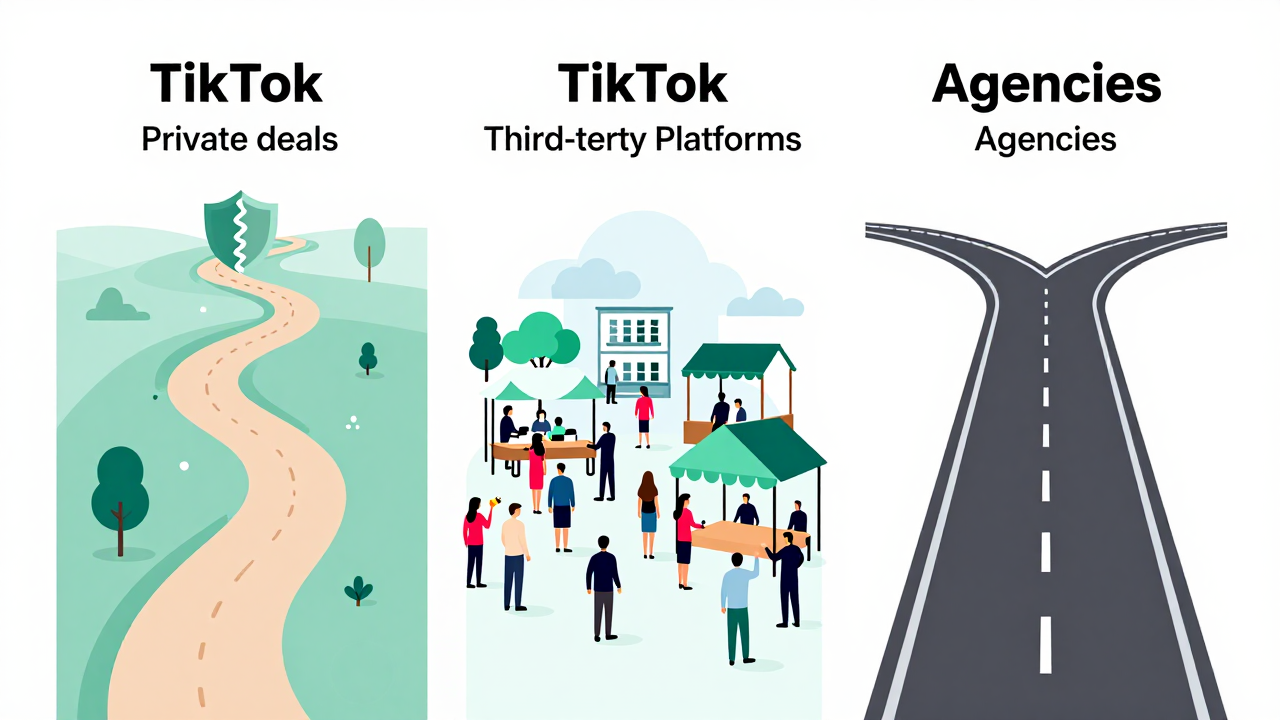
Many people first think of a specific website to buy accounts, but the reality is that the TikTok account marketplace is not a highly centralized platform. Based on industry observation, the mainstream channels can be divided into three categories, each with clear pros and cons.
1. Direct Deals in Social Media Private Channels. This is the most primitive and hidden channel. You can find numerous individual sellers on platforms like Twitter (X), Telegram groups, or even relevant Reddit sections. The advantage here is potentially the lowest price and high flexibility. The disadvantage, however, is fatal: transactions are almost completely unprotected. The risk of encountering scammers or receiving a "toxic account" (one with a history of severe violations) is very high. Many agencies started here, only moving to other channels after learning expensive lessons.
2. Third-Party Virtual Asset Trading Platforms. These platforms are like the "eBay" for accounts, offering escrow services. The seller entrusts the account to the platform, and payment is released only after the buyer confirms. This somewhat reduces the risk of being scammed. However, you must scrutinize the reliability of the platform itself and the authenticity of the seller's account data (e.g., whether follower locations and engagement rates are inflated). Platform fees typically range from 5% to 10%, which is an additional cost.
3. Professional Social Media Service Providers or Agencies. This is the mainstream choice for many businesses and agencies today. These providers don't hold large inventories of accounts but instead source or customize accounts based on your specific needs (e.g., target country, niche content area, account age). For instance, platforms like Getfollow include services for the compliant trade and delivery of overseas social media accounts. They often provide a period of after-sales support (e.g., replacement if the account is banned). This model is the most expensive but also offers the highest degree of certainty and security.
Why is "Buying an Account" Inherently Risky? Understanding the Value Logic
Before understanding the channels, you must grasp the core of the transaction. A TikTok account's value is far more than just its follower count. Its core weight lies in account age, historical behavioral data, and initial authority. A clean account with a stable usage history, not flagged by the algorithm, is like a "digital identity" with a good credit record.
However, cheap accounts on the market often have several critical problems: First, their origin is unknown—they could be batch-registered "black card" accounts or stolen accounts, facing imminent bans. Second, they have extremely low authority, lacking normal browsing, liking, or following behaviors, meaning videos posted receive almost no organic traffic. Third, their follower count is inflated with bots, which are useless for sales or traffic and actually drag down the account's engagement rate, signaling low-quality content to the algorithm. Many cross-border practitioners report that buying such a "junk account" means you've already lost at the starting line.
Practical Risk Avoidance: The Full Process from Inspection to Handover
Regardless of the channel, you must personally oversee the following details—this is key to avoiding pitfalls.
- Request Backend Data Screenshots: Don't just look at the frontend follower count. Ask for the "Creator" backend screenshots showing follower geographic distribution (to match your target market), video view curves (to see if growth is organic and not a sudden spike), and the account's registration date.
- Confirm Account "Cleanliness": Ask if the account has ever received platform warnings or sanctions. An account with a violation history is like a ticking time bomb.
- Perform a "Login Test": Before finalizing the transaction, cooperate with the seller to complete a full login and basic operations to ensure the account is accessible and doesn't trigger abnormal verification.
- Execute a Thorough "Handover Process": After the purchase, the first step is to change the password, bind a new phone number, and enable two-factor authentication (2FA). Simultaneously, unbind the original email and any third-party logins. This process must be swift and thorough.
A Concrete Risk Avoidance Case: Last year, a clothing agency purchased a "celebrity account" with a claimed 100,000 followers via a private channel at an extremely low price. Upon receipt, they found over 70% of the followers were from non-target regions, and recent video views had plummeted from tens of thousands to just a few hundred. An investigation revealed the account had been used for multiple violating marketing campaigns and had been demoted by the algorithm. Ultimately, the account had to be abandoned, resulting in a loss of tens of thousands.
How to Choose & Test: Practical Advice for Cross-Border Businesses
Faced with this complex market, my advice as a business or agency is: Strategy First, Test Small, Build Long-Term Partnerships.
First, clarify your goal. If you're just quickly testing a market's response and don't require high account quality, you can try small, short-term transactions on a trustworthy third-party platform. However, if you aim to build a long-term brand presence or conduct live streaming sales, investing in a clean, high-potential overseas account and considering a professional service provider is the more stable choice. Although the unit price is higher, when amortized over the stable returns of long-term operations, the overall cost may be lower.
Second, always conduct "small-to-large" testing. Don't purchase a large batch at once. Start by buying 1-2 accounts, running actual operations, and observing their organic traffic performance, follower retention, and engagement over a week to a month. An industry consensus is that a quality account should maintain a high next-day follower retention rate, while a problematic account's rate might fall below 50%. Only after passing this test should you consider scaling up.
Finally, building a long-term partnership is more important than chasing the best one-time price. A reliable service provider or platform will offer support for the ongoing compliant use of accounts and issue resolution. You are purchasing a "digital asset" and a "service," not just a login credential.
Frequently Asked Questions About Buying TikTok Accounts
Q: If I buy a TikTok account, will my videos still get traffic?
This depends entirely on the account's "health." A clean, high-authority account with normal historical behavior can gain organic traffic for quality content after a proper handover. However, a "junk account" or one with very low authority will likely get near-zero views. The organic view count during the testing period is a core metric for assessing account quality.
Q: How to choose a reliable seller or marketplace for TikTok accounts?
The key is the "transparency" of their service and "guarantee terms." A reliable provider will typically proactively offer detailed data reports on the account and clearly state the scope of after-sales support (e.g., how they compensate or replace an account banned due to its own issues within a certain period). You can judge based on industry reputation, the authenticity of case studies, and the rigor of contract terms. Platforms like Getfollow, which have a relatively stable industry reputation, operate on this relatively transparent logic.
Q: Does trading TikTok accounts itself violate TikTok's policy?
Yes. According to TikTok's Terms of Service, unauthorized transfer of account ownership is prohibited. This means account trading always carries a risk: the platform has the right to penalize it upon discovery. Therefore, choosing channels with clean account histories and compliant origins can minimize the risk of platform backtracking.
At its core, the TikTok account trading market is a fragmented, opaque, but genuinely existing market. It's a double-edged sword: used wisely, it can give you a fast start; used poorly, you can lose both money and opportunity. As cross-border practitioners, maintaining a clear head, treating every purchase as an investment requiring careful evaluation, and always reserving space and budget for the account's "sustainable operation" is the only way to win in the long run.