Why You Must Buy Exclusive Overseas Apple IDs — 2026 Insider Truth Nobody Tells You
Why You Must Buy Exclusive Overseas Apple IDs — 2026 Insider Truth Nobody Tells You
A lot of people, when they buy their first overseas Apple ID, go cheap and buy a shared account. Then two days later they can't log in anymore, or the account gets banned, and they wasted their money.
I've been around this industry for a while now, and I've seen so many people get burned on shared accounts. Some go cheap and buy shared accounts that die in two days. Some have their account balance spent by other people. Some even get their own devices affected because the shared account got banned.
In this article, I'm talking about why you absolutely must buy exclusive overseas Apple IDs, what the pitfalls of shared accounts are, and how to pick a good exclusive account. After reading this — you'll understand why you shouldn't be cheap.
Here's the short version: If you plan to use it long-term — you must buy an exclusive account. Shared accounts seem cheap, but they have way more pitfalls — and in the end, they cost more.
What's the Actual Difference Between Shared and Exclusive Accounts?
A lot of people don't know the difference between shared and exclusive accounts. They think they're both Apple IDs, they both work — what's the big deal? They're totally different.
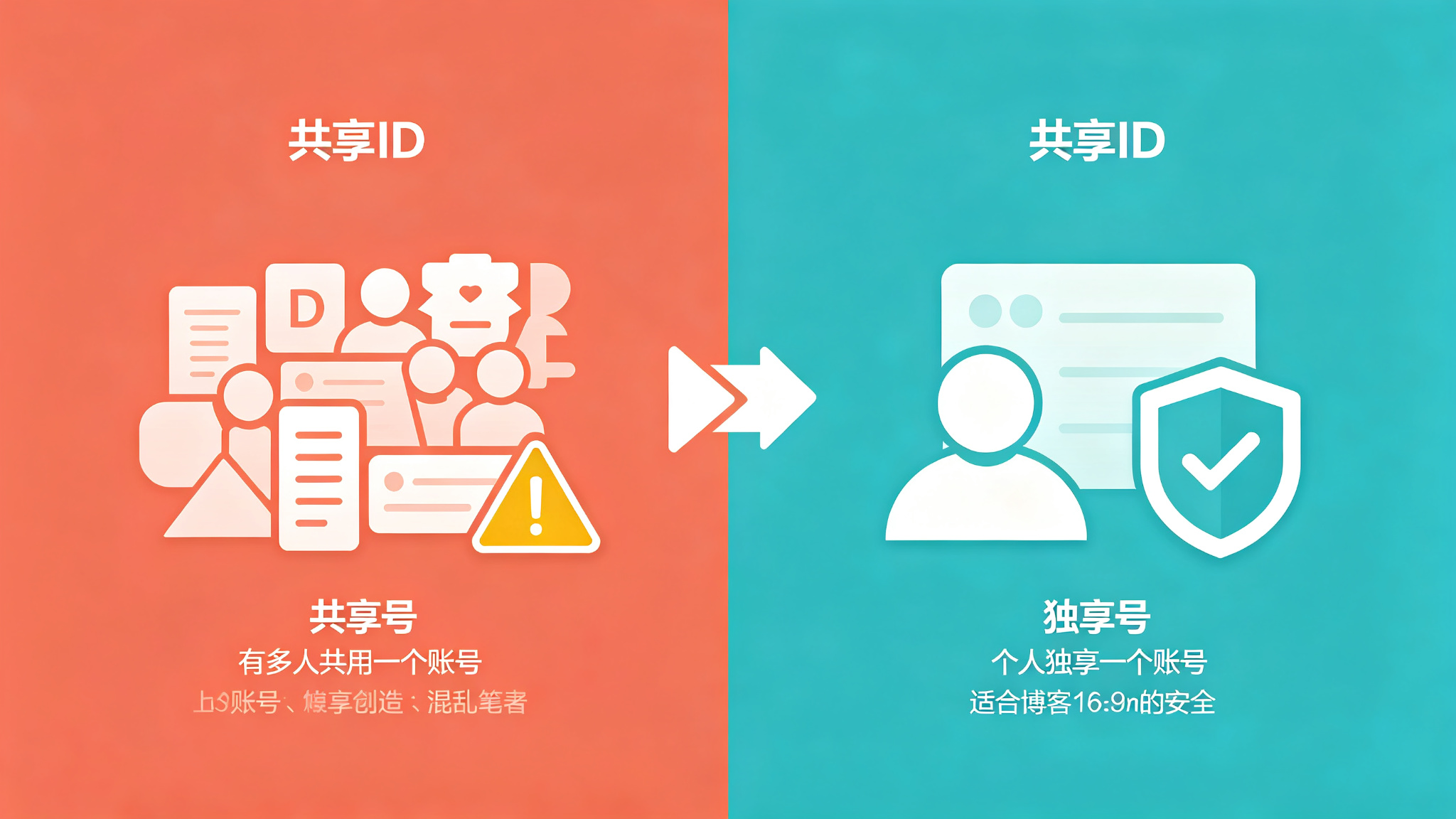
Shared accounts — as the name suggests, lots of people share one account. The seller registers one account and sells it to dozens or hundreds of people. Everyone uses it together. Super cheap, like a few bucks each.
Exclusive accounts — just you, only you use it. Once the seller sells it to you, they don't sell it to anyone else. More expensive, like fifty to over a hundred bucks.
On the surface, they're both Apple IDs, you can both log into the App Store and download apps — seems like no difference. But in reality — the difference is huge.
First difference: Control. With an exclusive account — you can change the password, security questions, rescue email. The account is completely yours. With a shared account — you can't change the password, can't change security questions. Control is in the seller's hands, or in lots of people's hands. You could get kicked off anytime, you could be unable to log in anytime.
Second difference: Security. With an exclusive account — only you use it, it's safe. With a shared account — lots of people use it. You have no idea what other people might do with it. If someone uses it for something that violates the terms — like app store manipulation, black market stuff — and the account gets banned — you go down with it. Even worse — if you signed into iCloud, someone could even lock your device.
Third difference: Stability. With an exclusive account — with normal use, it can last for years. With a shared account — it could disappear any day. It might work today, and tomorrow you can't log in. You never know when something will go wrong.
Fourth difference: Price. Shared accounts are cheap — a few bucks each. Exclusive accounts are more expensive — fifty to over a hundred bucks.
A lot of people only see the price difference. They don't see all the other differences. By the time they get burned and regret it — it's already too late.
How Many Shared Account Pitfalls Do You Know About?
Shared accounts have way more pitfalls than you think. The seller will never tell you about these.
Pitfall #1: You could get locked out anytime. Shared accounts — lots of people share them, you can't change the password. The seller can change the password whenever they want — and once they do, you can't log in anymore. Or too many people use it, triggers Apple's fraud detection, the account gets locked — you can't log in either.
You thought you bought permanent access? It's basically luck — however many days it works, that's what you get.
Pitfall #2: If the account gets banned — you go down with it. Shared accounts — lots of people share them. You have no idea what other people might do with it. If someone uses it for something that violates the terms — the account gets banned — and you can't use it anymore either.
Even worse — if you signed into iCloud and the account gets banned — your device might be affected too.
Pitfall #3: Your balance gets spent by other people. If you put money into the shared account, or bind a payment method — watch out. Other people can log into this account too, and they can spend the money in it. By the time you notice — it's already gone.
Of course, most people don't put money into shared accounts — but there are always people who don't know better, they put money in, and then someone else spends it. Who do you complain to?
Pitfall #4: Your personal info gets leaked. If you use the shared account to log into some apps — those apps might get some of your information. And other people use this account too — your information could get leaked.
The probability isn't super high — but the risk is there.
Pitfall #5: The seller disappears. For shared account sellers — disappearing is way too easy. Collect a wave of money, change the password, open a new store, start selling again. You can't even find them.
Anyway, the accounts are cheap, a few bucks — most people just accept it when they get scammed, they don't bother fighting it. Sellers know this, that's exactly how they get away with it.
Why Exclusive Accounts Are Actually a Better Deal
A lot of people think exclusive accounts are expensive, shared accounts are cheap — shared accounts are a better deal. It's actually the opposite.
Let me do the math for you:
Shared account — $5 each, lasts an average of 7 days. In a month, you'd have to buy 4 — that's $20. In a year — that's $240. And that's if everything goes smoothly. If you get an even worse one that dies in two days — you spend even more.
Exclusive account — $50 each, with normal use, lasts for years. Even if it only lasts a year — that's like $4 a month on average — cheaper than a shared account. And you don't have to worry about it dying on you anytime. You can use it with peace of mind.
And that's just the money part. What matters more is time and energy. Shared accounts disappear out of nowhere — the apps you were using, your game progress — it could all be gone. You have to buy a new account, redownload everything, log back in, set everything up again. The time and energy you waste — worth way more than the account fee.
People running projects understand this even better. Stable accounts, no delays — that's what matters most. Saving a few bucks on account fees but delaying your project — you lose way more money than you saved.
So yeah — shared accounts that seem cheap are actually more expensive. Exclusive accounts that seem expensive are actually a better deal.
Exclusive Accounts Come in Tiers Too — How to Pick?
Of course, not all exclusive accounts are the same. They come in different tiers too. Just because it's exclusive doesn't mean it's automatically good.
Exclusive accounts on the market roughly fall into a few categories:
Batch-registered accounts
Registered in bulk with virtual phone numbers. Exclusive — just you using it. But the registration method isn't exactly legitimate. Stability is so-so. Might get flagged by fraud detection someday.
Mid-range price, like ten to thirty bucks. Good for casual personal use, if you're on a budget.
Semi-legitimate accounts
Better than batch-registered accounts. Registration method is relatively more legitimate, but not completely. Stability is better than batch-registered accounts.
Mid-to-high price, like a few dozen bucks. Good for people who want some stability but are on a budget.
Legitimate exclusive accounts
The best tier. Registered through legitimate channels. Uses real phone numbers and addresses, registration method is fully compliant. You can change all security info. Longer warranty period. After-sales support.
Also the most expensive — like fifty to over a hundred bucks. But they're stable and secure. With normal use, they can last for years.
Good for people running projects, serious gamers, people who need high stability.
How do you tell the difference? Honestly — beginners have a hard time telling. You can only judge from the seller's reputation, after-sales support, price, etc.
The safest way is still: Buy one first to test the waters. Use it for a while, and if it's fine, then think about long-term cooperation.
Even With Exclusive Accounts — Avoid These Scams
Even if you're buying an exclusive account — it's not 100% problem-free. Avoid these scams too:
Scam #1: Selling shared accounts as exclusive. This is the most common one. The seller's title says "exclusive account," "one person one account" — but they're actually selling shared accounts. You buy it and find out you can't change the password. You go to the seller and they give you the runaround.
How to avoid it? Always ask before you buy: Can I change the password? Can I change security questions? Can I change the rescue email? If you can't change them — walk away. No matter what they say.
Scam #2: Selling black-market accounts as legitimate. Even worse than shared accounts — black-market accounts. What's a black-market account? Accounts registered with stolen info, stolen credit cards, or other illegal methods. These accounts cost almost nothing, so sellers sell them cheap — seems like a great deal.
At first everything works fine. Then one day it gets banned. You go to the seller — and they've already disappeared.
How to avoid it? Don't be cheap. If it's too cheap — there's definitely something wrong. In this industry especially, you get what you pay for.
Scam #3: Fake warranty. A lot of sellers say "one year warranty," "lifetime warranty" — sounds super reliable. But when something actually goes wrong — they're gone.
How to avoid it? Don't take warranty too seriously. See how long the seller has been around, what their reputation is. Sellers that have been around longer — relatively more reliable.
Scam #4: You can't change the info after you get it. Some sellers say it's an exclusive account — but after you get it, you find you can't change the password, or you can't change security questions. That means it's not really exclusive, or there's something wrong with the account.
How to avoid it? First thing after you get the account — try to change all the security info. If you can't — immediately contact the seller for a refund or replacement.
Frequently Asked Questions
Q: Are shared accounts completely useless?
A: Not exactly. If you're just downloading an app real quick and you're done with it — then a shared account is fine, it's cheap anyway. But if you plan to use it long-term, or if there's important data on it — never use a shared account. Way too risky.
Q: Will exclusive accounts never get banned?
A: Not exactly. Even with a legitimate exclusive account — if you use it recklessly, like downloading dozens of apps at once, switching regions all the time, doing things that violate the terms — it could still get banned. But with normal use, a legitimate exclusive account can last for years.
Q: How do I pick a reliable overseas Apple ID service provider?
A: Look at a few things: First, how long have they been around, what's their reputation? Second, can you change all security information on the account? Third, how long is the warranty, what's the after-sales policy? Fourth, is there payment protection? Fifth, is customer service professional? Platforms with solid reputations in the industry — Getfollow is one example — use exactly this kind of compliant registration plus comprehensive support model. Of course, you should always judge for yourself. Starting small and testing first is always the safest approach.
Q: How much does an exclusive account generally cost?
A: Depends — depends on the region, the account type, the quality. Batch-registered accounts are generally ten to thirty bucks. Legitimate exclusive accounts are generally fifty to over a hundred bucks. Too cheap — definitely something wrong. Too expensive — not necessarily better. Mid-to-high range prices are relatively more reliable.
Q: What should I do after I buy an exclusive account?
A: First — lock it down, change all security info. Second — only sign into the App Store, don't sign into iCloud. Third — use it normally, don't be reckless. Don't go on a downloading spree, don't switch regions all the time. Fourth — use gift cards for payments, don't bind a credit card.
Final Thoughts
When buying overseas Apple IDs — don't be cheap. Shared accounts seem cheap, but they have way more pitfalls — and in the end, they cost more, and they delay your work.
If you plan to use it long-term — you must buy an exclusive account. Pay a little more, buy peace of mind, buy stability — worth more than anything.
Of course, not all exclusive accounts are the same either. You have to pick carefully. Don't buy a shared account thinking it's exclusive. Don't buy a black-market account thinking it's legitimate.
Remember a few principles: Don't be cheap. If you can change all security info — then it's really exclusive. Test first, then scale up. Lock it down after you get it. These principles will help you avoid most scams.
If you're just a casual personal user — a regular exclusive account is fine. If you're running projects or a business and you need high stability — go straight for a legitimate platform, buy legitimate exclusive accounts. Don't save pennies on accounts. Your time and data are what's really valuable.
And as always: Start small, test first, then scale up. No matter how good the seller sounds, don't buy in bulk on your first try. Slow and steady always wins.