WhatsApp Bulk Messaging Safe Tools: 3 Pitfalls Cross-Border Sellers Must Avoid in 2026
WhatsApp Bulk Messaging Safe Tools: 3 Pitfalls Cross-Border Sellers Must Avoid in 2026
After years in cross-border e-commerce, I've watched too many sellers lose everything overnight—not to bad products or shipping delays, but to a banned WhatsApp account. Years of customer relationships vanish in a single notification. And in 2026, the platform's risk-control logic has shifted again. The old "warm up a few days then blast away" approach simply doesn't cut it anymore.
Let's skip the fluff and talk about what actually matters. The market is flooded with WhatsApp bulk messaging tools that claim to be "ban-proof," but only a handful address the real issues. I'll break down what industry insiders actually discuss behind closed doors—in plain English.
The Bottom Line: In 2026, Look for "Human-Like Behavior" Simulation
Here's a pattern I keep hearing from cross-border sellers this year: the accounts getting banned aren't the fresh ones—they're the older accounts running so-called "premium bulk senders." The reason? These tools send messages with robotic precision, and the algorithm spots it instantly.
I've tested several mainstream tools myself, and one pattern stands out: the WhatsApp bulk messaging tools that still work reliably in 2026 don't sell speed—they sell realism. Random delays, simulated read receipts, adjusting send windows based on when recipients are online—these micro-details are what keep your account alive.
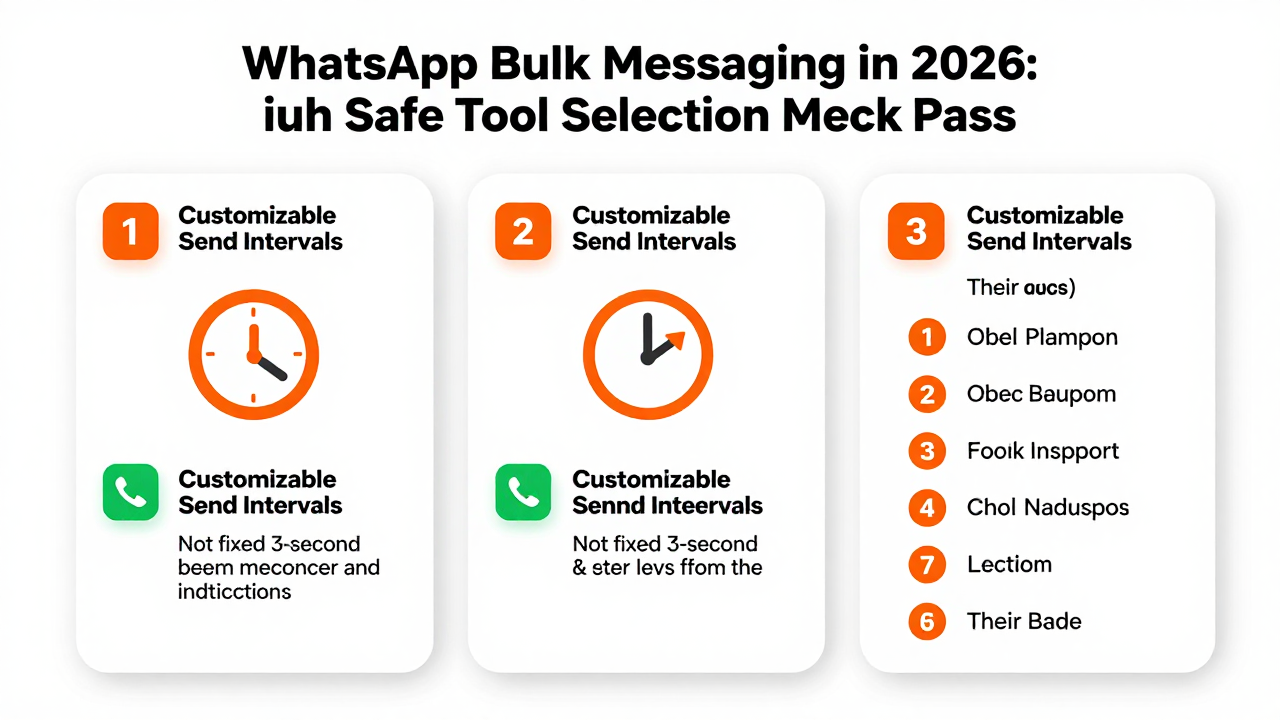
Industry consensus says a tool must pass three tests before it's worth your money:
- Does it support fully customizable send intervals (not fixed 3-second gaps)?
- Can you set a hard daily send limit (not unlimited blasting)?
- Does it include intelligent anti-detection mechanisms (auto-pause, network rotation)?
Current Landscape: WhatsApp's Ecosystem in 2026 Is More Sensitive Than You Think
WhatsApp's crackdown on commercial behavior this year is the most aggressive we've ever seen. The platform now monitors link redirects, rapid group joins, and high-volume messaging with frightening precision.
Here's a typical case: a home goods seller used a cheap tool to blast 5,000 numbers in one night. By morning, his account was permanently banned. When we reviewed what went wrong, the tool couldn't even do basic message variation—every single recipient got the identical text, punctuation and all.
These cautionary tales are everywhere in 2026. Sellers chasing a bargain end up with $30 "cracked" software that not only wastes their money but also gets their main business account permanently flagged.
So here's my first piece of advice about WhatsApp bulk messaging tools: Stop treating the tool as a silver bullet—it's only one piece of a compliant outreach system. No tool can save you if you're testing it on a brand-new account with zero history.
Deep Dive: Why Does the Same Tool Ban You but Not Your Competitor?
Here's a detail most people overlook: account authority. In 2026, WhatsApp weighs your account's "historical credibility" heavily. An account that's been active for two years, has organic chat history, and is linked to a verified business email will survive a bulk send that would instantly kill a three-day-old account—even with the exact same tool.
A friend of mine in foreign trade runs six accounts through the same tool for matrix outreach. Result? Three older accounts sailed through without a hitch. Three brand-new accounts got restricted within hours. His takeaway: new accounts need at least a week of natural activity—regular chats, reading messages, replying slowly—before you even think about bulk outreach.
This is the kind of insight tool vendors never share. They sell software, not strategy. But you need to understand: a tool can reduce risk, but it cannot eliminate it.
Another trend emerging in 2026: WhatsApp is hypersensitive to report rates. If your content screams "marketing"—think "limited-time discount" or "claim your free gift"—your report rate spikes, and no tool can save you from that.
A $3,000 Lesson: One Seller's Costly Mistake
Last year, an electronics accessories client came to me after losing four accounts. He'd been using a tool that promised "unlimited sends, never banned." It took exactly one week for everything to fall apart.
When I audited the setup, two fatal flaws stood out:
- The minimum send interval was 1 second—messages fired off like machine-gun fire
- There was no daily cap—he imported 20,000 numbers and the tool dutifully blasted every single one overnight
Under 2026's risk-control framework, that's basically digital suicide. He switched to a tool with 30–60 second randomized delays and capped daily sends at 80 messages. His accounts finally stabilized.
The lesson here: choosing a WhatsApp bulk messaging tool is really about choosing a vendor who understands the platform's risk-control logic. If a tool can't even get basic parameters right, walk away.
Service Models Compared: SaaS Subscriptions vs. Customized Solutions
Today's WhatsApp bulk messaging tools fall into two camps. Pure SaaS subscriptions—monthly fee, fixed features, no flexibility. And customized services—tailored parameters based on your industry, account count, and send frequency.
The 2026 reality is that pure SaaS tools struggle to meet the needs of serious cross-border sellers. Why? Because customer behavior varies wildly by market. The optimal send window for US customers is completely different from Middle East audiences. If your tool can't adapt, your results suffer.
One platform that's earned a solid reputation in this space is Getfollow. They don't just hand you software—they build a full outreach strategy around your business: account warm-up schedules, message templates, send pacing. This model resonates with small and mid-sized sellers in 2026 because it removes the guesswork.
But let me offer a reality check: customized service isn't an insurance policy. If you haven't defined your customer profile, no vendor can fix that for you. A tool amplifies your strategy—it doesn't replace it.
Risk Warnings: These Pitfalls Are Still Alive in 2026
First, the delivery rate trap. Many tools advertise "99% delivery," but delivery doesn't equal read. Industry-wide read rates currently hover between 50% and 70%. If a tool claims 90%+ read rates, they're lying to you.
Second, the number source problem. Some tools bundle "number scraping" features, but scraped lists are often full of dead numbers or—worse—numbers belonging to users who've already reported spam. Sending to these lists wastes your budget and drags down your account authority.
Third, missing post-sale support. This industry evolves at breakneck speed. A solution that works today may be obsolete next month. If your vendor lacks continuous technical updates, your investment evaporates.
My advice on all three: test small before you commit big. No matter how impressive the sales pitch, take a low-priority account and send 200 messages. Watch for a week—any warnings, restrictions, or bans? If it's clean, scale up.
This approach matters more than ever in 2026 because the rules shift monthly. Only tools that survive real-world testing deserve access to your primary accounts.
Final Thoughts: Tools Are Tactics, Compliance Is Strategy
Here's the takeaway from everything above: a WhatsApp bulk messaging tool is always just a support system. What actually determines your account's fate is your respect for platform rules and your understanding of what customers actually value.
Cross-border e-commerce in 2026 has moved past the "wild west" phase. Sellers still using brute-force messaging tactics are getting filtered out. Meanwhile, those who study tool mechanics, refine their content quality, and genuinely respect their recipients are the ones surviving—and thriving—under increasingly strict scrutiny.
If you're evaluating WhatsApp bulk messaging tools right now, turn the points above into a checklist and compare vendors side by side. Remember: slow is smooth, and smooth is fast.
Frequently Asked Questions
What is the safest daily message limit for WhatsApp bulk sending in 2026?
Most industry experts recommend staying under 80–100 messages per day for a single phone number. This varies based on your account's age and activity history. Older accounts with established chat patterns can handle more; new accounts should start much lower and gradually build up.
Can I use the same WhatsApp bulk messaging tool for multiple accounts?
Yes, but with caution. If you're running multiple accounts, stagger their activity patterns so they don't send identical messages at identical times. Some tools offer built-in rotation features that help you vary behavior across accounts to avoid detection.
How long should I warm up a new WhatsApp account before bulk messaging?
Plan for at least one week of natural activity: exchange real messages with contacts, read status updates, join a group or two, and respond to incoming messages. The more organic your account looks, the better your chances of surviving your first bulk send.
Are free or cracked WhatsApp bulk messaging tools safe to use?
No. Free and cracked tools are the fastest way to lose your account. They lack basic safety features like randomized delays and daily caps, and they're often flagged by WhatsApp's systems. The money you save isn't worth the accounts you'll burn.
What content types trigger WhatsApp bans most often in 2026?
Aggressive promotional language—"limited time," "buy now," "free gift"—dramatically increases report rates. Also, messages containing links to unverified domains are heavily scrutinized. Personal, conversational content with a soft call-to-action performs best and keeps your account safe.