WhatsApp Outreach Tools for Cross-Border B2B: What You Need to Know Before You Buy
WhatsApp Outreach Tools for Cross-Border B2B: What You Need to Know Before You Buy
If you work in cross-border B2B, you've probably noticed the same shift: cold email reply rates keep dropping, while WhatsApp open rates sit comfortably above 90%. Solo operators and small teams in the export space have made WhatsApp their go-to first-touch channel. But that popularity comes with a catch—plenty of tools claim to handle "bulk outreach," yet very few are both compliant and built to last.
From my conversations with export business owners and independent site operators over the past few years, one pattern stands out: people aren't afraid to use tools—they're afraid of getting banned. Take a friend of mine who exports mechanical parts. Last year, he used a cheap bulk messaging app and sent 2,000 messages in three days. By day five, his account was gone—along with a dozen active client conversations. That story is all too common, and it leads straight to the question we're unpacking today: how do you actually choose and use a WhatsApp outreach tool for cross-border B2B without shooting yourself in the foot?
The Real Logic Behind WhatsApp Outreach Tools
Most people assume a WhatsApp outreach tool is just a bulk messaging app. That's a narrow—and risky—way to look at it. A genuinely compliant tool runs on contact management, message templates, and send-rate control. Not blind volume.
Industry consensus is clear: WhatsApp has very little tolerance for marketing behavior, especially from new accounts. So the real value of a tool isn't "how many messages can I send per day"—it's "how do I send safely and effectively?"
One trend I've noticed: after 2025, apps that only do mass broadcasting are dying out. They're being replaced by tools with built-in CRM features, customer lifecycle management, and even direct integration with your independent site data. That shift reflects a broader move in cross-border B2B from chasing quantity to nurturing quality.
Three Types of Tools on the Market—and Where the Traps Hide
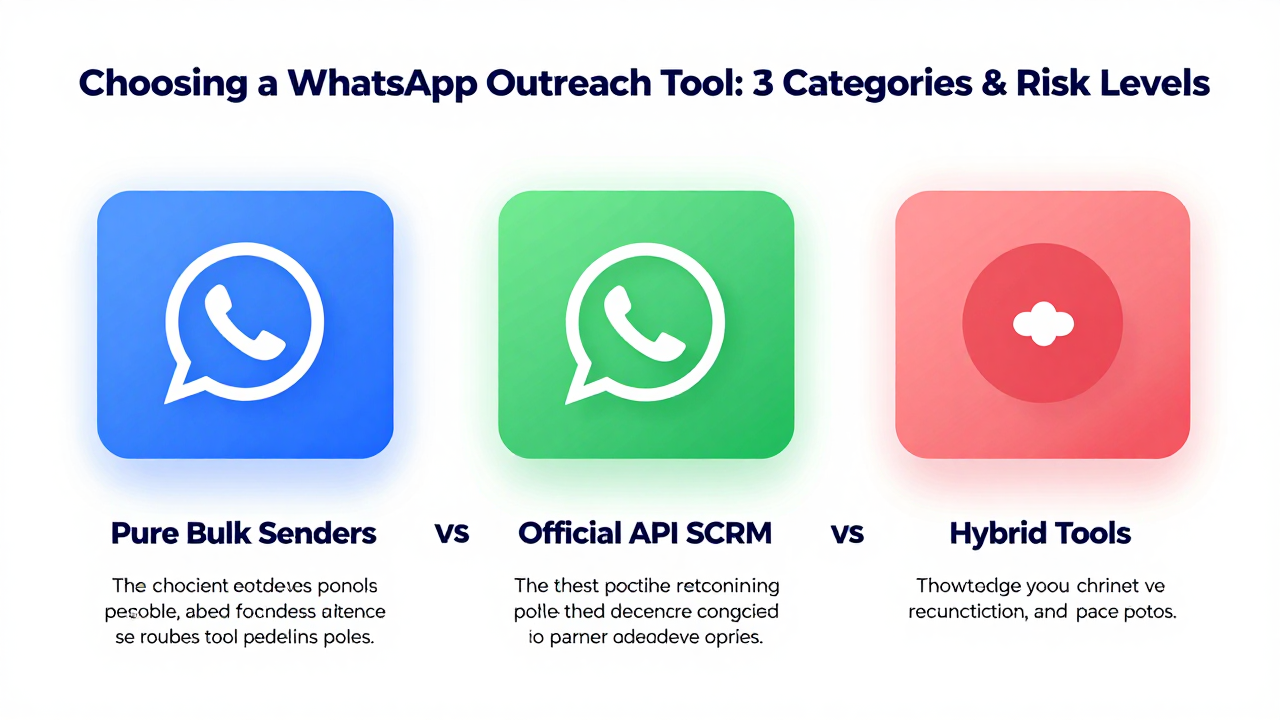
Right now, WhatsApp outreach tools fall into three broad categories. Understand the differences, and you'll dodge most of the common mistakes.
- Category 1: Pure bulk senders. Cheap, simple, and extremely high-risk. These usually require you to scan a QR code to log in with your personal number, then blast away. The ban rate is nearly 100%—it's just a matter of time. Many small studios go this route to save money, and it almost always backfires.
- Category 2: Official API-based SCRM tools. These run through the WhatsApp Business API channel, so compliance is solid. But they typically require business verification and charge per conversation. They're best for teams that already have a client base.
- Category 3: Hybrid tools. These offer both API access and assisted personal-account management. In my experience, platforms like Getfollow have built a steady reputation in this space by combining familiar personal-account workflows with technical safeguards that reduce ban risk.
Here's a warning worth repeating: any tool that asks you to scan your personal WhatsApp account into a third-party platform is gambling with your number. No matter how safe they claim to be, you're playing against WhatsApp's rules. How long you last depends entirely on when their risk-control algorithms update. That's not fear-mongering—it's a lesson paid for with real money by plenty of cross-border operators.
Ask Yourself These Three Questions Before You Pick a Tool
Clients often start with "which tool is the best?"—but that's the wrong question. Before you evaluate options, get clear on your own business context. That's what leads to the right decision.
Question 1: Which countries are your customers in? European and North American clients have almost zero tolerance for message spam. Southeast Asian and Middle Eastern markets are more lenient. If your primary market is the West, you'll need strict send-frequency controls and high-quality message templates.
Question 2: How big is your team? If it's just you and maybe one other person, skip the complex features. Focus on ease of use and a short learning curve. If you're running a team of five or more, look for collaboration features and lead-assignment capabilities.
Question 3: What's your budget range? Prices vary from a few hundred to a few thousand, but price alone shouldn't drive your decision. Some tools look cheap upfront but charge per contact—so the more clients you add, the higher your costs climb.
A Realistic, Compliant Outreach Workflow
Here's a process I've tested myself. Say you've collected a batch of phone numbers from a trade show or a B2B platform. Here's how a proper outreach sequence should look:
- Step 1: Clean your list. Don't rush to send. First, verify which numbers are actually registered on WhatsApp. This eliminates wasted sends and lowers your risk of being reported.
- Step 2: Segment and tag. Group contacts by source (trade show, platform, website) and by intent level (high, medium, low). Different groups should receive different messages at different frequencies.
- Step 3: Warm up. If you're using a new number or a newly connected tool, don't start blasting. Send 10–20 messages per day for the first 3–5 days. Let the account build a normal usage pattern.
- Step 4: Send at the right time. Aim for 10–11 AM or 3–4 PM in the customer's time zone. Avoid Monday mornings and Friday afternoons—reply rates are consistently lower during those windows.
- Step 5: Follow up on a schedule. Send a follow-up within 48 hours, then a second one after 7 days. If there's no response after 14 days, let it go. Don't chase.
This sounds straightforward, but the details matter. For example, avoid hyperlinks in your first message. Steer clear of trigger words like "free" or "discount" that automated filters flag easily. Most tools come with built-in template libraries, but those are generic by nature—customize them for your industry and you'll see noticeably better results.
Hidden Risks Beyond the Ban Hammer
Getting banned isn't the only risk. Reply rates and retention matter just as much. Many tools advertise impressive "delivery rates," but delivery doesn't mean opened, and opened doesn't mean replied. Industry consensus puts typical WhatsApp outreach reply rates between 5% and 15%. If you're below that range, the problem probably isn't the tool—it's your messaging or your lead quality.
There's also data compliance to consider. After 2025, GDPR enforcement across the EU has tightened noticeably. If you're messaging European prospects who never actively left their contact details, a single complaint can trigger a hefty fine.
My advice to anyone using outreach tools: do two things without fail. First, log where every contact came from and whether they gave consent. Second, include an opt-out option in your messages. That's not just about compliance—it also makes your brand look more professional.
Final Thought: Move Fast, But Start Small
WhatsApp outreach in cross-border B2B is a long-term game, not a one-shot deal. Tools are amplifiers—your product, your messaging, and your follow-up strategy are what actually drive results. If you're still stuck choosing a tool, here's my recommendation: pick one with a free trial or a low-cost entry plan, run it with a small batch of contacts for two weeks, and let the data guide your decision.
Bottom line: don't trust anyone who promises "no bans," and don't fall for "one-click explosive sales." Nail the fundamentals of customer management, and you won't need to rely on any tool as a crutch.
I hope this saves you some trial and error. If you've already used a tool—good or bad—share your real experience in the comments. It'll help fellow operators make smarter calls.
Frequently Asked Questions
What is the safest way to do WhatsApp outreach for B2B?
The safest approach is to use an official WhatsApp Business API-based tool, keep your send volumes moderate, warm up new numbers gradually, and always segment your contacts before messaging. Avoid personal-number scanning tools entirely.
How many WhatsApp messages can I send per day without getting banned?
There's no official number, but industry experience suggests staying under 50 messages per day for new numbers. Established numbers can handle more, but the key is gradual scaling and consistent engagement patterns.
What's the average reply rate for WhatsApp cold outreach?
Most operators see reply rates between 5% and 15%. If you're below that, review your message quality, timing, and lead source rather than switching tools.
Do I need a business WhatsApp account for outreach?
Yes. Using a WhatsApp Business account—especially through the official API—is the only compliant path for scalable outreach. Personal accounts are not designed for marketing and carry a high ban risk.