US SMS Verification Platform Market in 2026: How Cross-Border Businesses Can Avoid Hidden Pitfalls
US SMS Verification Platform Market in 2026: How Cross-Border Businesses Can Avoid Hidden Pitfalls
The buzz around US SMS verification platforms hasn't cooled down this year. Solo operators and small cross-border businesses are constantly wrestling with account registrations and verification codes—those seemingly minor steps that can grind operations to a halt. The market is flooded with options ranging from a few cents to several dollars per code, yet very few services actually deliver consistent results.
After talking with several e-commerce operators, a clear pattern emerged: most people chase the cheapest option—say, a few cents per code—only to watch their accounts get flagged or banned within days. That's not bad luck. It comes down to the compliance standards and resource quality behind the entire verification service chain.
How the 2026 SMS Verification Ecosystem Really Works: Your Number Pool Determines Everything
Cross-border sellers consistently report that the biggest issue in the US verification market isn't availability—it's number quality. A "clean" number hasn't been burned through mass registrations or flagged by major platforms. Industry consensus is clear: platform risk-control systems in 2026 are highly intelligent, and a number's historical behavior directly determines whether it can successfully receive verification codes.
I tested several budget verification platforms and found they frequently recycle numbers—sometimes selling the same one to multiple users within hours for different registrations. Using these to sign up for Amazon, WhatsApp, or TikTok is practically asking for a ban. Reputable providers, on the other hand, either "age" their numbers before release or partner directly with carriers to secure fresh number blocks. It costs more, but the success rate is dramatically more stable.
Here's a detail most people overlook: many platforms advertise "US native numbers," but they're actually routed through VoIP lines. VoIP numbers get flagged instantly when registering financial or social apps. If you're registering seller accounts for e-commerce, those numbers are basically landmines. So before you pay, always ask: physical SIM or virtual number? That single question saves you from most headaches.
The Real Story Behind the Price Wars
Price competition in 2026 is as fierce as ever. Search engines are packed with ads promising "100 codes for $9.99." But sellers who've been burned report two recurring problems: high number reuse rates that tank success rates, and zero after-sales support. If you don't receive a code, your money's gone.
From my experience, platforms like Getfollow have built a solid reputation by charging per use while giving you exclusive access to a number for a specific time window. You're not sharing a pool with strangers. The per-use price runs higher, but the security boost for your accounts is worth an order of magnitude more.
Another trend worth noting: in 2026, more platforms are pushing monthly subscriptions and "long-term numbers" aimed at businesses running account matrices that need ongoing verification. The hidden risk? If the provider can't guarantee number longevity—or worse, shuts down overnight—your account bindings become a dead end. That's why choosing a platform with clear service agreements and a working support channel matters more than the sticker price.
A Decision Framework Based on Your Needs, Not Just Price
Choosing a US SMS verification service is essentially paying for account security and operational efficiency. If you only register the occasional account, pay-per-code budget services might suffice. But if you're doing batch registrations, running account matrices, or handling accounts tied to financial transactions, you need to raise your standards for number quality.
The safest strategy in 2026, based on widespread seller feedback, is "test small before committing long-term." Spend a few dollars on a small package first. Test success rates on your target platforms, check number stability, and gauge how fast support responds. If everything checks out, then consider scaling up or moving to a monthly plan. This way, even if you run into a bad provider, your losses stay manageable.
Here's a concrete example: a friend running independent site traffic bought 100 US numbers from a budget platform last year to register multiple social media accounts. Within a week, every single account was flagged as linked and banned. He switched to a per-use exclusive service like Getfollow, re-registered, and those accounts have been running smoothly ever since. The lesson: the hidden costs of cheap verification services far exceed the visible price tag.
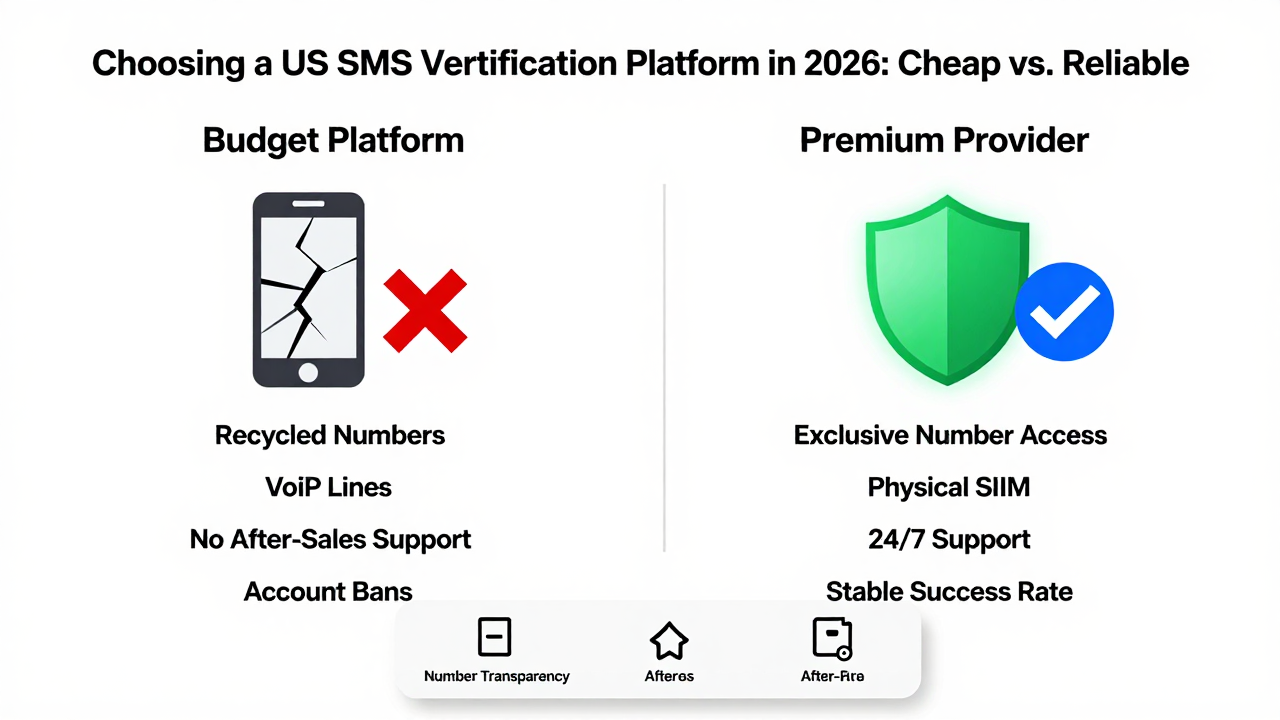
How to Pick a Reliable Provider: Three Core Criteria
Based on years of industry observation, here are three filters worth applying:
- Number Resource Transparency: Does the provider clearly state whether numbers are physical SIM or virtual, which number blocks they come from, and whether you can look up the number's location? If customer service dodges these questions, walk away.
- After-Sales Response Mechanism: When a code doesn't arrive, does the platform auto-refund or force you through manual appeals? How fast do they respond? Industry feedback in 2026 suggests any platform taking over 24 hours to respond is not worth your time.
- Compliance Track Record: Does the platform publicly disclose its operating entity? Does the service agreement include data privacy protections? This gets overlooked constantly, but if your verification numbers touch sensitive information, how the platform handles your data directly affects your business security.
Industry consensus is that the US SMS verification market in 2026 has entered a winner-take-all phase. Leading providers maintain strong user retention—typically between 50% and 70%—through resource integration and risk-control optimization. Smaller platforms, meanwhile, are stuck in a downward spiral of price cuts with no room to improve service quality. For cross-border businesses, paying a bit more upfront for stability and business continuity is the smarter long-term play.
Potential Risks and How to Protect Yourself: Don't Let Verification Become Your Weak Link
Two risks dominate the verification service landscape. First, numbers getting flagged by platform risk controls, causing registration failures or account restrictions. Second, numbers being recycled or deactivated, which breaks future verification. For the first, always choose exclusive-use numbers and avoid shared pools. For the second, regularly check that your bound numbers are still active and keep a backup verification channel ready.
Sellers in 2026 are also waking up to a third, less obvious risk: data leaks from verification platforms themselves. Some smaller, unregulated providers store user activity logs—including the actual content of received verification codes—on insecure servers. If those get breached, your account information is exposed. Choosing a provider with clear encryption standards and privacy commitments isn't optional; it's basic business hygiene.
One final thought: a US SMS verification platform is a tool. It solves the "receive the code" problem, but it doesn't replace your account management strategy. Whatever provider you pick, test with a small purchase first, confirm number quality and service stability, then commit to a larger plan. In cross-border business, account security always comes first.
If you're shopping for a US SMS verification service, run providers through the three criteria above and match them against your actual needs. The 2026 market is mature enough that with a little due diligence, you'll find a compliant provider that fits.
Frequently Asked Questions
What is the best US SMS verification service for cross-border businesses?
There's no single "best" option—it depends on your use case. For occasional registrations, budget pay-per-code services might work. For batch registrations or account matrices, prioritize providers offering exclusive number access, transparent number sourcing, and reliable after-sales support. Always test with a small package before committing.
Why do my accounts get banned after using cheap SMS verification services?
Budget services often recycle numbers across multiple users. When a number has a history of mass registrations or has been flagged by platform risk controls, any new account linked to it is more likely to be restricted or banned. Number quality directly impacts your account's fate.
What's the difference between virtual numbers and physical SIM numbers for verification?
Virtual numbers (VoIP-based) are easier to obtain and cheaper, but many platforms—especially financial and social apps—can detect and block them. Physical SIM numbers are tied to real carrier infrastructure and pass verification more reliably. Always confirm which type you're buying before payment.
How can I test if a US SMS verification platform is reliable?
Start with the smallest available package. Test success rates on the specific platforms you need, monitor number stability over a few days, and evaluate how quickly customer support responds to issues. If the provider passes these checks, consider scaling up.