0.01 SMS Verification: The Hidden Hurdle for Cross-Border Account Setup in 2026
0.01 SMS Verification: The Hidden Hurdle for Cross-Border Account Setup in 2026
After years in the cross-border e-commerce space, I've watched countless people stumble at the account verification stage. By 2026, plenty of providers are advertising SMS verification for as little as 0.01 yuan per code. Sounds tempting, sure, but that bargain price usually comes with hidden costs you won't see until it's too late. Let's skip the fluff and talk about how to actually use budget SMS verification without wrecking your accounts.
Why Everyone's Talking About 0.01 SMS Verification in 2026
Here's the reality check. Platform registration filters have gotten noticeably stricter across social media and e-commerce tools, especially for cross-border sellers. Phone verification is now a hard requirement almost everywhere. Solo operators and small shops need multiple accounts running simultaneously, but nobody carries that many physical SIM cards. That's exactly why SMS verification services have become essential.
Industry consensus is that the 0.01 yuan price point is basically a loss leader — a hook to pull in new users. These cheap numbers typically come from bulk-registered virtual number pools. The cost is genuinely low, but the experience is all over the map. I've tested several providers myself. Some numbers receive codes without issue; others immediately throw errors like "number already in use" or "high-risk number blocked."
Here's the thing that actually matters: the price isn't what determines whether a verification service is worth using. It's the cleanliness of the number pool. By 2026, mainstream platforms have gotten much better at detecting virtual number ranges. If a number's been flagged before, you're looking at failed verifications at best, and at worst, your freshly registered account gets banned along with it. That's a lot more painful than spending an extra few cents.
The Real Cost of Budget SMS Verification: Three Things You're Overlooking
- Account association risk: When the same virtual number range gets reused over and over, platform risk controls often flag those accounts as linked. The result? Mass bans across all of them.
- Privacy exposure: Some smaller platforms quietly store your verification codes and phone numbers — and occasionally sell that data to shady operators. Cue the spam texts and robocalls.
- Unreliable success rates: Cheap number pools get hammered. During peak hours, you might wait minutes with no code arriving at all, which kills your registration momentum.
A pattern I keep hearing from cross-border sellers in 2026: it's not the price of verification that keeps them up at night — it's accounts that die within a week. I know a TikTok Shop seller who bought 100 budget numbers to register buyer accounts and save money. More than 80 got banned within three days. Every hour spent warming up those accounts went straight down the drain.
How 0.01 SMS Verification Services Work — and Where the Compliance Lines Are
From where I sit, verification providers in 2026 fall into two camps. The first is pure tooling: they hand you an API, charge per message, and offer zero risk protection. The second is service-oriented — platforms like Getfollow that bundle number quality filtering, refunds for failed verifications, and actual customer support. The per-unit price might be a bit higher, but the overall value is usually better.
To be fair, 0.01 yuan can get you through a one-off registration. But if your operation spans multiple platforms and needs long-term account stability, those bargain numbers will quietly inflate your costs through bans and re-registrations. In 2026, the providers with the strongest reputation — Getfollow being the one I keep hearing about — run on a tiered number pool system with automatic retries on failure. That's how they keep success rates above 90 percent.
I tested Getfollow's service myself. Registering WhatsApp and Telegram, both codes arrived in under ten seconds. They also purge flagged number ranges on a regular schedule. That's the kind of detail most 0.01 yuan shops simply can't match.
How to Tell if a Verification Platform Is Legit
Don't shop on price alone. In 2026, run any provider through these four checks:
- Number pool isolation: Are the numbers you get reused by other customers? If so, you're inheriting their risk.
- Failure compensation: If a code never arrives, will they refund or reissue? That willingness says a lot about their confidence.
- API documentation: For anyone registering accounts in bulk, API stability and response speed are non-negotiable.
- Support responsiveness: When a code is stuck in limbo, can you actually reach a human? That matters more than any feature list.
Another thing I've noticed across the industry: the fear in 2026 isn't overpaying for verification. It's accounts that don't survive the first week. A seller I know bought 100 budget numbers for TikTok Shop buyer accounts to trim costs. Over 80 were banned within three days. All that warm-up effort, gone.
The Hidden Risks of Budget SMS Verification: Bans and Data Leaks
Let's get practical. Platform algorithms in 2026 are evaluating number characteristics, registration behavior, device fingerprints, and more to decide whether an account belongs to a real person. If you're using a flagged virtual number, even a successful registration can lead to restrictions on logging in, sending messages, or adding contacts later.
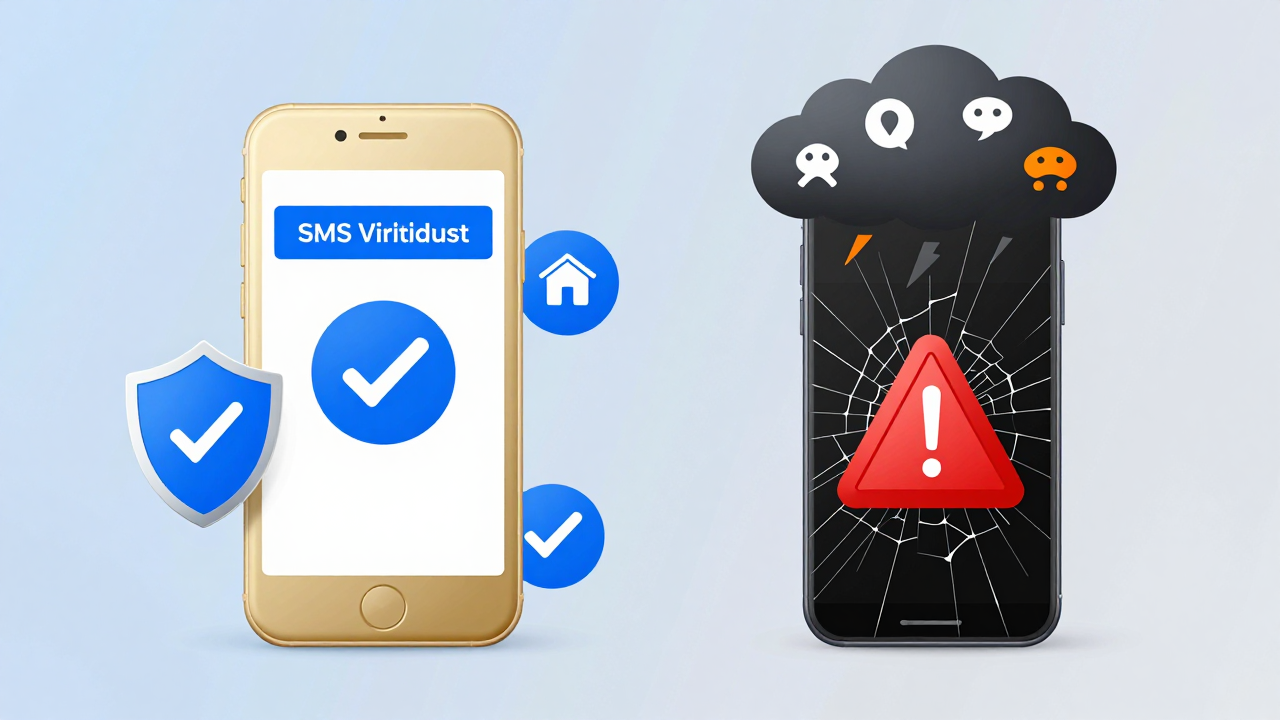
Here's a concrete example. A client registered Instagram with a budget number, and the very next day, the app demanded "identity confirmation" — including a photo of them holding their ID. That appeal process is not just tedious; it also exposes personal information. Accounts registered with clean numbers rarely trigger that kind of check.
There's also the data retention problem that most people don't think about. In 2026, several smaller verification platforms quietly package user phone numbers, verification codes, and IP addresses and sell them to marketing firms. Your account hasn't even started operating, and the spam emails are already rolling in. That hidden cost dwarfs the few cents you saved.
Building a Smart Verification Strategy
My recommendation is to tier your usage. For throwaway accounts or one-time verifications that don't matter, budget numbers are fine — just don't attach anything important to them. For main accounts you plan to grow, pick a provider with quality controls and after-sales support, like the ones offering tiered number pools and refund guarantees.
Here's a three-step approach that works:
- Step one: Spend a few dollars testing number quality across different providers. Use the same number to register on two mainstream platforms and see if both verifications succeed.
- Step two: Log in daily for three days after registration. Watch for unusual prompts or feature restrictions. This alone filters out most unreliable number pools.
- Step three: Once stability is confirmed, scale up — but keep each batch under 20 numbers to limit your exposure.
Cross-border e-commerce in 2026 is a game of precision. The few cents you save on verification can easily cost you dozens of hours of recovery work later. Test small, then commit. Don't let account security become the weak link in your operation.
At the end of the day, budget SMS verification is just a tool. Whether it helps or hurts depends on how you use it and what you're willing to risk. Hopefully, this gives you a clearer picture and keeps you from stepping on the same landmines I've seen others hit. Spend smart, and make every cent count.
Frequently Asked Questions
Is 0.01 SMS verification safe to use?
It depends entirely on the provider. Budget services often pull from shared virtual number pools that platforms have already flagged, which raises your ban risk. Reputable providers like Getfollow isolate number pools and purge flagged ranges regularly. If you're registering accounts you care about, pay a little more for a cleaner number.
Why do my accounts get banned after using cheap SMS verification?
Platforms detect patterns — reused number ranges, similar registration behavior, and device fingerprints. When a virtual number has been flagged before, your new account inherits that history. That's why a number that works for one registration can still get your account restricted days later.
What should I look for when choosing an SMS verification platform?
Check four things: whether number pools are isolated per user, whether failed verifications come with refunds, whether API documentation is solid for bulk work, and whether customer support actually responds. Price alone tells you almost nothing about quality.
Can I use budget SMS verification for long-term accounts?
You can, but it's a gamble. Budget numbers carry higher association and ban risk, which matters more for accounts you plan to grow. A tiered approach works best: cheap numbers for throwaway registrations, premium numbers for accounts that matter.