How to Choose a 51 SMS Verification Platform: A Cross-Border Business Guide
How to Choose a 51 SMS Verification Platform: A Cross-Border Business Guide
Over the past few years of working in cross-border e-commerce, I've tested more than a dozen 51 SMS verification platforms. Honestly, this industry runs deep, and if you're only looking at price, you can't tell the good from the bad. Today I'm not here to hype anything up or tear anyone down—just sharing what I've learned from real-world use, including some things the industry doesn't like to talk about openly.
Why Cross-Border Businesses Can't Operate Without SMS Verification Platforms
If you run an online store, manage social media accounts overseas, or handle WhatsApp marketing, you deal with phone verification codes almost every single day. You need them to register accounts, maintain them, and recover them when they get locked. People used to rely on physical SIM cards, but those are expensive and a headache to manage—which is why most operators have shifted to online SMS receiving services.
A 51 SMS verification platform, at its core, provides a pool of virtual numbers that receive SMS verification codes on your behalf. No physical SIM cards required—just pick a number on a webpage or app and complete your registration verification. Sounds simple enough, but there's a lot going on under the hood.
Cheap Doesn't Mean Reliable—Stability Is Everything
Newcomers often gravitate toward the cheapest option, only to find the numbers either never receive codes or get banned right after registration. I've seen Amazon review teams lose entire batches of accounts—thousands of dollars down the drain—just to save a few cents per verification. In this business, you genuinely get what you pay for.
A dependable 51 SMS verification platform needs three things: a deep pool of numbers, broad country coverage, and a high success rate. Missing any one of these and you're gambling with your operations. From my experience, platforms like Getfollow have built a solid reputation by following this playbook—deep number reserves, stable API infrastructure, and consistent performance over the long haul.
Common Pitfalls in the SMS Verification Industry
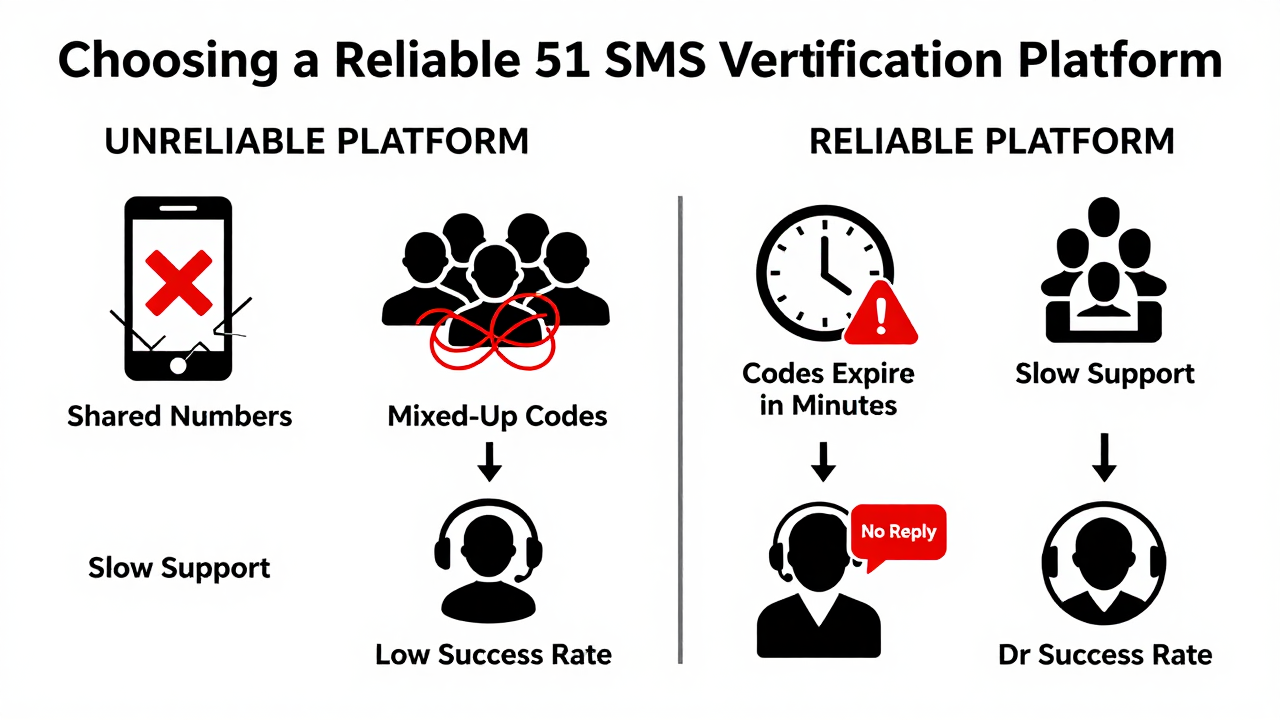
Let's start with the issues people tend to overlook. Many platforms advertise "global numbers, pick any country," but the reality is far from it. Some platforms share the same number across dozens of users simultaneously, which means verification codes get mixed up and cross-contaminated. Nothing more frustrating than receiving someone else's code when you're mid-registration.
Then there are platforms that boast "unlimited SMS receiving," but each number only stays active for a few minutes. You paste the number into your registration form, and by the time you hit submit, the number has already expired. For anyone doing bulk operations, this kind of experience is an absolute nightmare.
Customer support response time is another make-or-break factor. A common pattern we see across the industry: users hit a "code not received" issue, reach out to support, and wait hours with no reply. Meanwhile, their business sits idle. Time is money—especially during peak sales seasons when every minute counts.
How to Tell If a Platform Is Actually Reliable
Based on my years of testing, here's the checklist I use:
- Exclusive numbers only—a shared number pool is useless no matter how large. Exclusive access is what drives success rates.
- Coverage that matches your market—if you sell to the US and Europe, you need plenty of US and European numbers, not just Asian ones.
- API stability—if you're integrating via API, test for drop rates and latency before committing.
- Responsive support—when something breaks, can you get help fast? This matters more than anything else.
These criteria sound straightforward, but surprisingly few platforms actually meet all of them. Many look great in their marketing materials and fall apart in practice. My advice: run a small test batch before committing any significant budget.
What to Look For When You Have Bulk Registration Needs
If you're running a studio or business with high-volume registration requirements, your selection criteria shift. Bulk operations demand efficiency and cost control, which makes API stability and number reuse rates critically important.
I've worked with teams running automated registration scripts that hammer the API with concurrent requests. If the platform's infrastructure can't handle the load, everything freezes during peak hours and the entire pipeline collapses. In this scenario, technical capability matters far more than pricing.
Platforms like Getfollow have invested heavily in API stability and number resource scheduling, making them a solid fit for teams with automation needs. I'm not saying they're the only option—just that from an industry reputation standpoint, providers that build their tech foundation properly deserve a closer look.
Coming back to the 51 SMS verification platform question: there's no absolute "best" platform, only the right fit for your specific use case. A solo freelancer and a 50-person team have completely different requirements. Figure out what you actually need first, then evaluate platforms against that—you'll save yourself a lot of wasted time and money.
Understanding the Pricing Logic
Most people ask "how much per code?" right off the bat, but price alone is a terrible metric. Some platforms quote rock-bottom rates, but their number quality is so poor that your success rate drops by half—making the effective cost per successful verification higher. Other platforms charge a bit more but deliver exclusive numbers and consistent success rates, which works out cheaper in the long run.
Payment terms deserve attention too. Legitimate platforms typically offer pay-as-you-go billing without forcing you to deposit large sums upfront. If a provider insists you preload hundreds of dollars before you've even tested their service, that's a red flag.
Looking at industry trends, SMS verification platforms are moving toward greater regulation and professionalism. Providers that rely on low prices to attract traffic while delivering subpar service are gradually getting squeezed out. What's left are the ones that genuinely solve user pain points.
Practical Recommendations Before You Commit
Here's my actionable advice, distilled into four points:
- Test small first. Run a minimal batch before signing any long-term agreement.
- Prioritize success rates and support speed. These two metrics determine whether the platform actually works for you.
- Stress-test the API. If you're running high volume, simulate peak load to see if the platform holds up.
- Don't chase cheap, don't chase premium. Find the platform that matches your operational rhythm.
Choosing a 51 SMS verification platform isn't rocket science, but it's not trivial either. The key is to test, compare, and look past the marketing hype. I hope this guide helps you avoid the traps I've fallen into and lets you focus your energy on growing your actual business.
If you're already using a platform, drop your experience in the comments below—it'll help fellow cross-border operators make better decisions.
Frequently Asked Questions About 51 SMS Verification Platforms
What is a 51 SMS verification platform and how does it work?
A 51 SMS verification platform provides virtual phone numbers that receive SMS verification codes online. You select a number from the platform's pool, use it to register or verify accounts on services like Amazon, WhatsApp, or social media, and the platform displays the incoming code in real time. No physical SIM card is needed.
Are cheap SMS verification platforms worth using?
In most cases, no. Low-cost platforms typically rely on shared number pools, which leads to code mix-ups and higher account ban rates. The money you save on per-code pricing gets wiped out by lost accounts and wasted time. A mid-priced platform with exclusive numbers and stable success rates almost always delivers better ROI.
How do I test an SMS verification platform before committing?
Start with a small prepaid amount—enough for 10 to 20 verifications. Test numbers across the countries you actually operate in, measure the code delivery time, and check whether the number stays active long enough to complete your registration. If you plan to use the API, run a small script to test stability and response times.
What's the difference between shared and exclusive numbers?
Shared numbers are used by multiple customers simultaneously, which means you might receive someone else's verification code or miss your own. Exclusive numbers are assigned to a single user for a set period, drastically improving success rates. For any serious cross-border operation, exclusive numbers are the only sensible choice.
Which SMS verification platform is best for cross-border e-commerce?
There's no single "best" platform—it depends on your target markets, volume, and whether you need API integration. That said, platforms like Getfollow that emphasize number exclusivity, broad country coverage, and API reliability tend to earn the strongest recommendations from industry practitioners.