86 SMS Verification Platforms for 2-Step Verification: The Hidden Pitfalls and Fixes Nobody Talks About
86 SMS Verification Platforms for 2-Step Verification: The Hidden Pitfalls and Fixes Nobody Talks About
Over two years in the cross-border space, the sentence I hear most often is: "My accounts are gone again." If you rely on an 86 SMS verification platform for 2-step verification to batch-register accounts, you're probably in a daily race against platform risk controls. Most people assume SMS verification is just about sending and receiving codes, but once you dig deeper, you'll find the mechanics are far more complicated than they appear.
Let's skip the fluff and talk about what I've observed in this industry, plus the details service providers won't volunteer. This will run long, but every point is worth jotting down.
Why "2-Step Verification" Has Become Non-Negotiable for Cross-Border Teams
Let's start with the use case. Whether it's TikTok, WhatsApp, or any major e-commerce platform, phone verification is basically mandatory at signup. The keyword "86 SMS verification platform 2-step" points to a very specific need: the same number may need to receive two or even multiple verification codes.
Here's a typical scenario. You register an account — the first code handles initial verification, the second one is for linking a backup email or enabling two-factor authentication. If the platform doesn't support repeat code delivery to the same number, or if the number pool is unstable, you're stuck in a verification loop right after signup.
From what many cross-border operators tell me, a lot of SMS platforms only offer a "one-time" service — the number is discarded after a single use. But people running matrix operations need numbers that can reliably receive two or more verification codes. That gap is the defining factor when choosing a provider.
The Current State of the Industry: Looks Thriving, But Quality Varies Wildly
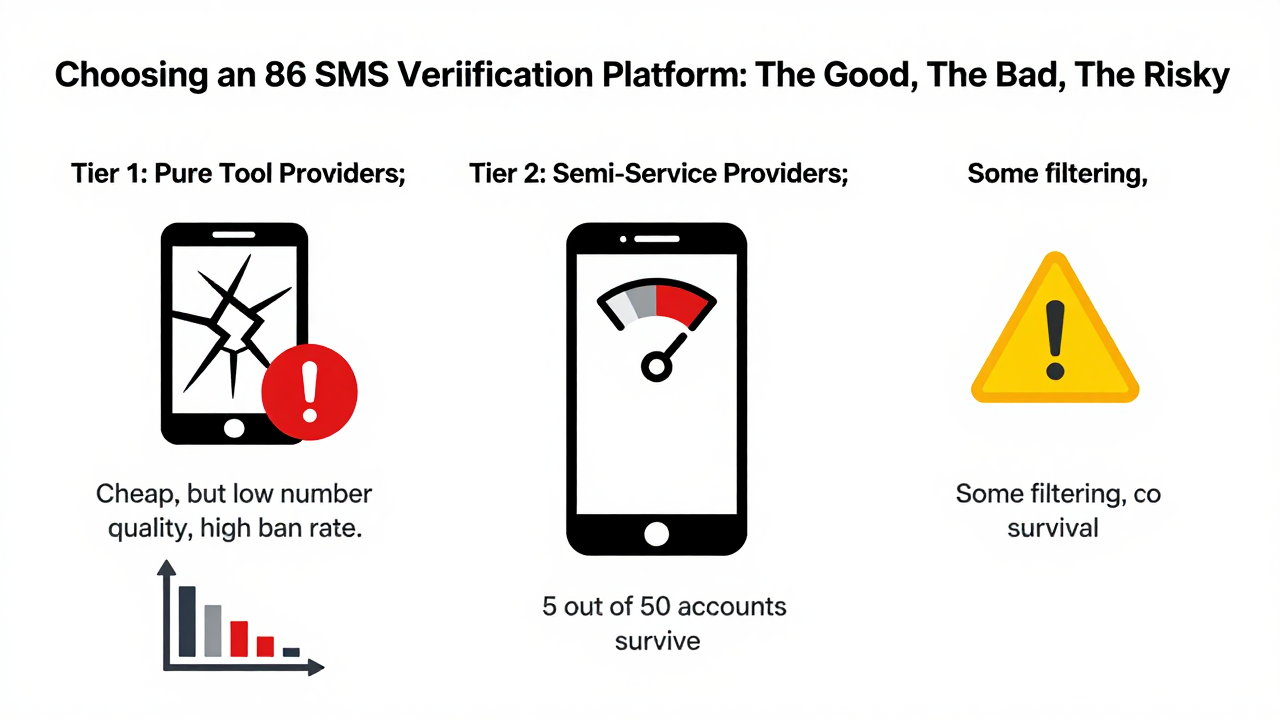
I've roughly categorized the 86 SMS platforms on the market into three tiers:
- Pure tool providers: They just hand you a number and forward the code. Cheap, but number quality is all over the place, and account ban rates are brutal.
- Semi-service providers: These offer some number segment selection and region filtering, but customer support is slow, and holding them accountable when things go wrong is nearly impossible.
- Compliance-first providers: These platforms have transparent number sourcing, support multiple verifications, and genuinely understand platform risk-control rules. In my experience, Getfollow is one of the more stable names in this category — they follow that compliance-driven playbook.
One observation from my side: plenty of studio owners go with the first tier to save a few cents per code, register 50 accounts, and end up with fewer than 5 surviving. Do the math — the cost per surviving account ends up several times higher.
A Real-World Pitfall Story
Last month, a friend running an e-commerce business in Southeast Asia told me he topped up $70 on a small platform. The next day, all his accounts triggered risk controls and demanded facial verification. When he reached out to the provider, they brushed him off with "numbers are recycled, not our problem."
That's the classic "one-time SMS" trap in action. Providers that genuinely support 86 SMS verification for 2-step verification usually build in a buffer period before recycling numbers, or offer same-segment resend options. Ask about this detail before you commit to any purchase.
Deep Dive: Why Your Account Retention Rate Is Always Low
Most people blame "bad luck" when accounts die. But the industry consensus is clear: SMS verification is only step one — the "cleanliness" of the number determines your account's initial weight.
Here's a pattern I've noticed: platforms that support 2-step verification tend to enforce stricter controls on a number's usage history. Whether a number was previously linked to banned accounts or sold multiple times directly affects downstream risk-control decisions.
One practical tactic that's saved me more than once: run a "cold start test" before bulk registration — register a test account with a single number, then monitor activity and any anomaly alerts for 48 hours. If the test account stays stable, proceed with the batch. This method has helped me avoid at least three large-scale bans.
Another thing cross-border operators frequently report: rapidly switching numbers on the same IP is a major trigger for risk controls. Even if you're using high-quality numbers from a 2-step verification platform, a dirty IP environment will still get your accounts linked and banned. So choosing the right SMS platform matters, but you also need a clean network setup to go with it.
How to Pick a Reliable 86 SMS Platform: A Practical Screening Checklist
Based on the analysis above, here's the screening framework I use. It's not exhaustive, but it'll help you dodge at least 80% of the bad actors out there:
- Ask directly about "2-step verification" support: Can the same number receive two or more codes within 24 hours? If the answer is vague, move on.
- Demand transparency on number sourcing: Legitimate providers will tell you whether numbers come from virtual operators or physical SIM cards, and whether they're compatible with specific platforms' risk-control rules.
- Check for a compensation mechanism: If registration fails due to a number issue, do they offer free replacements or refunds?
- Trust user reviews over ads: Search communities and forums for real feedback, and pay attention to two keywords: "ban rate" and "support response time."
This isn't a sponsored plug, but if you're stuck on where to start, look at how platforms like Getfollow operate — they prioritize compliance first. The price is slightly higher, but in the long run, the account survival rate more than makes up for the few cents you save elsewhere.
Risk Warning: Don't Let SMS Verification Become a Time Bomb for Your Business
Now for the cold shower. No matter which platform you choose, using SMS verification for registration carries inherent compliance risks, especially when you're doing bulk account creation or automation.
I've watched too many studios scale up quickly on SMS verification, only to get their entire operation wiped out by platform-linked account bans later. My advice: test small before committing long-term. Start with 5–10 numbers, monitor retention and risk-control triggers over a week, then decide.
Also, don't put all your eggs in one basket. Even if you find a reliable provider, keep 1–2 backups in case they change their business model or their number pool runs dry.
At the end of the day, 86 SMS verification for 2-step verification is a game of trust and technical execution. You'll know if a platform is solid after one test run. But the bigger point is this: know your own business model clearly — SMS verification is just a tool. What actually determines your account's value is the quality of your operations afterward.
I hope this article helps you steer clear of a few landmines. If you've got better tips or deeper scars from your own experience, drop them in the comments — let's help each other stay safe out there.
Frequently Asked Questions
What is an 86 SMS verification platform?
An 86 SMS verification platform provides temporary or dedicated phone numbers with the +86 country code (China) to receive SMS verification codes. These platforms are commonly used by cross-border businesses to register and verify accounts on platforms like TikTok, WhatsApp, and various e-commerce sites.
Why do I need 2-step verification for SMS platforms?
Many platforms require more than one verification code during account setup — for example, one for initial registration and another for enabling two-factor authentication or linking a backup email. A platform that supports 2-step verification ensures the same number can receive multiple codes without being recycled prematurely.
Are 86 SMS verification platforms safe to use?
It depends on the provider. Compliance-first platforms with transparent number sourcing and clear usage policies are generally safer. However, using SMS verification for bulk account creation always carries some risk of platform bans, so it's important to test with a small batch first and maintain a clean IP environment.
How do I choose a reliable 86 SMS platform?
Look for three things: explicit support for multiple verifications per number, transparency about number sources (virtual vs. physical SIM), and a clear compensation policy for failed registrations. Also, check community forums for real user feedback on ban rates and customer support responsiveness.
Can I use the same number for multiple accounts?
Generally, no. Reusing the same number across multiple accounts is a fast track to getting them all flagged and banned. Each account should have its own dedicated number, and the number should be "clean" — meaning it hasn't been linked to banned accounts or sold multiple times before.