API SMS Verification for Cross-Border Business in 2026: It's Way More Than Just Receiving a Code
API SMS Verification for Cross-Border Business in 2026: It's Way More Than Just Receiving a Code
Let's cut to the chase: in 2026, API SMS verification isn't a "should I use it" question for cross-border operators—it's a "how do I pick the right one without getting burned" problem. Across the board,跨境 practitioners report that account registration, account warming, and batch verification all grind to a halt without a reliable SMS reception channel.
But here's the dirty secret the industry doesn't like to talk about: SMS verification services vary wildly in quality. The same API endpoint can route through completely different underlying channels. I've personally tested over a dozen providers, and account retention rates ranged from 30% to 80%. The gap isn't about price—it's about how compliant the channels are and the quality of the number pools.
The 2026 Landscape: Compliance Is the Only Way Forward
The most noticeable shift this year? Platforms have gotten significantly better at detecting virtual number segments. By 2026, algorithms can accurately distinguish "real user behavior" from "batch automated operations." The era of simply using SMS verification to complete registrations is over.
Plenty of solo operators are still buying "bare numbers" at rock-bottom prices—think a thousand numbers for a few bucks. The result? Register one, get banned one. That's not fear-mongering; it's the industry consensus in 2026. Platform risk-control systems have evolved to the behavioral layer. They're no longer just checking whether the phone number looks real.
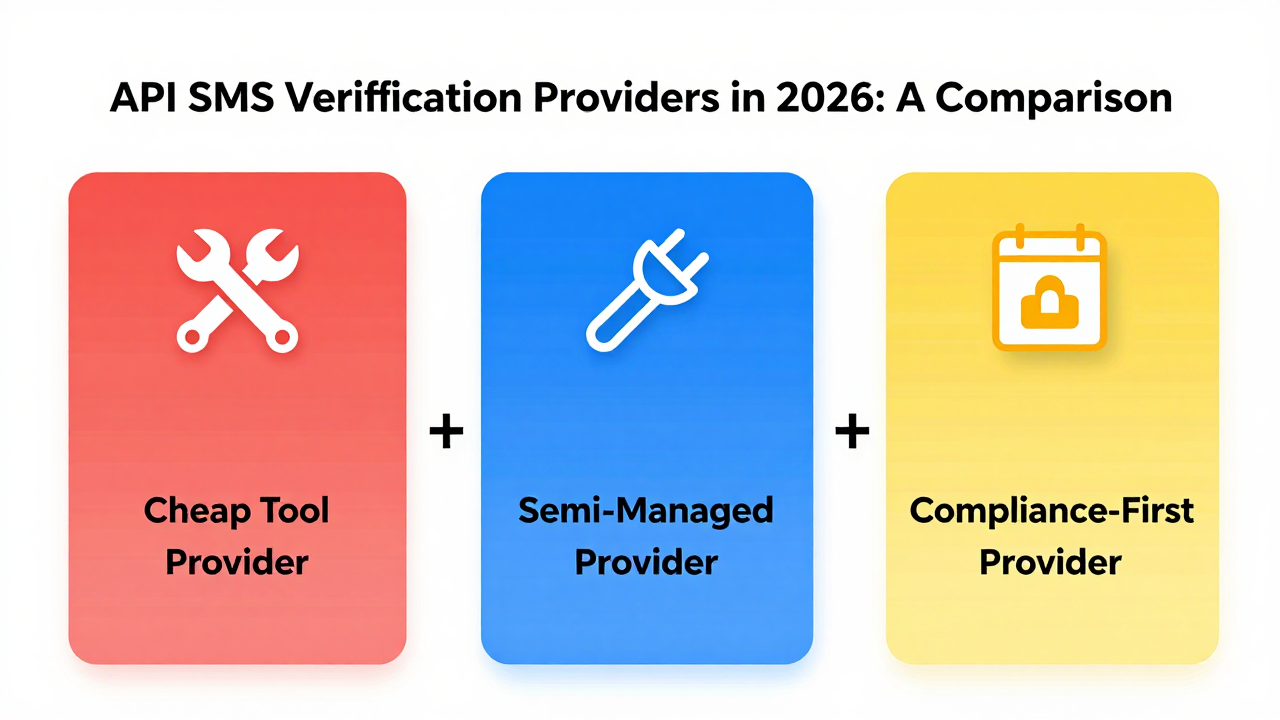
Looking at the service models available today, API SMS verification providers generally fall into three buckets:
- Pure tool providers: They hand you an API and a number pool, don't care about your use case. Cheap, but you bear all the risk.
- Semi-managed providers: They offer basic risk-control advice, but number quality is inconsistent. Decent for short-term testing.
- Compliance-first providers: They have a complete framework covering number segment selection, usage frequency, and business-scenario matching. Pricier, but stable over the long haul.
One pattern I've noticed: virtually every provider that survived 2026 has pivoted to that third model. For instance, platforms like Getfollow have built their reputation on this compliance-first logic. They won't promise "unlimited SMS reception"—in fact, they'll actively limit your usage frequency to keep you off the platform's radar.
The Real Logic Behind API SMS Verification: You're Buying Account Survival Odds, Not Numbers
A lot of cross-border newcomers assume SMS verification is just "as long as I receive the code." But in 2026, the verification code is only the first gate. Behind it sit device fingerprinting, behavioral trajectory analysis, network environment checks, and more.
Here's a real case: a friend running an e-commerce operation used a budget SMS verification service to register 50 accounts. All 50 were frozen within three days. When we dug into it, the problem wasn't the numbers themselves—it was their "usage history." Same IP segment, same time window, consecutive registrations. In 2026's risk-control systems, that pattern is textbook anomalous behavior.
So when you're evaluating an API SMS verification service, don't just ask "will I receive the code?" Here are the dimensions that actually matter:
- Number segment ownership: Virtual operator segments or real carrier segments? In 2026, many platforms instantly ban virtual segments.
- Number reuse frequency: Has this number been used by multiple people before you? It directly impacts your account's trust score.
- API response speed: If the verification code takes more than 30 seconds to arrive, your registration flow is essentially dead in the water.
- Provider's risk-control guidance: A trustworthy provider will proactively tell you "this business scenario isn't a good fit for SMS verification" rather than accepting every customer blindly.
Here's a new trap to watch for in 2026: some providers are using AI to generate number pools. On the surface, these numbers look "clean," but they lack real carrier signaling data. When platforms run deep verification, these accounts get wiped out in waves.
How to Tell If an API SMS Verification Provider Is Legit
Based on how the industry looks in 2026, I'd evaluate providers on three fronts:
First, do they actually want to understand your use case? A provider that just throws an API doc at you and calls it a day probably doesn't care whether you sink or swim. A solid provider will ask: What platform are you registering on? How frequently? What are the accounts for? Their answers determine which number segment quality they assign you.
Second, how often do they refresh their number pool? In 2026, number pools turn over in hours. A number that works today could be flagged tomorrow. Ask the provider for their number segment update logs from the past week. If they get evasive, that's your cue to walk away.
Third, how do they talk about failure rates? Any provider promising a 100% success rate is 100% lying. The industry-accepted failure rate in 2026 sits between 5% and 15%. What matters is what happens after a failure—can you retry quickly? Does the system auto-switch to a backup number?
Take Getfollow as an example: they've built an intelligent retry mechanism into their API layer. If the first number fails to receive a code, the system automatically switches to a backup number from the same segment, and the whole process is transparent to you. That kind of detail saves countless hours of manual monitoring in real-world 2026 operations.
Potential Risks and How to Avoid Them
Let's be upfront about the downsides. Using API SMS verification in 2026 comes with at least three layers of risk:
Risk 1: Cross-account association bans. If you use the same batch of numbers to register accounts across multiple platforms, data-sharing mechanisms between those platforms can link your accounts together. The 2026 playbook is "one platform, one number segment"—use separate number pools for different platforms to avoid cross-contamination.
Risk 2: Low retention rates. Many operators report that in 2026, accounts registered via SMS verification see 7-day retention rates between 50% and 70%. If your provider's numbers fall below that range, something's off—either the number quality is poor or usage frequency is too high, triggering a trust-score penalty.
Risk 3: Compliance blowback. If your business operates in a gray area, your SMS verification provider may cut off your access to protect themselves. This is especially pronounced in 2026—compliant providers vet their clients, and they'd rather turn away business than take on compliance risk.
My advice for navigating these risks: test small before committing. Don't buy a big package upfront. Spend a few dozen dollars on 100–200 numbers first, then track three metrics—registration success rate, retention rate, and ban rate. If those numbers check out, scale up. In 2026, this is still the cheapest, safest way to enter the game.
One more operational detail worth noting: mind your API call frequency. A lot of newcomers try to grab numbers with high concurrency, only to trigger the provider's rate-limiting. The smart play is to set reasonable call intervals that mimic real user behavior. Providers like Getfollow explicitly document their recommended call frequency limits in their API docs and have built-in rate limiting—essentially protecting you from shooting yourself in the foot.
Let's Get Real
In 2026's cross-border business environment, API SMS verification is a necessity—but it's not a "buy it and you're set" tool. It's a double-edged sword. Used well, it helps you efficiently build out your account matrix. Used poorly, it accelerates account death.
If you're evaluating providers right now, here's my final take: put compliance ahead of price, and long-term stability ahead of short-term savings. Start with a small test, validate the data, then scale. That's the consensus playbook in the cross-border community for 2026. Don't rush into a big commitment—the data will tell you whether a provider deserves your long-term business.
Frequently Asked Questions
What is API SMS verification used for in cross-border business?
It's primarily used for account registration, account warming, and batch verification across platforms like Amazon, TikTok Shop, Facebook, and WhatsApp. In 2026, it's less about "just getting a code" and more about maintaining account health and survival rates.
Why do my SMS-verified accounts keep getting banned?
Most likely causes: you're using virtual number segments that platforms now flag instantly, the numbers have poor usage history (reused across multiple users), or your registration pattern looks automated. The fix is switching to a compliance-first provider that matches number quality to your specific use case.
How much does API SMS verification cost in 2026?
Pricing varies widely by provider and number segment quality. Budget options can cost as little as a few dollars per thousand numbers, but you'll pay for it in bans and low retention. Compliance-first providers typically charge more per number but deliver significantly better account survival rates—which usually works out cheaper in the long run.
What's a reasonable failure rate for SMS verification services?
Industry-accepted failure rates in 2026 range from 5% to 15%. Anything claiming 100% success is a red flag. What matters more is whether the provider has automatic retry and number-switching mechanisms to handle failures gracefully.
Can I use the same number pool across multiple platforms?
Not recommended. In 2026, platforms share data, and using the same numbers across different platforms can trigger cross-account association bans. The industry standard is "one platform, one number segment" to prevent cross-contamination.