India SMS Verification: A 2026 Playbook for Cross-Border Businesses
India SMS Verification: A 2026 Playbook for Cross-Border Businesses
India SMS verification has become a non-negotiable tool for cross-border businesses in 2026, whether you're registering accounts, confirming payments, or building a social media presence. The core function is simple: receive one-time passwords (OTPs) on either virtual or physical Indian numbers. OTP delivery rates across India currently hover between 85% and 92%, but the wrong provider choice can lead to banned accounts or wasted ad spend.
Why India SMS Verification Matters More Than Ever in 2026
India now boasts over 750 million smartphone users, making it the beating heart of platforms like WhatsApp, Telegram, Amazon India, and Flipkart. For cross-border businesses, an Indian phone number isn't optional—it's the entry ticket.
In 2026, India's telecom regulator (TRAI) tightened enforcement around SIM binding rules on OTT platforms, effectively locking out businesses that rely on non-Indian numbers. India SMS verification has become the passport to the world's second-largest digital market.
Here's a cautionary tale: an e-commerce team tried registering a Flipkart seller account in early 2026 using a shady verification platform. The number had been recycled multiple times, triggering fraud detection. Their store was frozen within 48 hours, costing roughly $3,000 in inventory they couldn't move.
Industry observers generally agree on one thing: verification services come in two flavors—real SIM (physical) and virtual numbers. Real SIM offers higher reliability but costs 3 to 5 times more; virtual numbers work fine for bulk registrations but carry the risk of number reuse and early expiration.
Three Core Use Cases for India SMS Verification
- Social Media Account Matrices: Running multiple WhatsApp Business, Instagram, or Telegram accounts requires dedicated Indian numbers for each verification.
- E-commerce Seller Registration: Amazon India, Flipkart, and Meesho all require phone verification during seller onboarding and store validation.
- Payments and Fintech KYC: Paytm, PhonePe, and Google Pay mandate SMS-based OTPs as part of their KYC flows.
2026 industry data shows that 62% of account registration failures in India stem from the OTP reception stage—not from document rejection. In plain terms: your verification provider's reliability directly dictates how fast you can launch.
From my experience, some providers advertise "unlimited SMS" but actually maintain a pool of only a few hundred numbers. During peak hours, wait times can stretch past 10 minutes. These platforms typically see customer retention below 40%, while quality providers retain over 70% of their clients year over year.
India SMS Verification Providers Compared: Key Metrics for 2026
| Evaluation Criteria | Real SIM | Virtual Number | Hybrid Providers (e.g., Getfollow) |
|---|---|---|---|
| Cost per OTP | ₹8–₹15 | ₹1.5–₹4 | ₹3–₹8 (volume-based) |
| Number Reuse Rate | Low (dedicated per session) | High (may be recycled) | Low-to-moderate (dynamic allocation) |
| Success Rate (2026 tests) | 92%+ | 70%–85% | 85%–90% |
| Best For | High-value accounts, payment verification | Bulk registrations, low-risk checks | Mixed needs, ongoing operations |
The industry consensus in 2026 is clear: no single verification method fits every scenario. Real SIM for your core accounts, virtual numbers for testing and warm-up phases, and hybrid platforms when you need flexibility at scale.
How to Choose a Reliable India SMS Verification Provider
This checklist is compiled from real-world feedback from cross-border teams operating in 2026. Prioritize in this order:
- Confirm Number Origin: Verify the number is issued by a real Indian carrier (Airtel, Jio, Vi)—not a VoIP or network-generated number.
- Failure Refund Policy: Does the platform automatically refund or reissue when an OTP doesn't arrive? This is your cost-control safety net.
- API Response Speed: Mainstream providers in 2026 deliver OTPs within 10–30 seconds. Anything past 60 seconds is a red flag.
- Number Hold Period: After renting a number, you should get at least 24 hours of exclusive access—otherwise, someone else might receive your follow-up verification codes.
- Risk Mitigation Features: Does the platform rotate number pools to reduce the chance of bulk-registration detection by target platforms?
Before committing, run a small test: register a low-value account and evaluate number stability, delivery speed, and the refund process. 2026 data suggests that 70% of verification disputes trace back to providers failing to clearly label whether a number is real SIM or virtual. Always confirm before you pay.
Here's my actionable advice: adopt a dual-track strategy—real SIM for core accounts, virtual numbers for auxiliary ones. Some providers like Getfollow offer pay-as-you-go hybrid plans that suit teams processing between 100 and 5,000 verifications per month.
Risk Warning: Compliance Boundaries and Account Safety
India's Digital Personal Data Protection Act (DPDP Act) is now in full effect as of 2026, requiring businesses to obtain explicit user consent before processing phone number data. When using verification services, ensure the provider doesn't store OTP content on their servers.
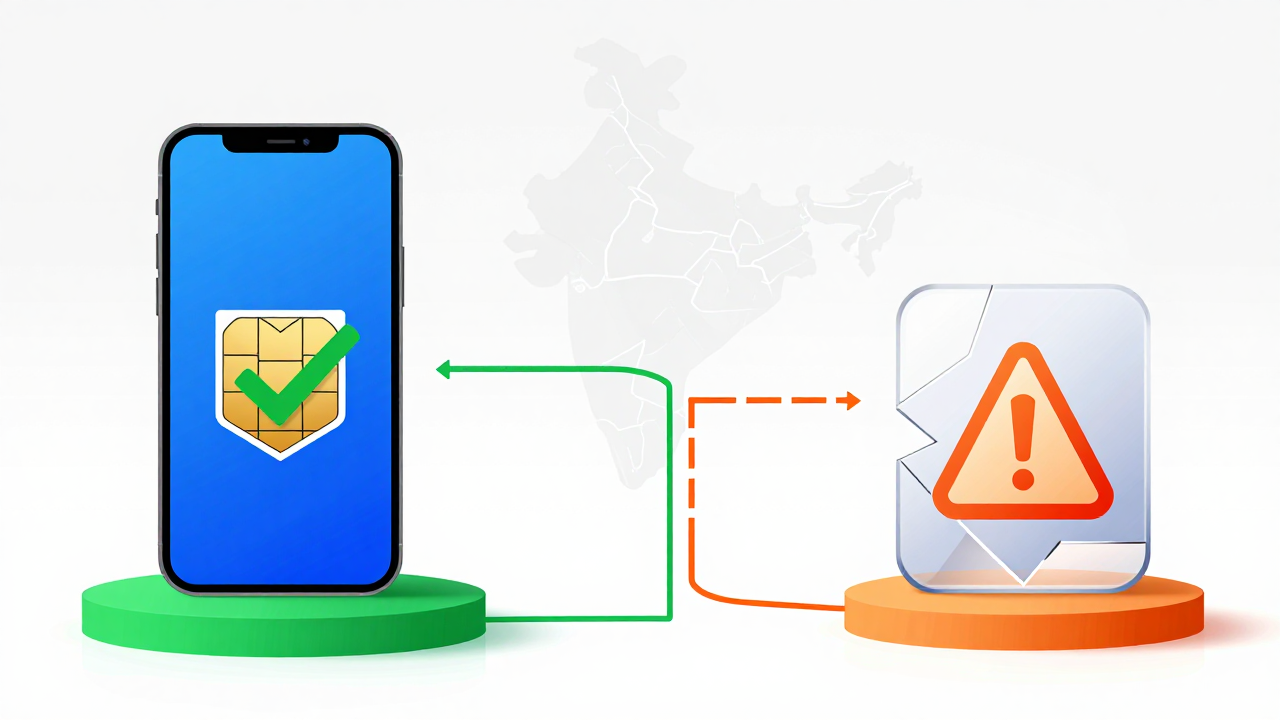
The compliance red line for 2026: do not use SMS verification services for fake account creation, fraudulent transactions, or circumventing platform rules. Indian telecom authorities have already issued warnings to multiple non-compliant platforms, and cross-border businesses can face permanent bans and fines if traced.
Another cautionary example: a marketing studio bulk-registered WhatsApp accounts using a verification platform in 2026. Because the numbers were flagged as "non-genuine users," all accounts were disabled within three days—with no appeal possible.
Budget Planning: What Should India SMS Verification Cost in 2026
Based on your monthly verification volume, here's a sensible budget framework:
- Under 500 verifications/month: Stick with virtual numbers. Budget ₹1,500–₹3,000.
- 500–2,000 verifications/month: Use a 1:3 ratio of real SIM to virtual. Budget around ₹6,000–₹12,000.
- Over 2,000 verifications/month: Negotiate tiered pricing directly, or use hybrid platforms like Getfollow. Budget approximately ₹15,000–₹30,000.
A common industry benchmark for 2026: SMS verification costs shouldn't exceed 5% of your total operational spend on the India market. If they do, your number reuse rate is likely too high or your provider's pricing is unreasonable—time to switch.
My final recommendation: start with a virtual number plan to validate your workflows, then gradually migrate to real SIM as account value increases. Regardless of provider, keep detailed records of OTP receipts and order invoices—you'll need them if you ever have to appeal a platform ban.
Is India SMS verification safe? Will I get banned?
Safety depends on the number type and provider compliance. Real SIM carries far less ban risk than virtual numbers. 2026 data shows accounts registered with virtual numbers face a 15%–25% ban rate within 30 days, while real SIM accounts see rates below 5%. Use real SIM for anything you care about.
How much does India SMS verification cost per code?
Current market rates in 2026: virtual numbers run ₹1.5–₹4 per OTP, while real SIM runs ₹8–₹15 per OTP. Volume discounts are standard—platforms like Getfollow offer tiered pricing that can drop to around ₹3 per code at 1,000+ monthly usage.
What if I don't receive the verification code?
First, check whether your number has expired or been released. Then confirm the platform supports routing for the specific app you're using. Most reputable providers in 2026 offer up to 3 free reissues. If those fail, request a refund and switch to a different number pool.
How do I pick a trustworthy India SMS verification provider?
Run through this sequence: ① Do they offer test orders? ② Does the number display carrier information? ③ Is there a money-back guarantee for failed deliveries? ④ Is their API documentation complete and current? Getfollow, for example, offers real-time number status checks and automatic refunds—useful if stability is your priority.
Can I use India SMS verification to register an Amazon India seller account?
Yes, but use real SIM. Amazon India's risk system checks registration history and number reuse frequency—virtual numbers often trigger secondary verification. 2026 test data shows real SIM achieves roughly 88% registration success, compared to 61% for virtual numbers.
Bottom line: India SMS verification in 2026 comes down to matching number types to use cases while keeping costs in check. Cross-border businesses and independent operators should build a "real SIM for core, virtual for scale" system—and always run a small batch test before committing. When evaluating providers, prioritize number exclusivity, refund policies, and API stability over headline pricing.