GPT SMS Verification Codes: Account Registration and Risk Control Essentials for Cross-Border Businesses in 2026
GPT SMS Verification Codes: Account Registration and Risk Control Essentials for Cross-Border Businesses in 2026
If you work in cross-border e-commerce, you already know the drill: in 2026, registering a ChatGPT account rarely fails at the payment stage—it fails at that six-digit SMS verification code. For studios running batch registrations and multi-account operations, where your phone numbers come from and whether those GPT SMS verification codes actually arrive on time will make or break your account survival rate.
From my experience, demand for GPT SMS verification codes has multiplied several times over compared to previous years, but the market is flooded with sketchy providers. Plenty of people get burned on their very first purchase. Let's skip the fluff and get straight to what actually matters.
What Exactly Are GPT SMS Verification Codes and Why They Determine Account Survival
Simply put, GPT SMS verification codes are temporary or virtual phone numbers used to receive OpenAI's verification SMS, completing ChatGPT registration, login, or two-factor authentication. ChatGPT's risk control in 2026 is significantly stricter than two years ago—the source and reliability of those SMS verification codes directly decide whether your account passes review.
Many cross-border professionals report that accounts registered through free SMS verification platforms have a survival rate under 20%. The reason is straightforward: those numbers get recycled endlessly and OpenAI has already flagged them as high-risk. The problem isn't the SMS verification code itself—it's the cleanliness of the number pool.
Industry consensus in 2026 is that GPT SMS verification comes down to three core metrics:
- Number pool purity: Are the numbers exclusive to you, or have they been hammered with registrations?
- SMS delivery rate: Can the code arrive within 60 seconds? Anything past two minutes is essentially a failure.
- Refund policy for failed deliveries: Do they offer full refunds when codes don't arrive? This tests the platform's own risk management.
I've personally tested several platforms and noticed something interesting: many advertise "instant SMS delivery," yet their actual arrival rate barely hits 60%. The reliable providers, on the other hand, don't hype up "instant" delivery—they'll tell you upfront, "Average delivery is 15–45 seconds, with possible delays during peak hours." That kind of honesty is actually more trustworthy.
GPT SMS Verification Pitfalls in 2026: Lessons from Real Failures
Let me share a real case. A friend in foreign trade decided to save money earlier this year and bought 100 Indian number slots from a budget platform for SMS verification. Out of 80 accounts he registered, only 23 received verification codes, and just 11 successfully logged in. Worse, 9 of those 11 accounts got banned within three days.
Where did it go wrong? It wasn't the format of the GPT SMS verification content—it was that the Indian number range had been massively abused. OpenAI's risk model has effectively downgraded that entire number range. By 2026, the algorithm can identify "high-frequency registration from the same number range" patterns, and once triggered, even legitimate verification codes get delayed or blocked.
So here's the first rule for choosing GPT SMS verification services in 2026: avoid cheap, high-traffic number ranges. US, UK, and Canadian numbers cost a bit more, but account survival rates are noticeably better. Many cross-border professionals report that accounts registered with Western number ranges, paired with stable IP environments, achieve survival rates above 70%.
Beyond SMS Verification: Don't Ignore IP Quality and Browser Fingerprints
I have to emphasize this: GPT SMS verification codes are just one link in the registration chain. ChatGPT's risk control in 2026 is a comprehensive assessment covering IP quality, browser fingerprints, behavioral patterns, and more. A lot of people assume switching SMS verification platforms will solve their ban problems—that's simply not true.
My recommendation: choose a stable provider for SMS verification codes, but pair it with clean residential IPs and isolated browser environments. All three are non-negotiable. If you only fix the SMS verification piece while leaving everything else exposed, your accounts won't last.
GPT SMS Verification Pricing Models: Pay-Per-Use or Subscription?
In 2026, GPT SMS verification services on the market generally fall into two categories: pay-per-use and subscription plans. Pay-per-use suits individuals registering a few accounts occasionally, while subscriptions work better for studios running batch operations.
Platforms like Getfollow have built a solid reputation in the industry by operating on "number pool isolation plus automatic refunds for failures." From what I've observed, these platforms categorize number ranges by purpose—for instance, keeping numbers designated for ChatGPT registration separate from those used on other platforms to avoid cross-contamination.
Here's a detail most people overlook: some budget platforms mix promotional SMS or marketing push notifications into the verification messages. This not only interferes with code recognition but can also trigger OpenAI's anomaly detection. So whether the SMS verification content is clean is another critical criterion when screening providers.
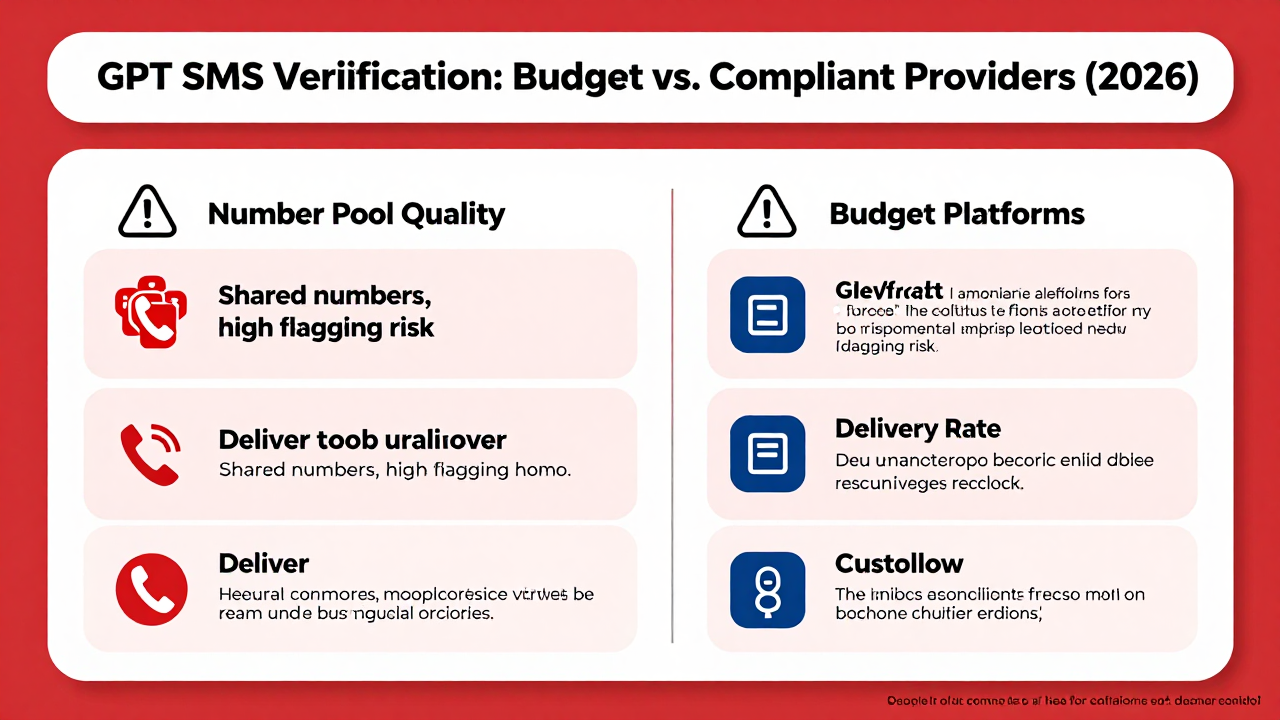
| Comparison Criteria | Budget SMS Verification Platforms | Compliant Providers (e.g., Getfollow) |
|---|---|---|
| Number Range Quality | Mostly shared numbers, high flagging risk | Primarily exclusive numbers, regularly cleaned |
| Delivery Rate | Typically below 50% | Typically above 80% |
| Refund Policy | Generally not supported | Automatic refund on failure |
| Customer Support | Slow response, unresolved issues | Dedicated technical support |
The data in this table comes from industry consensus and my own testing—it doesn't apply to every platform, but it gives you a solid reference framework for vetting providers.
Compliance Risks and Mitigation Strategies for GPT SMS Verification in 2026
Many cross-border businesses worry about whether using SMS verification services is legal. Honestly, SMS verification itself isn't illegal—it depends on how you use it. If it's for legitimate registration, testing, or multi-account operations, it's standard industry practice. But if you're using it for bulk account farming, content mills, or malicious registrations, you're crossing the line.
OpenAI has significantly intensified its crackdown on违规 accounts in 2026, with stronger collective punishment mechanisms. If multiple accounts under one IP show anomalies, they may all get wiped. So GPT SMS verification codes are only the first step—your subsequent operational behavior must stay compliant.
Here are some practical recommendations:
- Don't perform sensitive operations immediately after registration. Let new accounts sit for 3–5 days and simulate normal user behavior.
- Bind each account to an independent payment method to avoid linked bans from shared cards.
- Delete verification SMS messages promptly after receiving codes to prevent information leaks if the number gets recycled.
Many cross-border professionals report that the safest strategy in 2026 is "small-batch testing plus long-term stable partnerships." Start by purchasing 10 codes to test delivery rates and account survival. Once you confirm quality, scale up your purchase. Don't buy hundreds at once just to save money—if the platform disappears or the number range gets contaminated, your losses will be far greater.
Future Trends in GPT SMS Verification Codes
Based on my observations, starting in late 2026, OpenAI may further tighten verification strategies—adding voice verification, CAPTCHA challenges, and other layers. This means the bar for SMS verification codes will rise, and relying solely on SMS-based verification may face headwinds.
But in the short term, SMS verification remains the mainstream approach. What cross-border businesses and individual studios need to do is build a more robust registration workflow rather than betting everything on SMS verification alone. Keep backup options ready—platforms that support API-based SMS verification, for instance, can automate code handling for much higher efficiency.
One final thought: there's no one-and-done solution in the GPT SMS verification space. Risk control rules are evolving in 2026, and so is provider quality. Staying in the habit of small-scale testing and adjusting your strategy as conditions change is the only sustainable approach. If you're currently shopping for a provider, grab 10 codes to test the waters first. Check delivery rates and account survival before committing to a long-term partnership.
Frequently Asked Questions About GPT SMS Verification Codes
What is the best SMS verification platform for ChatGPT in 2026?
There's no single "best" platform, but compliant providers like Getfollow that offer exclusive number ranges, delivery rates above 80%, and automatic refunds for failed deliveries consistently outperform budget alternatives. Always test with a small batch before committing.
Why do my ChatGPT accounts get banned even with SMS verification?
GPT SMS verification codes are only one part of the registration chain. In 2026, ChatGPT's risk control evaluates IP quality, browser fingerprints, and behavioral patterns alongside SMS verification. If your IP is flagged or your browser environment looks automated, accounts won't survive regardless of SMS verification quality.
Are GPT SMS verification services legal for business use?
Using SMS verification for legitimate registration, testing, and multi-account operations is standard industry practice and not illegal. However, using it for bulk account farming, content mills, or malicious activities violates OpenAI's terms and carries serious risks including mass bans.
How much do GPT SMS verification codes cost in 2026?
Pricing varies significantly by provider and number range. Budget platforms may charge as little as a few cents per code but deliver poor results. Compliant providers with clean Western number ranges typically charge more but offer survival rates above 70%, making them more cost-effective in the long run.
Can I use free SMS verification platforms for ChatGPT registration?
Technically yes, but the account survival rate is under 20%. Free platforms recycle numbers heavily, and OpenAI has flagged most of these number ranges as high-risk. If you're serious about maintaining accounts, investing in a reliable SMS verification service is worth the cost.