How SMS Verification Services Work in 2026: What Cross-Border Sellers Must Know
How SMS Verification Services Work in 2026: What Cross-Border Sellers Must Know
Let's tackle the question head-on: how do SMS verification services actually work? The honest answer is that these platforms don't "send" text messages at all—their core function is receiving verification codes. What you're really asking is how to use a verification platform to complete account registration and validation. This distinction is where many cross-border sellers trip up in 2026.
I've watched countless people buy a verification service thinking it's a bulk messaging tool, only to realize they can't send a single text. The confusion stems from how these platforms structure their services, so let's break that down.
The Real Mechanics of SMS Verification Platforms: Borrowing Numbers, Not Sending Texts
In 2026, SMS verification services essentially provide access to a pool of temporary virtual numbers that can receive text messages. You grab a number through their API or web dashboard, use it to register for platforms like TikTok, WhatsApp, or Telegram, and the service forwards any verification codes sent to that number back to you.
So when you search "how does SMS verification work," what you actually need is the complete workflow for using a verification service to validate your accounts. Here's what industry insiders know: by 2026, the risk-control systems on major platforms have become remarkably good at flagging virtual number ranges. Google Voice, Microsoft, and other tech giants maintain aggressive blocklists for known verification numbers.
From my own testing across multiple platforms, here's a typical scenario: you register a social media account with a virtual number, everything works fine for three days, then suddenly you're asked to upload a photo of yourself holding your ID. That's when you realize the account is essentially dead in the water.
The Complete 2026 Workflow for Using SMS Verification Services (With Pitfalls to Avoid)
Now that the underlying logic is clear, let's walk through the actual process. Using a typical web-based verification platform as an example, the workflow usually breaks down into four steps:
- Pick a provider and top up your balance: You're charged per message, typically between $0.10 and $0.50 depending on the target country.
- Select your target number: Choose the platform you want to register for (say, Telegram), and the system assigns a number from the corresponding country.
- Register with that number: Enter the virtual number on the registration page and wait for the verification code to arrive.
- Retrieve the code and complete verification: The platform's dashboard updates in real-time with incoming messages—just copy and paste.
Sounds straightforward, right? But here's the 2026 catch: many verification platforms hand out "shared" numbers. That means the same number could be used by dozens of people simultaneously to register for different services. If one of those users triggers a violation and gets the number blacklisted, your account—mid-verification or already active—gets caught in the crossfire.
Let me share a real failure story. A friend running a dropshipping store wanted to bulk-register WhatsApp accounts for outreach. He grabbed a cheap verification package to save money. Out of 50 accounts he registered, 47 were banned within 48 hours. The remaining three had such low account weight that his marketing messages went straight to spam folders. When he dug into what happened, he discovered that entire number range had already been flagged as high-risk by WhatsApp—the provider just never told him.
This is why, when choosing a verification service in 2026, number "purity" matters far more than price. Industry consensus is that reputable providers isolate their number pools, ensuring each number is assigned to only one user at a time. Platforms like Getfollow have built a solid reputation using this exact approach—their rates run slightly higher, but users consistently report account survival rates above 70%.
Three High-Volume Use Cases for SMS Verification in 2026 Cross-Border Operations
Now that the mechanics are clear, let's talk about real-world applications. Different use cases demand completely different requirements from your verification service.
Use Case 1: Bulk Account Registration for Social Media Matrix Management
This is the most common demand. In 2026, TikTok and Instagram algorithms are extremely sensitive to "new account weight." Accounts registered with virtual numbers that don't immediately get a profile photo, bio, and linked email will likely end up in the "zombie account" pool—they won't even appear in Explore recommendations. Many cross-border sellers report that the quality of your first 1,000 followers determines whether your account enters the recommendation pool, and accounts registered with virtual numbers start with roughly one-third lower initial weight.
Use Case 2: Registering for Overseas Tools and Services (OpenAI, Notion, etc.)
These platforms have even stricter virtual number detection. By 2026, OpenAI's risk control has evolved into a "number reputation scoring" system, and most verification number ranges are already on their blacklist. If you only need temporary access, you might get lucky. But if you're planning long-term API usage, invest in a physical SIM or an overseas card instead.
Use Case 3: Testing Your Own Product's Registration Flow
This is the most overlooked—and most legitimate—use case. Many SaaS teams building for cross-border markets need to test registration experiences across different countries, and using verification services to simulate overseas phone numbers is the most cost-effective approach. However, note that in 2026, both Apple's App Store and Google Play have updated their review guidelines. If your app detects frequent virtual number registrations, it can directly impact your listing approval.
Clarifying the "Sending" Misconception About SMS Verification Services
Let's circle back to the title. If you genuinely need to send text messages—say, for marketing notifications to customers—a verification service won't help you. In the 2026 cross-border landscape, the proper way to send SMS is through Bulk SMS providers like Twilio or Plivo, or via the WhatsApp Business API. One route is more expensive but reliable; the other is cheaper but requires account warming.
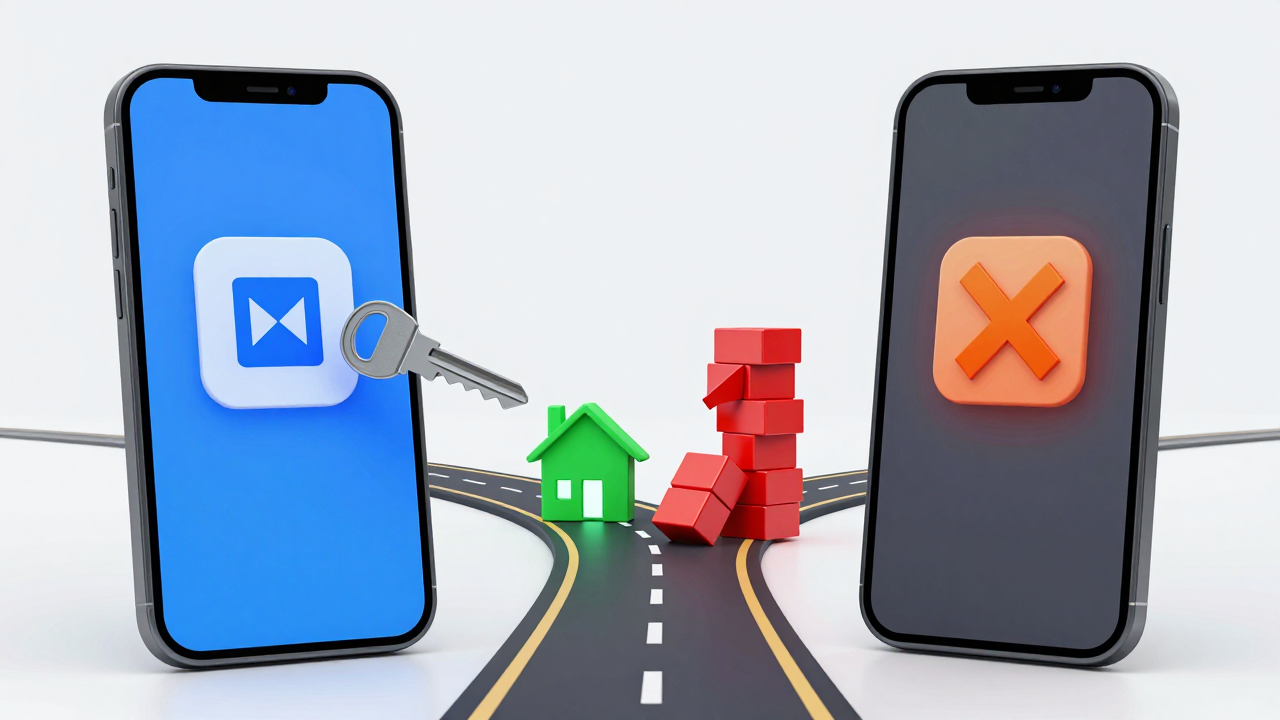
Too many newcomers conflate verification with bulk messaging. They buy a verification package, try to send marketing texts, fail completely, and waste their prepaid balance. This misconception is still rampant in 2026.
If you genuinely need "send" functionality, look for platforms that offer two-way SMS services—not verification platforms. Verification services are built for receiving, not sending.
How to Choose a Reliable SMS Verification Provider: A 2026 Practical Checklist
This is where the real decision-making happens. Drawing from my own mistakes and industry feedback, here's a screening checklist you can use right now:
- Check number pool isolation: Ask customer support directly, "Can the same number be assigned to multiple people simultaneously?" If they hedge or give vague answers, walk away.
- Review failure refund policies: Reputable platforms in 2026 typically offer "full refund if no code received." A provider willing to make that commitment has confidence in their risk control.
- Examine API documentation quality: The more detailed and well-maintained the docs, the more technical investment behind the platform—and the lower the risk of them vanishing overnight.
- Verify country coverage: If your primary market is Southeast Asia, buying from a platform focused on US/European numbers will waste your time and money.
- Start with a small test batch: No matter how impressive their sales pitch, put in $10, test five numbers, and observe both registration success rates and account survival over the following week before committing long-term.
Here's a critical 2026 warning: some platforms engage in "secondary selling" of accounts registered through their numbers—essentially packaging your account credentials and selling them to black-market operators. So, never use a verification number for any account involving money or sensitive personal data (think PayPal, Amazon seller central). That's a hard boundary you shouldn't cross.
If you need stable, compliant verification services, it's worth watching platforms like Getfollow. They use enterprise-grade number pool management, isolated from personal number pools. The per-unit price runs slightly higher, but long-term account retention is far more predictable.
The State of the SMS Verification Industry in 2026: Pricing, Retention, and Risks
Industry consensus shows that verification service prices in 2026 have risen about 30% compared to two years ago. The reason: telecom operators have tightened controls on virtual number ranges, making legitimate number resources scarcer. For US numbers, per-message pricing typically lands between $0.15 and $0.30. Numbers from India, Indonesia, and other Southeast Asian markets are cheaper—roughly $0.05 to $0.10.
But price isn't the only metric that matters. In 2026, industry-wide account retention rates hover between 50% and 70%. In practical terms: spend $10 on 10 numbers, and you might end up with only 5–7 accounts that remain stable beyond a week. If you bought an ultra-cheap package, retention could drop below 30%—that's where you're truly burning money.
Another risk to watch is cross-platform ban correlation. If you use one verification number to register on multiple platforms that share data (Facebook and Instagram being the obvious example), a flag on one account can trigger bans across all of them. Meta's risk control in 2026 has upgraded to cross-platform correlation detection—treat this as a serious threat.
Final Thoughts: Verification Services Are Tools, Not Shortcuts
So, how do SMS verification services work? By now you should see clearly: they solve the "receive verification codes" problem, not the "send messages" problem. In the 2026 cross-border ecosystem, verification services still have their place—but they're a cold-start aid, not the foundation of a long-term operation.
My recommendation: use verification services for initial account registration and validation, then immediately link a real email, enable two-factor authentication, and flesh out your account profile to gradually build account weight. And regardless of which provider you choose, test small before committing. Account security is the most expensive line item in any cross-border business.
Frequently Asked Questions
What's the difference between SMS verification services and bulk SMS marketing?
Verification services only receive codes—they have no capability to send outgoing messages. Bulk SMS marketing requires dedicated providers like Twilio or Plivo, charged per message, with templates that need pre-approval. In 2026, most platforms enforce strict review of marketing messages, so the WhatsApp Business API is often a better alternative.
Will accounts registered with verification numbers get banned?
There's a real chance, especially on platforms with aggressive risk control like TikTok and Instagram. Industry-wide retention in 2026 sits between 50% and 70%. If you're using shared numbers or budget packages, your ban rate will be higher. Link a real email immediately after registration and complete your profile to improve account weight.
How do I pick a reliable SMS verification provider?
Focus on three things: number pool isolation, refund policies for failed deliveries, and the quality of their API documentation. Platforms like Getfollow have built stable reputations using enterprise-grade number pool management—slightly higher pricing, but far more predictable account survival. Whatever you choose, run a small test batch before scaling up.
Can I use verification numbers for PayPal or Amazon accounts?
Strongly advise against it. Accounts tied to money and identity—if detected using virtual numbers—face restrictions at best, permanent bans at worst, potentially affecting your real identity information. Financial platforms in 2026 have mature risk-control systems. Don't gamble your business on this.