How to Connect SMS Verification Code API: A 2026 Compliance Guide for Cross-Border Businesses
How to Connect SMS Verification Code API: A 2026 Compliance Guide for Cross-Border Businesses
Let's cut to the chase: connecting an SMS verification code API in 2026 isn't rocket science anymore. But there's a world of difference between "getting connected" and "staying connected reliably." I've had countless cross-border entrepreneurs tell me their purchased numbers never receive codes, or their fresh accounts get flagged within minutes. Nine times out of ten, the problem isn't the API itself—it's the provider and number pool quality behind it.
Today, I'm not going to walk you through another generic seven-step tutorial. Instead, I'll share what I've observed across the industry: how API integration really works in 2026, the pitfalls that cost people real money, and how to tell if a provider actually knows what they're doing.
What API Integration Really Means: You're Buying Number Stability, Not Just an Interface
On the surface, connecting an SMS verification code API looks like a straightforward technical task—grab a URL, pass some parameters, receive a callback. But in the 2026 cross-border landscape, what truly separates successful integrations from failed ones is how "clean" the number resources behind that API are.
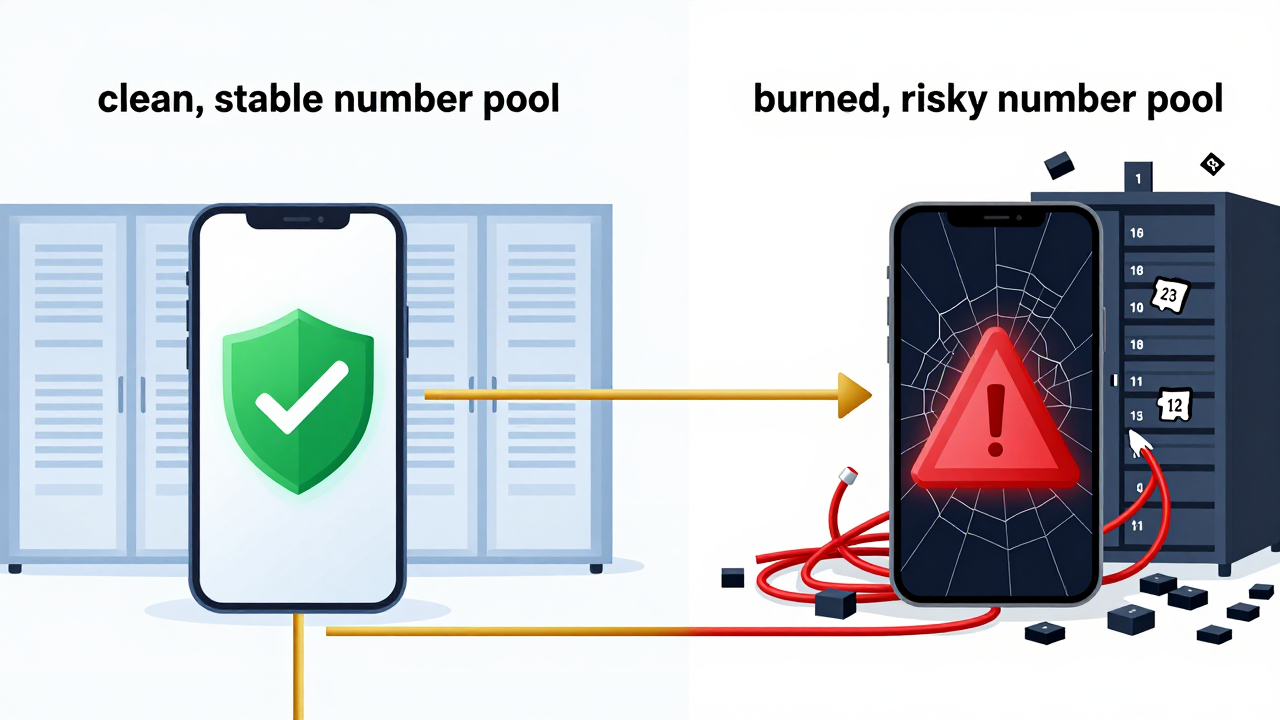
I've seen too many solo operators grab a cheap API package for a few bucks, only to discover the number pool is packed with "burned" numbers already flagged by major platforms. You can have the smoothest API connection in the world, but if verification codes never arrive—or your account gets banned the moment it's created—you've wasted your time and money.
Industry consensus is clear: a reliable setup in 2026 must deliver on three fronts: real-time availability (numbers ready the moment you need them), purity (not flagged by risk controls), and stability (no lost callbacks). These three factors determine whether your API integration actually works.
Three Main Integration Methods: Pick What Fits Your Setup
From a technical standpoint, the cross-border community in 2026 mostly relies on these three approaches. Here they are, ranked by real-world experience:
- Direct HTTP API (most universal): The provider gives you an endpoint. You send a POST request to grab a number, then poll or receive callbacks to get the SMS content. Works for most scenarios, low integration cost—if the docs are decent, you can be done in a day.
- Webhook Callback Mode (recommended): You provide a receiving URL, and the provider pushes the SMS to your server the moment it arrives. The big win here is no constant polling—efficient and far less likely to drop data. Most reputable providers in 2026 support this natively.
- SDK Integration (best for dev teams): The provider hands you a pre-built SDK, and you just call the methods. Saves you from writing request logic from scratch, but you lose some flexibility and have to trust their code quality.
A common pattern we see across the industry: roughly 80% of integration issues trace back to misconfigured callback URLs or numbers timing out before release. That's not an API problem—it's a detail-management problem.
The 2026 Landscape: Number Quality Is Stratified, and Price Alone Won't Save You
If you're shopping for an SMS verification code API and only looking at price, you're setting yourself up for a bad time. The 2026 market has sorted number resources into clear tiers.
Low-end market: Numbers priced at fractions of a cent are typically from bulk-registration "farming pools." They might work for low-stakes platform verification, but if you're registering WhatsApp, Telegram, Amazon, or any platform with serious risk controls, you're basically walking into a minefield.
Mid-to-high-end market: Prices range from a few cents to over a dollar per number. These numbers come from cleaner sources with proper recycling and washing mechanisms. From my experience, these maintain a 70%–85% registration success rate on mainstream platforms in 2026, depending on how aggressive the platform's risk controls are.
Here's a real case worth mentioning. A friend of mine running an e-commerce operation decided to cut costs in early 2026 and went with a budget API provider. He got over a dozen accounts banned while trying to register on TikTok Shop. After switching to a provider that does proper number washing—at nearly double the price—his registration success rate climbed noticeably, and his accounts survived much longer. His takeaway stuck with me: "Connecting the API is the easy part. Finding a provider that actually invests in number pool quality is the real challenge."
Platforms like Getfollow get mentioned in cross-border circles not because they have some secret sauce, but because they've built solid, compliant operations around number resource management and API stability—reducing the chances of users getting burned by low-quality pools.
Hidden Risks and Pitfalls: What Nobody Tells You Before You Integrate
Reading the API docs takes an afternoon. But these next few pitfalls? They've cost people real money in 2026, and most only learned about them the hard way.
Pitfall #1: Numbers timing out before you receive the code. Most API providers auto-release a number if no SMS arrives within a set window. But if the number was previously used by someone else, or the platform's SMS is delayed, you're left waiting while the number gets recycled. Money spent, code never received. My advice: confirm upfront whether the provider supports "number locking"—even if it costs a bit more, it's worth every penny.
Pitfall #2: Your callback URL must support HTTPS. In 2026, virtually every mainstream platform requires HTTPS for callback endpoints. Plenty of solo operators are still testing on HTTP, and the result is either browsers blocking the data or platform risk controls flagging the request as suspicious. It's a small detail that can eat up half your day.
Pitfall #3: Post-registration retention rates. You've connected the API, received the code, and created the account. But if you used a shared number pool, that number might already be claimed by someone else when you need it for login or two-factor verification down the road. Industry consensus puts second-verification success rates on shared pools at 50%–70%, while dedicated number pools consistently hit 90% or higher.
Here's my bottom line: if you're registering accounts you plan to run long-term, pay the premium for dedicated numbers. This isn't scare tactics—it's hard-earned wisdom from people who lost accounts before they learned this lesson.
How to Choose a Reliable Provider: A Practical Checklist You Can Use Today
Choosing the right provider is the final—and most critical—step in connecting your SMS verification code API. Here's a framework I've found useful in 2026:
| Evaluation Criteria | What to Look For | Red Flags to Avoid |
|---|---|---|
| Number Pool Purity | Regular washing cycles, option for dedicated number pools | Providers who only give verbal assurances—ask for recent success rate data |
| API Documentation Quality | Comprehensive integration guides, sample code, clear error code explanations | If the docs are a mess, expect the support to be worse |
| Callback Reliability | Webhook support, retry mechanisms, clear data-loss policies | Vague answers about what happens when data gets lost |
| Support Responsiveness | Active tech community, ticket system, reasonable response times | If nobody answers at 2 AM when something breaks, you're on your own |
One more piece of advice: run a small-scale test before committing. Put in $20 or so, test a few dozen numbers, and check registration success rates, number quality, and callback stability against your expectations. Most reputable providers in 2026 offer small trial packages. If a provider won't let you test small first, that's a dealbreaker.
On the compliance front, Getfollow is one of the platforms that standardized number quality management and API stability early on. I'm not telling you to sign up—but when you're comparing providers, it's worth using as a benchmark for what compliant operations should look like.
Final Thoughts: API Integration Is Just the Starting Line
Connecting an SMS verification code API isn't the hard part. The hard part is what comes after: keeping your accounts alive and stable. The 2026 cross-border ecosystem has gotten smarter with platform risk controls, and the era of mass account registration through pure "code receiving" is over.
My recommendation: start small, verify number quality and provider stability, then scale up gradually. And don't treat code receiving as your only growth lever. Pair it with genuine user engagement strategies—content, interaction, retention. That's how your API integration actually creates value instead of becoming an express lane to account bans.
If you're stuck choosing a provider, run the checklist above against a few candidates. Ask questions, test small, and don't rush into a commitment. In the 2026 cross-border game, the winners aren't the ones who move fastest—they're the ones who move steadily.
Frequently Asked Questions
What is the best way to integrate an SMS verification API?
For most cross-border businesses, Webhook callback mode is the recommended approach. It eliminates the need for constant polling, reduces the risk of missed data, and is supported by most reputable providers in 2026. If you have a dedicated dev team, SDK integration is also a solid option.
Why am I not receiving SMS codes even though my API is connected?
This usually comes down to number pool quality rather than your API setup. If the numbers you're getting have been flagged by platform risk controls or previously used by others, codes may never arrive. Check whether your provider offers dedicated number pools and proper number washing.
How much does an SMS verification API cost in 2026?
Pricing varies widely by market tier. Budget options can cost fractions of a cent per number but come with high failure rates on major platforms. Mid-to-high-end providers charge anywhere from a few cents to over a dollar per number, with significantly better success rates and stability.
What's the difference between shared and dedicated number pools?
Shared number pools are used by multiple clients, which means numbers may already be claimed by others—leading to lower success rates for subsequent logins or verifications (50%–70% in 2026). Dedicated number pools are reserved for your use, pushing success rates above 90% and significantly improving account longevity.