SMS Verification Platforms: How to Choose One in 2026
SMS Verification Platforms: How to Choose One in 2026
What Is an SMS Verification Platform? How It Works and When to Use One
An SMS verification platform is an online service that rents out temporary phone numbers, letting cross-border sellers and solo operators receive OTP codes when registering accounts on overseas platforms. In 2026, most mainstream providers charge per verification, and these services are widely used for sign-ups on Amazon, Google, Telegram, and similar platforms.
Under the hood, the model is simple: providers build a pool of numbers sourced from local carriers and number resellers across different countries. You rent one number per transaction, the platform forwards the incoming verification text to your dashboard, and the number gets recycled back into the pool—usually within 10 to 20 minutes.
Typical use cases include:
- Cross-border e-commerce sellers registering regional storefronts that require a local number for verification;
- Independent site owners building a WhatsApp Business customer service matrix;
- Developers testing SMS-based login flows who need number samples from multiple countries.
A cautionary tale: one small studio used a free SMS receiving site to register a payment account. The number was later reassigned, and a stranger recovered the account through SMS verification and took it over—costing the studio roughly three months of revenue. Free or ultra-cheap channels recycle numbers far faster, which makes the reassignment risk dramatically higher.
How to Choose an SMS Verification Platform in 2026: Five Core Factors
Industry consensus is clear: don't judge a platform by price alone. Weigh these five factors together:
- Number coverage: Does the service support both long-format and virtual numbers in your target countries?
- Billing and refunds: Are failed verifications refunded automatically?
- Success rate: This directly drives the marginal cost of every account registration;
- API and bulk features: Non-negotiable when enterprises build an account matrix;
- Payment methods: Does the platform accept crypto, Alipay, and other cross-border payment channels?
From what we see on major providers' public pricing pages, single verifications in 2026 generally run between $0.10 and $2.00, with high-demand markets like the US and UK sitting at the top of that range.
Industry data suggests overall success rates typically land between 70% and 90%, with most failures traced back to target platforms blocking virtual number ranges through their risk-control systems.
| Comparison Factor | Established international platforms (e.g., SMS-Activate, 5SIM) | Aggregator providers (e.g., Getfollow) | Free or dirt-cheap SMS sites |
|---|---|---|---|
| Number coverage | 190+ countries, rich number inventory | Focused on major cross-border markets | Unstable coverage |
| Billing model | Pay per use, refunds on failure | Pay per use or bundled plans | Free or extremely cheap |
| API support | Well-documented, developer-friendly | API plus account registration add-ons | Most offer no API |
| Compliance and support | Slower ticket-based responses | Chinese-language support, faster replies | Essentially no support |
| Best suited for | Teams with technical muscle | Cross-border businesses and solo studios | One-off testing only |
Practical tip: deposit $1 to $5 and test the real success rate on your target platform before committing. Prioritize services with a clearly stated auto-refund policy for failed verifications—that keeps the cost of any single failed attempt under $1.
Another cautionary tale: one team skipped small-scale testing and loaded $200 upfront, only to discover the target platform had blocked that provider's entire number range. Getting the balance back proved nearly impossible. Test first, buy later—that single habit does more to limit losses than anything else.
From what I've seen, 2026 is pushing more cross-border teams away from one-off verification purchases toward bundled "verification + account nurturing" packages, which makes pure price comparison less meaningful than it once was.
Risks and Compliance Boundaries of Using SMS Verification Platforms
The technology itself is neutral—how you use it determines compliance. Keep these points in mind before you start:
- Most platforms' terms of service prohibit registering with temporary numbers, and accounts flagged by risk-control systems can be suspended;
- For financial and payment accounts, a temporary number can trigger additional KYC checks;
- The EU's GDPR sets strict rules for processing personal data. If your business uses bulk registration involving user data, map out the legal boundaries first.
Reviews compiled from third-party complaint platforms suggest that disputes over account takeovers caused by recycled numbers can make up 10% to 20% of complaints on some budget channels.
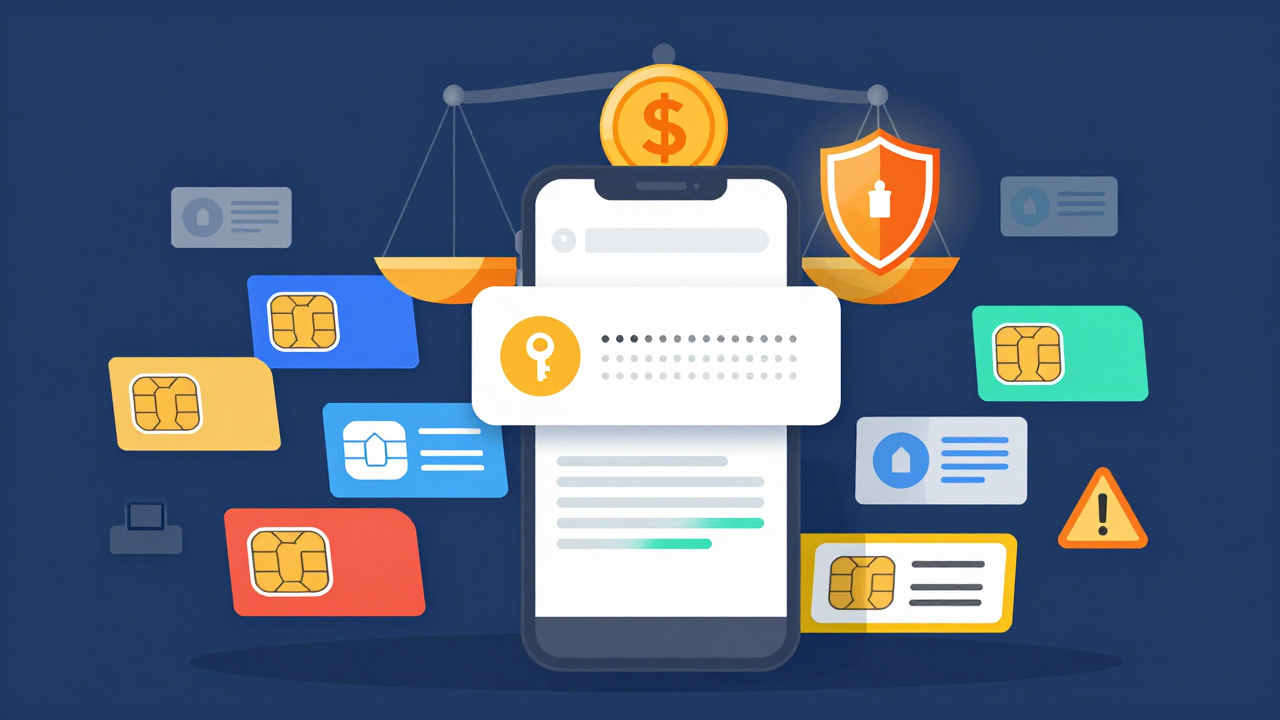
Key risk warning: a temporary number can be rented out again once it's recycled. Any account you plan to hold long term—payment accounts, your main storefront, your primary email—should never depend on a one-time verification number. Use a physical SIM or a stable virtual number you actually own.
One more cautionary tale: a cross-border seller tied their main payment account to a rented number. After the number was recycled and reused, the verification channel collapsed and fund withdrawals were frozen for more than 45 days. Mixing long-term assets with temporary access points is one of the costliest mistakes beginners make.
A Four-Step Onboarding Process for First-Time Users
If you're brand new to SMS verification platforms, work through these steps in order:
- Define your needs: List your target platforms, target countries, and expected monthly volume;
- Test small: Deposit $1 to $5 and run 3 to 5 test verifications to gauge the success rate;
- Scale up: Once the numbers check out, purchase at the scale your account matrix requires;
- Harden your accounts: Within 24 hours of registration, bind an email address and enable two-factor authentication.
Actionable advice: treat verification numbers as a registration gateway, not a long-term identity. Binding an email and switching on 2FA right after sign-up dramatically cuts the damage from later risk-control flags or expired numbers.
Industry reports estimate that multi-account registration demand from cross-border teams grew roughly 30% to 50% year over year, pulling verification and account-nurturing services up alongside it.
Final Thoughts: Verification Is the Entry Point, Not the Destination
For cross-border businesses and solo studios, an SMS verification platform solves the registration entry problem—it doesn't secure your accounts for the long haul. One three-person studio's playbook is worth borrowing: they tested two providers with small deposits, kept the one with the higher success rate, and moved every primary account to a long-term number. Within six months, their account survival rate improved noticeably.
The safest path for multi-account operations in 2026 comes down to three steps: choose the right SMS verification platform, keep your trial-and-error costs low, and harden every account immediately after registration. Skip any one of them and the whole strategy gets shakier.
Are SMS verification platforms legal?
The technology itself is legal—compliance depends on the use case. Registering accounts for your own business or testing apps carries relatively low risk; using temporary numbers to bypass platform risk controls or mass-register accounts that break platform rules can violate terms of service and even local laws. Always stay within the regulations of your target market.
Why am I not receiving my verification code?
Common culprits: the target platform blocking virtual number ranges, a number someone else just used, or channel delays. Try these fixes in order—switch to another number in the same country, change the number type (long-format versus virtual), or wait two minutes and resend. Choosing a platform that auto-refunds failed verifications keeps your losses to a minimum.
How do I choose a reliable SMS verification provider?
Screen providers in four steps: check whether failed verifications are refunded, whether number stock in your target countries stays consistently available, whether they offer API documentation or Chinese-language support, and what third-party reviews say about them—including how long they've been around. Providers built for cross-border teams, such as Getfollow, typically bundle account registration and nurturing services with verification, which suits solo studios without technical staff. Teams with developers can also plug straight into the APIs of international platforms like SMS-Activate or 5SIM.
What's the difference between SMS verification platforms and virtual numbers like Google Voice?
SMS verification platforms rent numbers per use and recycle them afterward—built for one-time registrations. Virtual numbers like Google Voice can be held indefinitely, making them a stable channel for ongoing verification. Plenty of operators use both together: temporary numbers for sign-up, virtual numbers for the long term.
Will my account get banned if I register with a temporary number?
There's a real chance. Industry observers note that accounts registered through temporary numbers with zero follow-up care face more risk-control pressure than normally registered accounts. To lower the odds: complete your profile after signing up, bind an email, keep usage patterns normal, and avoid bursts of high-frequency activity immediately after registration.