Slow SMS Verification Codes in 2026? The Real Fix Isn't a New Platform—It's a New Approach
Slow SMS Verification Codes in 2026? The Real Fix Isn't a New Platform—It's a New Approach
If you're in cross-border e-commerce, you've probably noticed it this year: waiting three to five minutes for an SMS verification code when registering overseas accounts, or worse, never receiving it at all. Honestly, by 2026, slow SMS verification codes have stopped being just an inconvenience—they're actively throttling your account registration speed and throwing off your entire account matrix strategy.
Here's something interesting I've observed: most people's first instinct is to "just switch to another SMS receiving platform." But after cycling through a few, the slowness persists. Why? Because most people haven't figured out that the root cause usually isn't the "receiving" step itself—it's upstream, in the number segment quality and routing strategy.
Before You Switch Tools, Have You Checked These Three Real Causes of Slow SMS Verification?
I've personally tested plenty of so-called "instant SMS receiving" services, and the gap between marketing claims and reality is significant. The industry picture in 2026 is that slow SMS verification codes typically stack up from three layers.
First, number segment quality varies wildly. Many platforms use second-hand or even third-hand number segments. These numbers have been registered across countless services and are already flagged by risk-control systems. When your verification request goes out, carrier gateways prioritize high-reputation segments, leaving low-reputation ones queued or blocked entirely.
Second, routing nodes take detours. Some providers cut costs by forwarding international SMS through multiple relay stations, and every hop adds latency. Industry consensus is that a 10–30 second delivery window is normal for cross-border SMS in 2026. Anything beyond 60 seconds basically means the routing path is broken.
Third, the platform's own concurrency handling. Many smaller platforms see server overload during peak hours—think 9 PM to 11 PM in China—causing message queues to back up. The "slowness" you're experiencing is actually the platform quietly throttling traffic.
Slowness Is Just the Symptom—"Never Arriving" and "Getting Flagged" Are the Real Killers
Many cross-border operators report that what's scarier than slow delivery is finally receiving the code, only to find your account flagged as suspicious due to timeout. Risk-control systems on major platforms tightened significantly in 2026, especially on TikTok and Instagram, which are highly sensitive to device fingerprints and IP purity.
Here's a real cautionary tale. A friend of mine who runs a community for independent site operators used a budget SMS receiving platform to batch-register WhatsApp accounts last month. Because the number segment was flagged, every registration got banned immediately—he lost over a dozen accounts in three days. When he checked the backend later, he found the numbers' geographic origins didn't match his proxy IP locations at all. The system instantly classified the activity as "non-human behavior."
So the issue of slow SMS verification codes is fundamentally a tug-of-war among number segment reputation, routing efficiency, and platform risk control. Chasing "instant delivery" while ignoring number purity is like trying to check into a hotel with a blacklisted ID—doesn't matter how fast the front desk processes it.
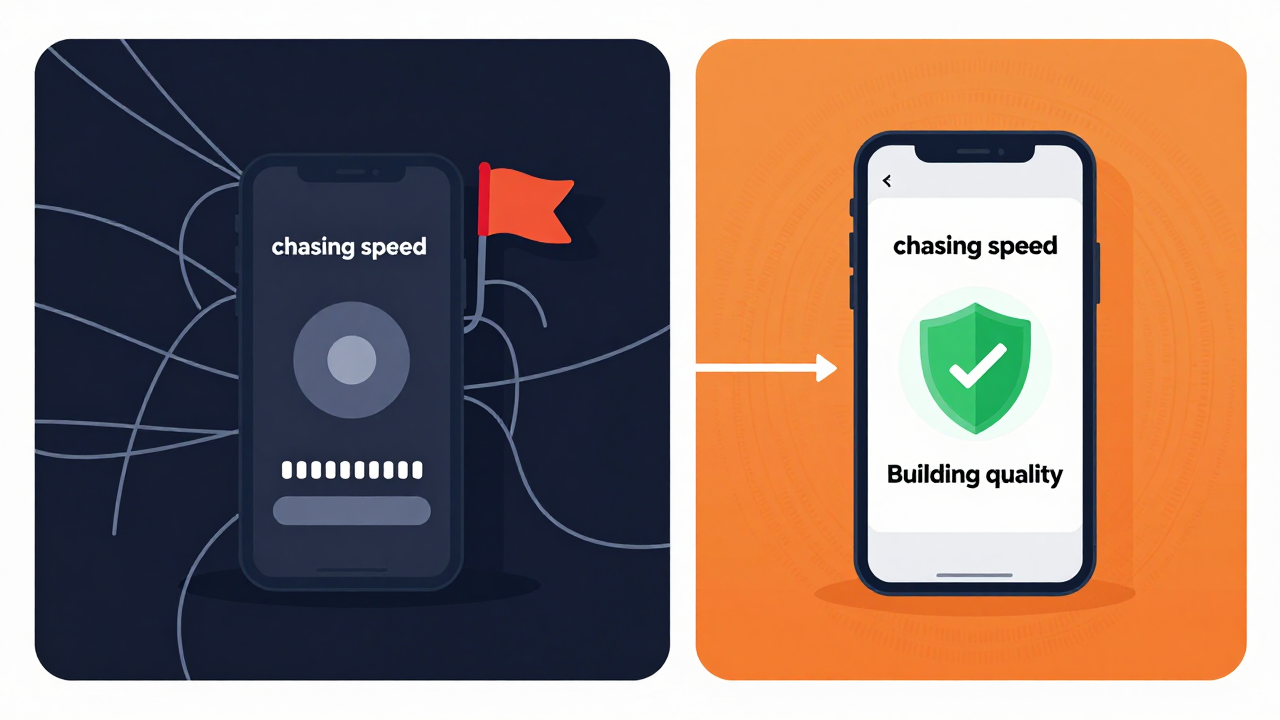
The Right Way to Handle SMS Verification in 2026: Shift from "Chasing Speed" to "Building Quality"
A trend I've noticed: the cross-border teams that are thriving this year have stopped obsessing over "which platform receives codes fastest" and started asking, "which provider's number segments can consistently receive codes without getting banned?" This mindset shift directly determines your account matrix survival rate.
Here are a few practical points worth considering:
- Prioritize providers offering dedicated number segments. Yes, they cost more, but the number is used only by you, keeping its reputation manageable.
- Don't batch-test. Start small—test 5 to 10 numbers and observe the 24-hour retention rate and secondary verification trigger rate.
- Pair with stable residential IPs. Avoid a wide gap between data center IPs and number segment locations.
One platform that's earned a solid reputation in the industry is Getfollow. It follows exactly this compliance-first logic—no chasing short-term spikes, but managing number segments and optimizing routing to keep slow SMS verification codes within reasonable bounds. I'm not telling you to go use it; I'm suggesting you treat it as a benchmark to evaluate whether other providers have similar technical foundations.
One Detail Most People Miss: The "Golden 30 Seconds" After Code Delivery
What most tutorials won't tell you is that the time between receiving the code and actually submitting it affects your account's standing. In 2026, algorithms run an invisible scoring mechanism on "registration behavior completeness." If you dawdle for two minutes after receiving the code before filling it in, the system flags you as "non-immediate action" and tags your account with low trust.
So when you're dealing with slow SMS verification codes, consider optimizing your own workflow: prepare registration details in advance, copy your username, pick your avatar—everything ready so that the moment the code arrives, you complete the entire submission within 10 seconds. It's a low-cost, high-impact trick for improving account quality.
Another suggestion: keep two SMS receiving channels as backups. Use one for primary account registrations and the other for temporary verifications. That way, even if your main channel lags, you're not stuck staring at a loading screen. Many solo studios adopted this "dual-channel" strategy this year, and feedback has been consistently positive.
Here's the bottom line: in 2026, cross-border success isn't about who has more tools—it's about who understands the details more deeply. If you can see past the surface of slow SMS verification codes and grasp the underlying number segment and routing dynamics, you're already ahead of 80% of your competitors. Remember: test small first, then scale up. That's always the safest play.
Frequently Asked Questions
Why is my SMS verification code taking so long to arrive?
Slow delivery usually comes down to three factors: low-quality number segments that carriers deprioritize, inefficient routing paths with too many relay hops, or the platform throttling traffic during peak hours. It's rarely a single issue—usually a combination of all three.
What's the difference between shared and dedicated number segments?
Shared segments are used by multiple customers simultaneously, which means they accumulate flags faster and get deprioritized by carriers. Dedicated segments are assigned to a single user, keeping reputation cleaner and delivery times more consistent. The cost difference is worth it if you're registering accounts in volume.
Can using a residential IP really improve SMS verification success rates?
Yes. Platform risk-control systems cross-reference your IP location with the number segment's origin. If they don't match—say, a US number with a Singapore IP—the system flags the registration as suspicious. Residential IPs also score higher than data center IPs in trust algorithms.
How many numbers should I test before committing to a provider?
Start with 5 to 10 numbers and monitor them for 24 hours. Look at delivery time, retention rate, and whether secondary verifications get triggered. If more than 20% of test numbers get flagged, move on to another provider.
Is it normal for cross-border SMS to take 30 seconds or more?
Yes. Industry consensus puts the normal delivery window at 10 to 30 seconds for international SMS in 2026. If it consistently exceeds 60 seconds, the routing path is likely inefficient, and you should consider a different provider.