Bank Verification Code Not Received? The 2026 Cross-Border Payment Dilemma
Bank Verification Code Not Received? The 2026 Cross-Border Payment Dilemma
If you've been in cross-border business for more than six months, you've likely hit this wall: you're logging into your bank portal, initiating a withdrawal, or setting up a new payment account—and the verification code simply never arrives. Full signal bars, your carrier insists nothing's blocked, yet the SMS might as well have vanished into thin air.
This isn't an isolated glitch. In 2026, the cross-border community is buzzing about missing bank verification codes, especially among those using virtual numbers, dual-SIM setups, or frequently switching between countries. A friend of mine running a DTC store had funds frozen for three full days because a foreign bank's verification code never came through.
Why Did This Get Worse in 2026?
Most people blame the carrier first—and yes, domestic carriers tightened their filtering of international SMS in 2026. Anti-spam enforcement ramped up, and short numeric codes from banks (the kind verification messages use) are getting caught in the crossfire more often. But that's only part of the story.
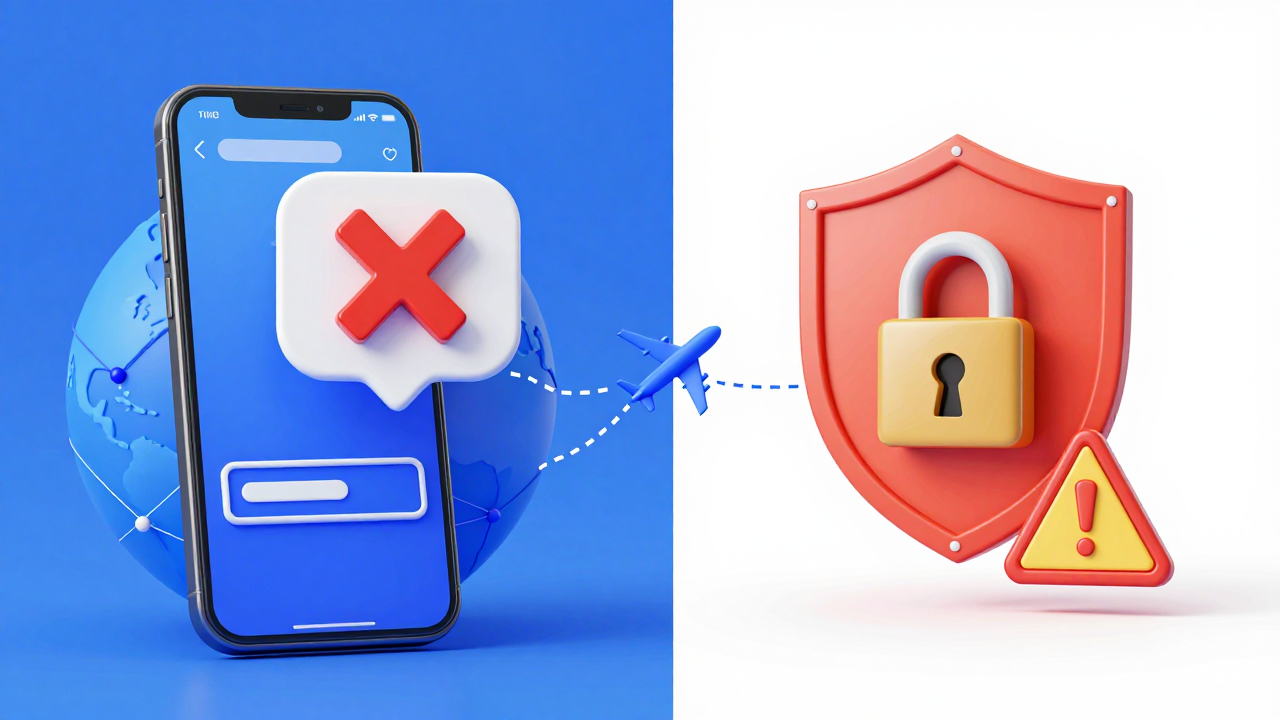
The bigger shift: banks' risk engines are far more sensitive to your "SMS environment" than ever before. In 2026, major banks upgraded their anti-fraud models. If your phone number has been registered across multiple financial services in a short window, or if your IP location and number's country code don't match up for extended periods, the system flags your account as high-risk. Result: verification SMS gets silently suppressed—no error message, no SMS, just dead air.
Industry consensus is clear: the problem isn't that you're not receiving the code—it's that the bank decided you shouldn't receive it. Asking your carrier to "unblock" is treating the symptom, not the cause.
A Real-World Example: The Amazon Seller Who Got Locked Out
I know a seller operating on Amazon Europe who registered a German bank account through a virtual number platform in late 2025. Everything worked flawlessly for two months. Then in early 2026, he started shuttling between China and Europe. Every time he switched network environments, SMS delivery lag went from 30 seconds to five minutes—and eventually stopped altogether. He assumed the virtual number platform was at fault, switched providers multiple times, and hit the same wall every single time.
When he finally checked his bank dashboard, the account had been flagged as "unusual login environment." Every verification SMS was being swallowed by the risk control system. It took submitting notarized passport documents and a manual review to regain access—a two-week ordeal.
The takeaway: a missing verification code is often a signal that your account security settings and communication environment are out of sync. It's not just a technical glitch.
Three Typical Failure Modes for Verification SMS in Cross-Border Scenarios
Based on real feedback from 2026, here are the three most common patterns. Check which one matches your situation:
- Domestic physical SIM receiving international bank SMS: Severe delays—sometimes arriving a day late. International SMS gateways route through multiple hops, especially for messages from European banks heading to China.
- Virtual numbers or SMS-receiving platforms: Success rates are wildly inconsistent. In 2026, bank risk systems have become highly effective at identifying virtual number ranges (specific +44, +1 prefixes), and many platform number blocks are already blacklisted.
- Dual-SIM or eSIM switching causing dropped messages: On many phones, when the secondary SIM is in standby mode, international SMS gets low delivery priority—the system may auto-collapse or delay the message.
If you fall into the third category, try manually setting your default data SIM or disabling smart network switching. It's the cheapest fix and worth trying first.
How to Choose a Reliable Verification Code Solution
Given the complexity, many cross-border operators are turning to third-party services. In 2026, the market offers three main options: pure SMS-receiving platforms, number hosting services, and full-service cross-border communication providers.
My advice: don't fixate on the "success rate" metric alone. Many platforms advertise 99% success, but in real-world testing, bank verification code delivery rates hover around 60%. Bank risk algorithms change dynamically—no platform can predict them in advance.
A more robust approach: choose a provider that offers long-term number ownership and can support you through manual bank review processes. For example, Getfollow has built a solid reputation in the industry by following this compliant operational model—numbers aren't disposable; they're maintained as your genuine business contact. That way, even if risk control triggers, you can recover access through manual appeals.
But here's the honest truth: no third-party service guarantees 100% delivery. Across the industry in 2026, bank verification SMS success rates fluctuate between 70% and 85%, depending on the bank, the country, and your account's behavioral history.
Three Non-Negotiables When Vetting a Provider
- Does it support number country customization? If you're doing business in Europe, get a European local number. Using a US number to receive verification codes from a European bank creates massive risk-control friction.
- Is there a clear appeal channel? When a bank's risk system blocks your verification SMS, can the provider supply number ownership proof and usage records to support your manual unblocking? In 2026, this matters more than any technical metric.
- Is the pricing model transparent? Be wary of suspiciously cheap annual plans. Many cross-border professionals report that budget providers simply abandon numbers once banks blacklist them—leaving your account without its linked phone number and making recovery a nightmare.
If you're evaluating providers, start with a small test—bind only a non-critical account, monitor delivery rates and stability for a week, then decide on long-term commitment. That's the responsible approach, and it's the consistent strategy I've seen across every successful cross-border team.
Four "Don'ts" for Verification Code Issues in 2026
To wrap up, here are practical guardrails I've gathered from industry peers. Every single one corresponds to a real failure we've witnessed:
- Don't link the same phone number to more than three different bank accounts. Banks now share risk data in 2026. Frequent number changes across accounts will trigger red flags.
- Don't spam the resend button. If the first attempt fails, wait at least 15 minutes before retrying. Rapid repeated requests get flagged as malicious behavior.
- Don't ignore your SMS center number settings. During roaming, some phones auto-switch to an incorrect SMS center, breaking international message delivery. Manually resetting to your carrier's default resolves this in many cases.
- Don't rely on SMS as your only verification method. Major banks in 2026 support app-based push verification or hardware keys. Enable these as backup channels.
Missing bank verification codes in 2026 is no longer just a communication issue—it's a microcosm of compliant cross-border operations. It tests your holistic understanding of account security, communication environments, and risk control. Instead of scrambling when problems hit, plan your number strategy in advance. Consider providers like Getfollow with a complete compliance framework as a backup option, and always maintain a manual appeal path.
Start small, test thoroughly, then scale. That's the most honest advice I can offer to anyone navigating cross-border payments this year.
Frequently Asked Questions
Why am I not receiving bank verification codes even though my signal is full?
Full signal doesn't guarantee SMS delivery. In 2026, banks' anti-fraud systems may silently suppress verification messages if they detect unusual login environments—such as mismatched IP and phone number locations, or multiple financial accounts tied to one number. Your carrier may not be blocking anything; the bank's risk engine is making that call.
Can virtual numbers receive bank verification codes reliably?
Not reliably in 2026. Bank risk systems have become highly proficient at identifying virtual number ranges, and many are blacklisted. If you must use a virtual number, choose a provider that offers long-term number ownership and can support manual appeals with documentation—not throwaway numbers from cheap SMS platforms.
How long should I wait before retrying a bank verification code?
Wait at least 15 minutes between attempts. Requesting verification codes repeatedly in a short window triggers fraud flags at most banks, which can lead to temporary or permanent suppression of SMS delivery. Patience is the safer strategy.
What's the best backup if SMS verification keeps failing?
Enable app-based push notifications or hardware security keys through your bank's mobile app. Most major banks in 2026 support these alternatives, and they bypass SMS channels entirely. This is the most reliable fallback when you're traveling or switching networks frequently.