SMS Verification Services in 2026: The Hidden Infrastructure Every Cross-Border Business Needs
SMS Verification Services in 2026: The Hidden Infrastructure Every Cross-Border Business Needs
If you run a cross-border e-commerce operation or manage overseas social media accounts, you've probably hit the same wall recently: phone verification has become the bottleneck nobody talks about. By 2026, platforms have tightened their registration controls significantly. The number of accounts you can create with a single phone number has dropped sharply, and some platforms now even require voice verification codes. That's why SMS verification services have shifted from "nice to have" to genuinely essential infrastructure.
What SMS Verification Tools Actually Solve: More Than Just Receiving Codes
Most people assume an SMS verification assistant simply receives a code. That understanding is outdated. In 2026, these tools have evolved to support the entire account lifecycle, not just the initial sign-up step.
- Bulk account registration: Independent site sellers juggling multiple storefronts need a unique phone number for each account. Verification platforms provide access to a dedicated number pool.
- Account warming and ban prevention: Newly created accounts are most vulnerable to risk controls within the first seven days. They often need to receive login alerts or device confirmation codes, and a reliable platform ensures those messages come through consistently.
- Privacy protection: Freelancers and small teams conducting market research or competitor analysis don't want to expose their primary numbers. A temporary verification number offers the simplest workaround.
From my experience working with cross-border teams, attitudes toward verification tools have shifted dramatically. A few years ago, these were dismissed as gray-area utilities. Today, established operators treat them as a standard part of account management. The reason is straightforward: platform rules keep getting stricter, manual account warming is too expensive, and verification tools are simply the most efficient solution available.
Three Major Shifts in the SMS Verification Industry for 2026
If you used a verification platform before 2025, you'll notice the industry has already been through a shakeout. Here are three clear trends I've observed while helping cross-border clients navigate this space:
First, number quality is now heavily tiered. Older platforms mostly offered disposable numbers that died after receiving one code. But in 2026, many providers offer "renewable" and "long-term" numbers designed for accounts that require multiple verification steps. Industry consensus suggests long-term numbers retain accounts at rates over 40% higher than disposable ones—though they cost three to five times more.
Second, platform risk detection has evolved. Major platforms—especially social media and payment services—no longer just check whether a number is valid. They analyze the number's country of origin, carrier, and whether it belongs to a virtual number range. Many cross-border operators report that accounts registered through cheap verification services get banned within 24 hours because the number is flagged as high-risk virtual infrastructure.
Third, compliance-focused providers are emerging. In 2026, a new wave of services emphasizes compliant operations. They don't promise unlimited registrations. Instead, they offer on-demand number allocation with built-in risk alerts. Platforms like Getfollow have built a solid reputation in this space by focusing on number "cleanliness" and survival rates rather than chasing maximum daily volume.
The Hidden Value of Verification Tools: Low-Cost Experimentation
Here's something most people overlook: verification tools are essentially a low-cost way to test the waters. Cross-border businesses constantly need to probe different platforms' policies, traffic rules, and ad review standards. If you use your primary number for every test registration, one wrong move contaminates it—and every other operation tied to that number suffers.
I tested this myself while building a TikTok account matrix. I needed to run five accounts with different content angles to see which one the algorithm would push. Without a verification tool, I'd have needed five physical SIM cards—expensive and tedious to swap. With an SMS verification assistant, I registered and verified all five accounts in about ten minutes. The efficiency gain was massive.
A Real-World Cautionary Tale
One client running Amazon review services decided to cut costs in early 2026 by using the cheapest verification platform they could find—about $0.10 per number. They registered 30 buyer accounts. Within a week, 27 were banned. Not only did the review operation grind to a halt, but their main seller account also got pulled into a linked investigation. They switched to a provider that charges based on number quality. The unit price was five times higher, but account survival jumped from 10% to over 70%. The lesson: verification tools don't save you money—they save your accounts.
How to Tell If an SMS Verification Service Is Reliable
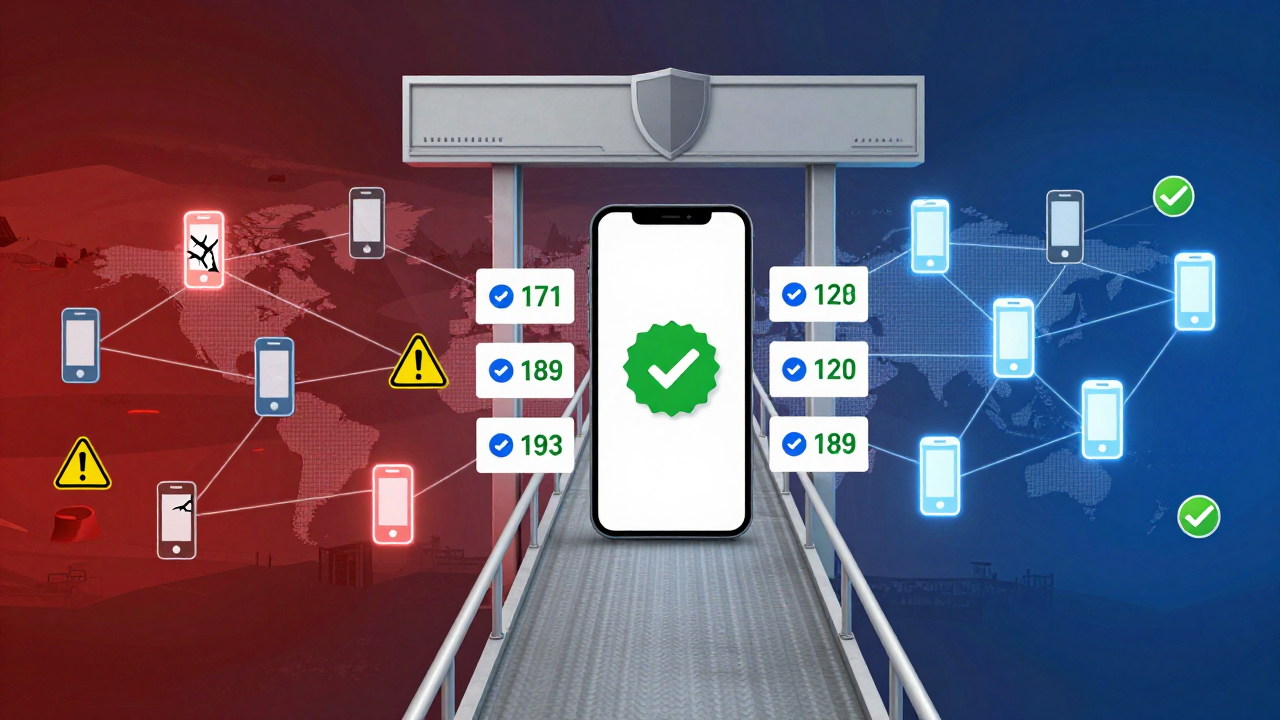
The 2026 verification market is crowded, and plenty of new platforms lure users with rock-bottom prices while delivering poor service and questionable number quality. Based on what industry operators consistently look for, here are four dimensions to evaluate:
| Evaluation Criteria | What "Reliable" Looks Like | Red Flags |
|---|---|---|
| Number sourcing | Clearly states number origin, carrier, and whether it's a virtual number | Only says "global numbers" with no specifics |
| Number reuse policy | Supports project-based number pool isolation to prevent account linking | All users share the same pool |
| Support and refunds | Failed verifications get refunded or replaced; dedicated contact person available | Support unreachable; refund process is a maze |
| Risk alerts | Provides real-time notifications if a number gets flagged | Only delivers codes; doesn't care what happens after |
Operators across the industry report that the scariest scenario in 2026 isn't a failed verification—it's a successful one where the number itself is problematic, leading to an account ban within 24 hours. So when choosing a verification service, always ask about number pool refresh rates and isolation strategies. Platforms like Getfollow have earned their reputation largely because they treat number quality as the core metric, not just price.
Risk Warning: Don't Mistake a Tool for a Shield
Let's be direct: an SMS verification assistant solves the "receiving codes" problem. It does not solve the "account violation" problem. In 2026, platform risk systems are far more intelligent. Even if your phone number is completely legitimate, abnormal account behavior—like rapid IP switching or mass registrations in a short window—will still trigger a ban.
I've seen teams assume verification tools give them a green light for unlimited registrations. They ignored IP isolation and device fingerprinting, and the entire account matrix got wiped out in one sweep. Here are three practical rules to follow:
- Cap registration frequency: No more than three new accounts per day from the same IP. Let new accounts sit for at least three days before any activity.
- Match numbers to target regions: If you're targeting the U.S. market, use U.S. numbers. Cross-region registration is a common trigger for risk controls.
- Keep numbers active: Don't discard a number right after registration. Some platforms require the original number for mid-account verification. Keep it for at least 30 days.
So what's the real purpose of an SMS verification assistant? It's the backbone of bulk account operations, a firewall for personal privacy, and a safety net for low-cost experimentation. But remember: it's a tool, not a guarantee. What ultimately determines whether your business survives long-term is your operational strategy and compliance awareness. If you're considering integrating a verification service, start with a small test before committing to a long-term plan. Don't buy the biggest package upfront. Run ten numbers through the full cycle—registration, warming, verification—and confirm both number quality and platform support before scaling up. That approach keeps your risk in check and helps you find the verification solution that actually fits your business model.
Frequently Asked Questions
Are SMS verification services legal?
The legality depends on how you use them and your jurisdiction. The tools themselves are neutral—many legitimate businesses use them for privacy protection and account management. However, using them to circumvent platform rules or engage in fraudulent activity may violate terms of service or local laws. Always check both your platform's policies and your local regulations.
Why do platforms ban accounts registered with virtual numbers?
Platforms analyze multiple signals beyond number validity, including whether a number belongs to a virtual range, its carrier, and its registration history. Virtual numbers are statistically associated with higher rates of spam and fraudulent activity, so platforms flag them as higher risk. Using a number that matches your target market and comes from a reputable provider reduces this risk.
How much do SMS verification services cost in 2026?
Pricing varies widely. Disposable numbers can cost as little as $0.10, while premium long-term numbers with high survival rates may cost five times more or higher. The right choice depends on your use case—if you're running serious account operations, paying more for quality typically saves you money in the long run by reducing account losses.
Can I use one verification number for multiple accounts?
Technically, some platforms allow it, but it's strongly discouraged. Using the same number across multiple accounts creates a link between them. If one account gets flagged, all linked accounts become vulnerable. Reputable verification services offer number pool isolation to prevent this, but it's still best practice to use a unique number per account whenever possible.