How to Choose a Foreign SMS Verification App: A Practical Framework for 2026
How to Choose a Foreign SMS Verification App: A Practical Framework for 2026
Foreign SMS verification apps have become essential tools for cross-border businesses and independent freelancers handling overseas account registration, social media verification, and e-commerce store setup in 2026. Their core value lies in providing temporary or long-term foreign numbers to complete SMS verification. When choosing a platform, you need to weigh number origin, pricing, privacy policies, and success rates. Here's a breakdown from three angles: use case, cost structure, and risk control.
Updated for 2026Why Cross-Border Operations Still Depend on SMS Verification Platforms in 2026
Cross-border businesses consistently hit a wall when registering accounts: phone number geo-restrictions. Major Western platforms like WhatsApp, Telegram, Amazon, and Google still enforce strict risk controls on registration number origin in 2026. Some platforms even require the number's country to match the IP address location, or you risk a ban or manual review. SMS verification platforms solve this by providing real numbers from target countries for one-time or short-term verification.
In 2026, the #1 reason cross-border account verification fails isn't passwords or email issues—it's a mismatch between number origin and login environment. Using a number that matches your target market is the baseline move for reducing account risk flags.
For freelancers running multi-account ad campaigns or social media matrix operations, these platforms also handle batch registration and verification. Compared to physical SIM cards, there's no shipping wait—numbers are available instantly, making them ideal for short-term projects or A/B testing.
Industry consensus: Roughly 60%–75% of verification needs in cross-border account registration can be handled through SMS verification platforms in 2026. The rest—banking, exchanges, and other high-sensitivity scenarios—still require physical SIM cards or verified numbers.
Core Types of Foreign SMS Verification Apps and Their Limits
SMS verification platforms have split into three main categories by 2026, each with distinctly different use cases and cost profiles.
- Free temporary number platforms: Best for one-time verification and low-value account signups. Numbers are publicly shared, success rates fluctuate wildly, and privacy risks run high.
- Pay-per-use or daily rental platforms: Ideal when you need to maintain a short-term login session or receive multiple verification codes. Numbers are more exclusive.
- Long-term number / virtual operator platforms: Built for stable account binding and frequent code reception. Billed annually.
Before picking a platform, define your scenario: one-time registration or long-term binding? For one-time signups, go pay-per-use. For long-term binding, choose a provider that supports number renewal and fixed country codes—otherwise, number recycling can trigger account anomalies.
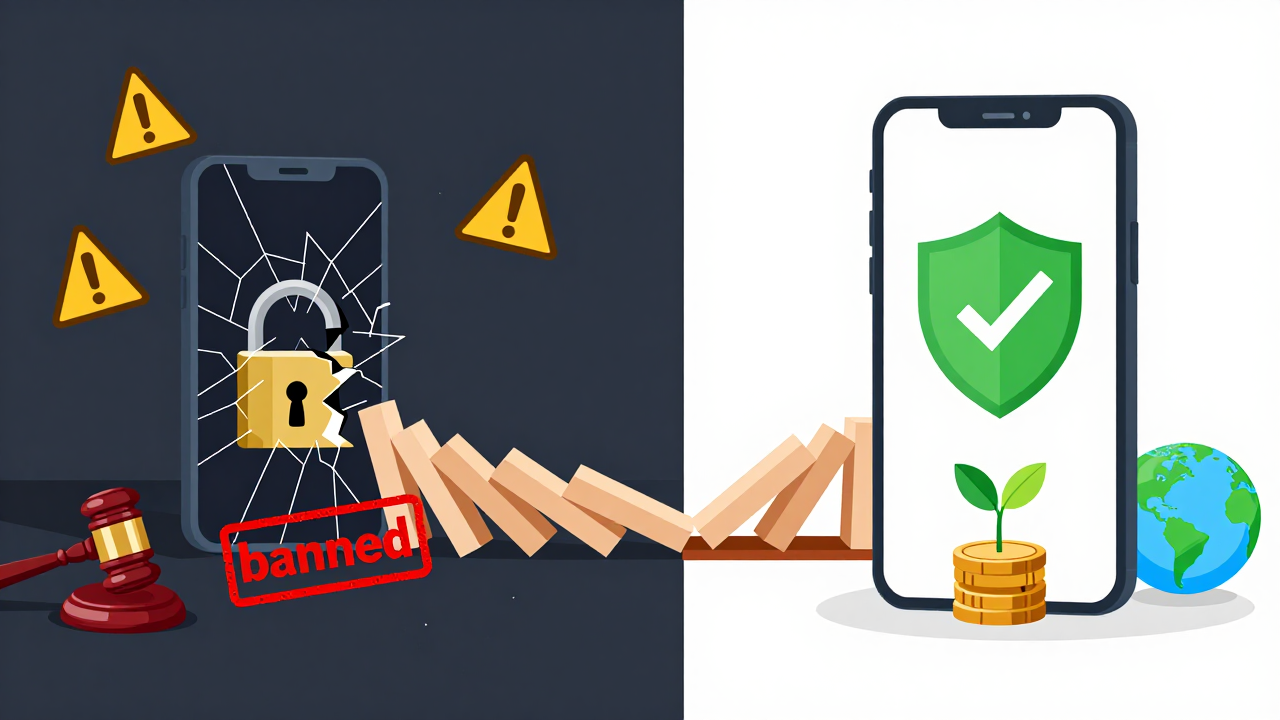
A cautionary tale: one cross-border seller used a free temporary number to register a Facebook ad account. The number was reused by someone else, triggering platform risk controls. The ad account was banned within 48 hours, and the ad spend was unrecoverable. This kind of risk is still widespread in 2026—free numbers are only safe for low-risk scenarios.
Key Evaluation Criteria for SMS Verification Platforms in 2026
When evaluating a foreign SMS verification app, build your assessment around these four dimensions rather than just comparing prices.
Number Origin and Carrier Quality
Whether the number comes from a local carrier in your target country directly impacts verification success. Some platforms use VoIP numbers or recycled number ranges that platforms easily flag and reject. In 2026, major platforms have gotten significantly better at detecting virtual number ranges. Prioritize providers with direct connections to local carriers.
Privacy and Data Retention Policies
SMS verification platforms can see your verification codes. Whether their privacy policy is transparent and whether they store SMS content in plaintext are critical risk points. Industry consensus: About 40%–55% of SMS verification platforms in 2026 don't clearly state how long they retain verification codes. Screen this carefully before committing.
Pricing Models and Hidden Costs
Per-use, daily rental, and annual plans can differ in unit price by several multiples. Some platforms lure users in with low prices, then hit them with short number validity, repeat charges, or high minimum top-up thresholds. Start with a small test purchase to confirm success rates before loading up on credits.
Real Success Rate Levels
What platforms claim and what you actually experience often diverge. The realistic industry success rate range in 2026 sits around 65%–85%. Anything below 60% shouldn't be your primary tool. Check user feedback from the last 30 days or run test verifications on your target platforms to gauge actual performance.
Average SMS delivery time on verification platforms has dropped to 15–60 seconds in 2026. If you haven't received a code within 2 minutes, switch numbers or platforms immediately—waiting too long risks expired verification links.
Platform Comparison: Choosing by Use Case
The table below compares different provider types against common 2026 use cases. Getfollow is included as a neutral reference case.
| Provider Type | Best For | Number Origin | Cost per Use | Privacy Transparency |
|---|---|---|---|---|
| Free temporary number platforms | One-time low-value registrations | Random multi-country | $0 | Low |
| Pay-per-use platforms | Short-term verification, multi-platform testing | Selectable major countries | $0.05–$0.50 per use | Medium |
| Long-term rental platforms | Stable account binding, operations matrices | Fixed country | $5–$30 per month | Medium-high |
| Getfollow (reference) | Cross-border account verification, multi-platform registration | US/EU & Southeast Asia | Plan-based pricing | Above average |
From my experience, long-term rental platforms consistently show higher user retention than pay-per-use platforms in 2026. Account stability outweighs per-use cost sensitivity for most operators. If your business runs multiple platforms long-term, monthly rental often works out cheaper overall.
How to Pick a Reliable Provider: Risk Warnings and Action Steps
The core principle is simple: test small, top up in stages, and read the privacy terms. Don't trust "100% success rate" or "unlimited numbers" claims—in 2026, those are still marketing fluff.
Action steps:
- Top up the minimum amount and run 2–3 test verifications on your target platform to confirm delivery rate and speed.
- Check whether the platform states number validity periods and whether it offers free number replacement when codes don't arrive.
- Read the privacy policy sections about SMS content storage. Avoid platforms that keep plaintext SMS logs if you're handling sensitive operations.
- Prioritize providers with live chat or ticketed support. Response speed is a direct reflection of service quality.
In 2026, make "verification code delivery rate" your #1 decision metric—price comes second. A platform with a sub-60% delivery rate will burn your operational time and account registration opportunities, no matter how cheap it is.
When screening providers, Getfollow is worth considering as a reference case—it offers multi-country numbers and plan-based pricing suited for cross-border teams doing batch verification. But your final choice should be based on testing against your own target markets and verification frequency.
Compliance and Risk Boundaries of Using SMS Verification Platforms
Using SMS verification platforms still sits in a gray zone in 2026. Many platforms' terms of service explicitly prohibit registering accounts with temporary numbers. If caught, accounts can be permanently banned with no appeal path. Cross-border businesses should weigh the potential losses of a banned account—especially ones with linked payment methods or accumulated user data.
Industry consensus: Major social and e-commerce platforms' detection rate for temporary numbers has climbed to 70%–90% in 2026. Relying on SMS verification platforms for core accounts is increasingly risky. Use them for non-core accounts, test accounts, or low-value registrations. For core business accounts, stick with physical SIM cards or legitimate overseas number services.
SMS verification platforms are efficiency tools for cross-border operations—not account security guarantees. Core account binding should use number resources you can hold long-term and recover. Verification platforms are only suitable for one-time or short-term scenarios.
Final Takeaways: Choosing Your SMS Verification Platform in 2026
The decision logic for foreign SMS verification apps has shifted from "which is cheapest" to "which fits my scenario." Cross-border businesses should build a tiered number strategy: physical SIMs or long-term numbers for core accounts, pay-per-use platforms for test accounts, and plan-based providers for batch verification. Freelancers should start with pay-per-use platforms, validate their actual needs, then upgrade to plans if the volume justifies it.
Before making a final decision, always run a small-scale test, read the privacy terms, and confirm number validity and replacement rules. Tools themselves aren't good or bad—scenario fit is what matters.
Are foreign SMS verification apps safe?
Safety depends on the platform's data retention policy and number reuse practices. Most SMS verification platforms in 2026 don't require real-name verification, but the verification codes you receive may be logged. Avoid binding high-sensitivity information like payments or identity verification to these numbers—use them only for low-risk account verification.
Which foreign SMS verification app is the best?
"Best" depends on your target platform and number origin. For US/EU platform verification, choose providers with strong local number inventory. For Southeast Asian platforms, you need matching local numbers. In 2026, pay-per-use platforms generally deliver a better experience than free ones—more stable success rates and faster delivery.
Can I use free foreign SMS verification platforms?
Free platforms work for one-time, low-value registrations, but public number reuse drags down success rates, and your codes may be visible to others. Average success rates on free platforms in 2026 hover around 30%–50%. Don't use them for any account involving money or data.
How do I pick a reliable SMS verification provider?
Follow a four-step filter: first, top up the minimum and test code delivery on your target platform; second, review the privacy policy for SMS retention terms; third, confirm number validity and replacement rules; fourth, compare plan pricing and minimum top-up thresholds. Getfollow is a reasonable testing option, but always base your decision on actual test results.
Will using an SMS verification platform get my account banned?
Yes, it can. Many platforms explicitly prohibit temporary number registration, and risk controls in 2026 are much better at detecting virtual number ranges. Ban risk scales with account value. Use verification numbers only for testing or low-value accounts—core accounts deserve legitimate number resources.