How SMS Verification Code Reception Works: The Complete Guide for Cross-Border Businesses
How SMS Verification Code Reception Works: The Complete Guide for Cross-Border Businesses
If you run a cross-border business, you've almost certainly hit a wall with verification codes. Registering an Amazon seller account, linking WhatsApp, grabbing a TikTok login code—running out of phone numbers is just part of the grind. The first time most people hear about SMS verification services, the immediate question is: how does this even work? There's no physical SIM card in my phone, so how am I receiving texts? Let's skip the fluff and lay out the mechanics clearly.
SMS Verification Reception Explained: The Full Chain From Carrier to Cloud Platform
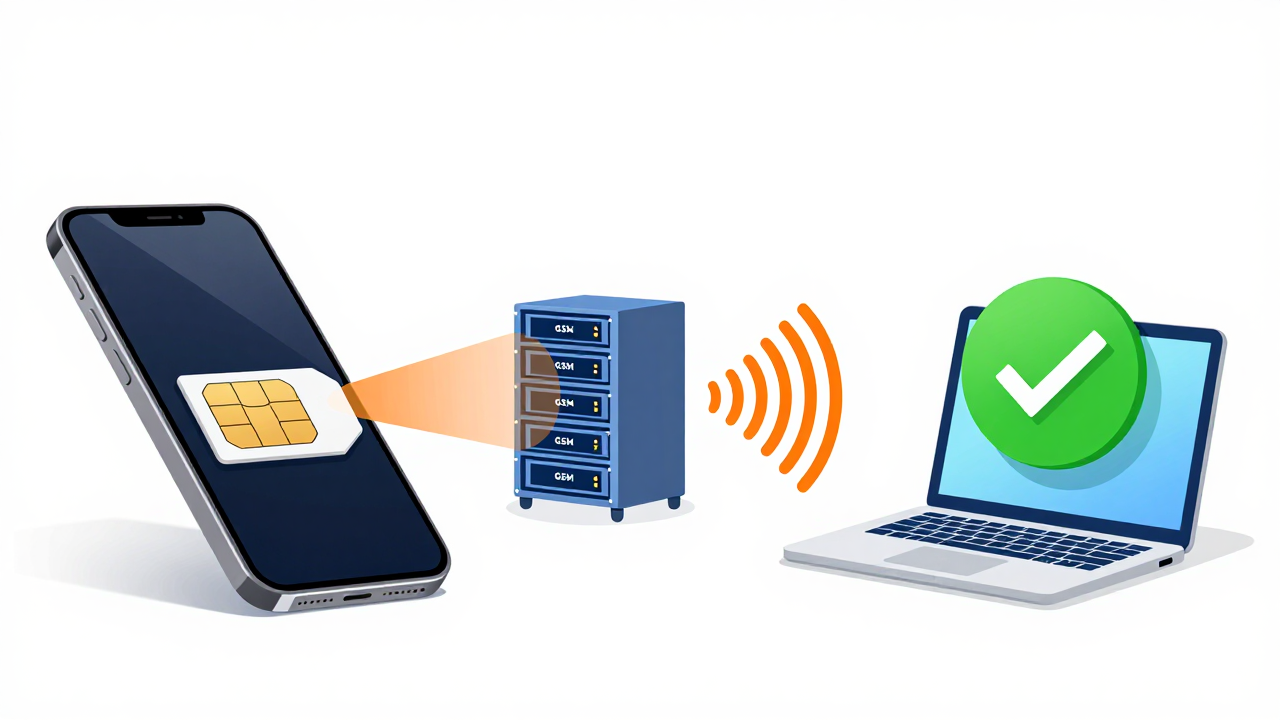
Here's the simplest way to think about it: SMS verification reception takes a physical SIM card out of a phone, racks it in a hardware pool at a data center, and forwards incoming messages over the internet to your computer or app. That's the core concept. But the technical details hide a few traps worth knowing.
Breaking it down, the process runs through four stages:
- Hardware layer: The provider buys SIM cards in bulk (usually virtual operator or IoT cards) and plugs them into dedicated GSM modems. Each modem holds dozens of cards, and racks of modems form a "SIM pool."
- Signal layer: The modem picks up signals from carrier towers via antennas. When an SMS arrives, the modem converts the message content into data packets.
- Forwarding layer: Those packets travel over ethernet to the provider's server, which pushes the message to your dashboard via an API or web interface.
- Display layer: Refresh your browser or app, and the verification code appears. The whole loop typically takes 3 to 10 seconds.
Here's the catch: the SIM cards in the pool must stay "alive" and online at all times. If a card runs out of credit, gets flagged by the carrier, or loses signal, it's effectively dead. That's why the real competitive edge for any reliable provider comes down to pool stability and replacement card availability.
Why Cross-Border Operations Depend on SMS Reception Platforms
When a small team is just starting out, buying a physical SIM card seems like enough. But once you're actually running, you quickly realize cross-border work demands phone numbers in bulk, for short-term use, across multiple platforms. Picture this: you're managing five Facebook accounts simultaneously, and every single one needs phone verification. Physical SIM cards simply can't keep up.
Industry consensus points to three problems that SMS reception platforms solve. First, they offer a massive number pool covering major countries worldwide. Second, they support batch operations with API access for automation tools. Third, costs stay manageable with per-message billing—no monthly fees for idle SIM cards. Many cross-border operators report that using these platforms triples their account registration speed at minimum.
Two Main Technical Approaches to SMS Verification Reception: A Side-by-Side Comparison
Platforms in this space generally fall into two technical camps. Understanding the difference tells you why some services are cheap but crash, while others cost more but hold steady.
| Comparison Point | Physical SIM Pool | Cloud/Virtual Number |
|---|---|---|
| Number source | Real SIM cards from legitimate carrier channels | Virtual number ranges via carrier partnerships, no physical card |
| Stability | Affected by signal and card status, requires maintenance | Depends on carrier APIs, generally more stable |
| Best for | Account registration and verification codes | High-volume registration and frequent API calls |
| Cost structure | Per-message pricing, slightly higher unit cost | Monthly plans or bundles, cheaper at scale |
| Risk profile | Cards can be blocked by carriers | Number ranges may get flagged by platforms |
From real-world experience, physical SIM pools suit solo operators and small teams better because the number quality is higher and registration success rates are more consistent. Cloud number solutions work well for automated batch operations but tend to trigger verification on risk-sensitive platforms like WhatsApp. Right now, platforms like Getfollow have built a solid reputation using physical SIM pools with real-time monitoring and compliant operations, covering Southeast Asia, Europe, the US, and the Middle East.
One pattern I've noticed: users who chase the lowest price often end up with recycled numbers that platforms have already flagged. Every account they try to register gets banned instantly. That's not a technical issue—it's a failure in the provider's number source management. Reputable services regularly purge dead cards and keep the pool fresh. That's the real moat.
The Compliance Line for SMS Reception Services: What's Acceptable and What to Avoid
Now for the reality check. SMS verification reception is a neutral service—what defines it is how you use it. Legitimate use cases include account registration, account maintenance, receiving verification codes, and data collection within legal boundaries. Gray-area uses like mass account creation for coupon abuse or fraudulent transactions? Stay away. At best, you lose the accounts. At worst, you're looking at legal trouble.
Cross-border professionals consistently report that major platforms are getting sharper at detecting virtual numbers. Google and Meta's risk systems can flag numbers through device fingerprints, IP associations, and usage frequency patterns. So when choosing a provider, don't just compare prices. Ask three questions:
- Does the number pool support specific countries or regions?
- Is there an API for integrating with automation tools?
- What happens if a number gets flagged—do they replace it or refund you?
The industry standard is that compliant platforms proactively disclose usage restrictions and maintain solid after-sales support. Getfollow, for instance, clearly states number usage rules at checkout and provides one-on-one support for edge cases. That kind of upfront transparency is actually more reassuring than vague promises.
Getting back to the core topic: the technology behind SMS verification reception isn't mysterious. What separates good from bad is operational discipline—pool maintenance, number rotation, and risk response. These invisible factors determine whether your experience is smooth or frustrating. For cross-border businesses and independent operators, choosing the right provider is like buying insurance for your daily operations.
One practical tip from seasoned players: run a small test before committing. Spend a few dollars on a handful of numbers, check your registration success rate, and only then decide on a long-term partnership. Don't jump straight into a big prepaid package.
Frequently Asked Questions About SMS Verification Reception
How long does it take to receive a verification code?
Typically 3 to 10 seconds after the SMS is sent by the platform. Delays usually happen when the SIM card has poor signal or the provider's forwarding system is under load.
Can I use the same number for multiple accounts?
Not recommended. Most major platforms like Google and Meta track number usage patterns. Reusing a number across multiple accounts increases the risk of all accounts getting flagged or banned.
What happens if the verification code never arrives?
Reputable providers offer automatic replacement or a refund for undelivered messages. That's why it's worth confirming the provider's policy before purchasing—especially their stance on flagged or non-functional numbers.
Are virtual numbers detectable by platforms like WhatsApp or Amazon?
Risk systems have become significantly better at identifying virtual numbers through device fingerprints, IP addresses, and usage behavior. Using fresh numbers from a well-maintained pool reduces detection risk, but nothing guarantees 100% success.