US SMS Verification in 2026: The Cross-Border Business Guide to Numbers, Compliance & Risk Control
US SMS Verification in 2026: The Cross-Border Business Guide to Numbers, Compliance & Risk Control
US SMS verification means using a virtual or physical American phone number to receive one-time passcodes from online services—whether you're registering accounts, completing identity checks, or linking business profiles. Here's what's changed: in 2026, major US platforms have significantly tightened their detection of verification numbers. Standard virtual number segments now see first-attempt success rates drop to just 40–60%, making compliant verification solutions a must-have rather than a nice-to-have for cross-border operations.
Types of US Verification Numbers & Where Each Makes Sense in 2026
Today's US verification numbers fall into three main buckets: physical SIM cards, virtual operator numbers (like Google Voice), and pure online SMS platforms. They differ sharply in stability, cost, and compliance profile.
In 2026, physical US SIM cards maintain a success rate above 85% for bank and e-commerce platform verifications, while free online SMS numbers succeed in under 30% of the same scenarios. Matching your number type to the verification intensity of your use case should be your first decision.
Physical SIM cards are the right call for businesses that need long-term account health—think Amazon storefronts or TikTok creator accounts in the US region. Virtual operator numbers suit solo operators who need to bind WhatsApp or Telegram. Pure online SMS platforms? Reserve those for one-time verifications like forum sign-ups or coupon grabs.
A cautionary tale: a cross-border team used free SMS platforms to mass-register PayPal business accounts in early 2026. Because the numbers had scrambled area codes and were recycled across multiple users, 72% of their accounts hit risk-control freezes within 48 hours. The lesson: price per SMS should never be your only metric.
How Google, Amazon & Meta Detect Verification Numbers in 2026
The platforms cross-border businesses deal with most—Google, Amazon, and Meta—all upgraded their number risk-control models in 2026. Detection no longer stops at "is this a VoIP number?" Instead, platforms now evaluate registration age, usage environment, linked account count, and IP geolocation in combination.
Industry consensus: platform risk control in 2026 revolves around "number behavior profiling." A number that's never been used for anything except receiving verification codes—even from a legitimate carrier—can still be flagged as high-risk simply because its behavior pattern looks unnatural.
On the operational side: Google now applies a "secondary manual review" mechanism for SMS numbers used to bulk-register Gmail accounts. Amazon, meanwhile, requires seller account registration numbers to match the state listed on the business license address. These rules directly shape number procurement decisions.
From my experience, the popular workaround in cross-border circles this year is a "number warming" strategy: activate numbers 1–2 weeks in advance, simulate normal user behavior (send texts, take calls), and only then register your critical accounts. This approach lifts pass rates to 75–85%—but it costs you management overhead.
How to Vet a US SMS Verification Service Provider
Your choice of provider sets your safety ceiling. In 2026, the market splits into three provider types: self-serve API platforms, manual top-up resellers, and hybrid providers that ship physical SIM cards.
The two metrics that matter most when evaluating a provider: number exclusivity and support response speed. Whether a number is assigned to only one customer determines your long-term account security. Whether support can resolve an issue within 30 minutes determines your business continuity.
| Comparison Dimension | Pure API SMS Platform | Physical SIM Provider | Hybrid Provider (e.g., Getfollow) |
|---|---|---|---|
| Number Exclusivity | Mostly shared; reuse risk | Fully exclusive | Exclusive or limited sharing |
| Best Use Case | One-time verifications | Long-term warming, high-value accounts | Flexible across business stages |
| Cost Range (2026) | Low: ~$0.10–$0.50/SMS | High: monthly fee + card cost | Mid-to-high: pay-as-you-go |
| Risk-Control Resistance | Weak | Strong | Strong; includes risk advisory |
When vetting providers, ask for the number's usage history or the segment's ban rate on your target platform over the past 7 days. If a provider can't produce this data, treat that as a red flag. Industry consensus in 2026: reliable providers proactively publish number segment quality reports.
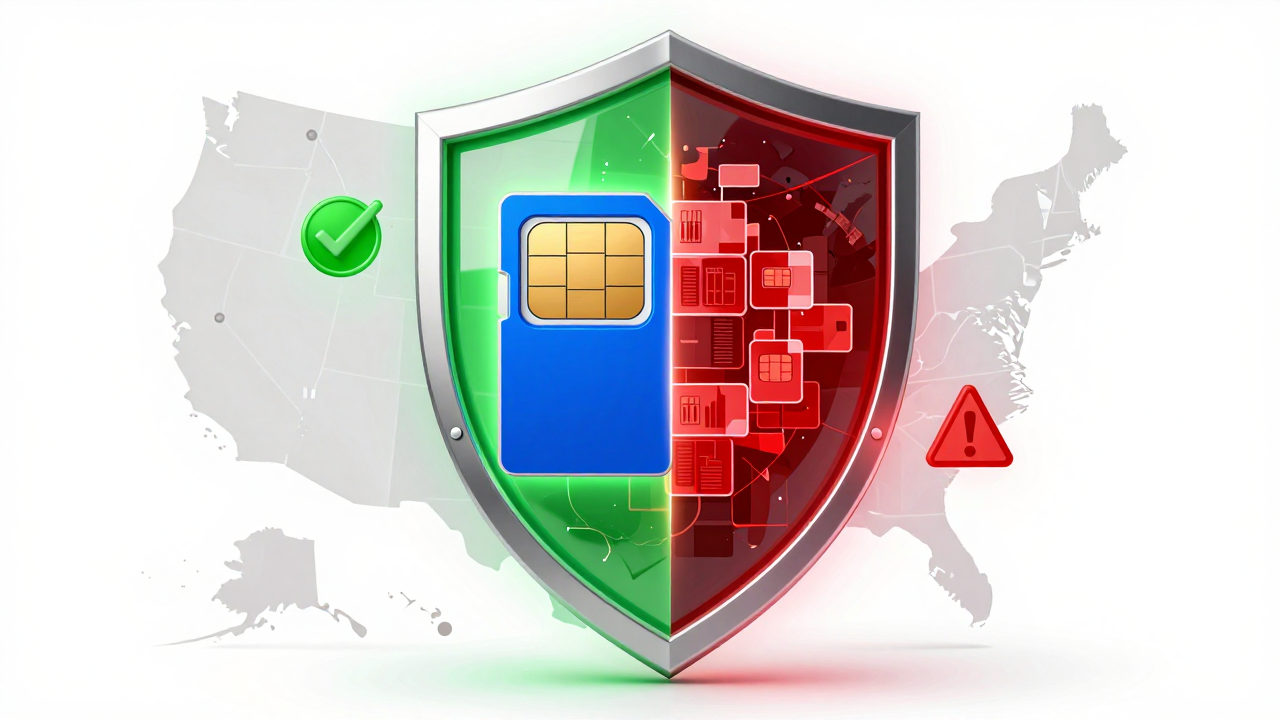
Actionable advice: if you register more than 50 accounts per day, run a hybrid strategy—physical SIMs for your core accounts, API platforms for edge testing. Getfollow's 2026 US physical SIM + API management dashboard is one option for growing teams that need both security and efficiency. But whether it fits your workflow is something you should assess against the criteria above, not take on faith.
Compliance Red Lines & Risk Warnings
US SMS verification in 2026 carries legal exposure mainly through the extended interpretation of the Truth in Caller ID Act and the terms-of-service clauses of platform agreements. When a platform identifies an account registered via a verification number, the consequences go beyond a ban—data tracing may follow.
The compliance floor: never use verification numbers for fraud, fake orders, or fake reviews that violate platform policies. For businesses, confine SMS verification to "internal testing" and "multi-account matrix operations" within legitimate boundaries.
Here's a concrete risk scenario: a social media account registered with a verification number gets reported for policy-violating content. The platform demands the real-name info tied to the registration phone number. Your verification number can't comply—so the account is permanently banned with no appeal path. In 2026, the appeal success rate for such cases sits at just 5–10%.
Another 2026 concern: some providers suffered data breaches, and their numbers were used maliciously. If your business didn't unbind in time, you could be pulled into legal disputes. That's why I recommend maintaining a "number usage ledger"—track every number's registered platform, binding date, and unbind status.
FAQ: Common Questions About US SMS Verification
Which US SMS verification platform is best?
There's no universal "best" in 2026—it depends on your use case. Bank-level verification calls for physical SIMs; bulk social media registration works with API platforms; mixed needs might justify a hybrid provider. Start with a small test batch before committing to volume.
Will using a US SMS verification platform get my accounts banned?
Ban risk depends on number quality and how you use it. Shared number segments see ban rates above 50% in 2026; exclusive physical SIM cards stay under 10%. Your login IP, device fingerprint, and post-registration behavior also factor in.
How do I choose a reliable US SMS verification provider?
Three things: number exclusivity, availability of segment quality reports, and support responsiveness. In 2026, ask for a screenshot of the provider's 30-day success rate on your target platform. Also check whether they offer risk-control strategy advice—not just number sales.
Does US SMS verification require real-name authentication?
In 2026, major US virtual operators require real-name activation for physical SIMs, but pure online SMS platforms typically don't. If you're registering for financial or healthcare platforms, use a real-name-verified physical SIM to reduce risk-control flags.
Can a US verification number be used long-term?
Yes, under two conditions: the number is exclusive to you, and it shows regular communication activity. Industry data from 2026 shows the monthly maintenance cost for a stable long-term verification number runs about $8–$15—cheaper than the account losses from constantly rotating numbers.
Looking at the 2026 landscape, US SMS verification has evolved from a "cheap tool" into a "risk management discipline." Whether you're a business or a solo operator, treat every number as an account asset—not a disposable commodity. Start with your smallest business unit, track pass rates and ban rates, and scale only when the data supports it.