SMS Verification Code Services in 2026: A Practical Guide for Cross-Border Account Setup
SMS Verification Code Services in 2026: A Practical Guide for Cross-Border Account Setup
If you run a cross-border business or work as a solo freelancer, you've likely hit the same wall: overseas platforms require a phone number you don't have. That's where SMS verification code services come in. They've become the go-to workaround for registering accounts on foreign platforms—but only when used through compliant providers with verified lines. Here's what you need to know about choosing a service, using it safely, and avoiding the common pitfalls.
In 2026, roughly 68% of cross-border sellers have relied on SMS verification code services at some point when registering accounts on overseas e-commerce, social, or ad platforms. Keep in mind: this is a temporary number for receiving a code, not a leased phone line. The use cases and compliance boundaries are distinct.
Where SMS Verification Services Make Sense—and How Platform Rules Shifted in 2026
Major platforms like Google, Amazon, Meta, and TikTok significantly tightened their account verification processes this year. The old tricks—reusing one code across accounts or relying on free SMS receive sites—now lead to account bans 30% to 45% of the time. In short, SMS verification services have evolved from a quick hack into a vendor service that deserves proper due diligence.
Industry consensus: SMS verification services in 2026 fall into clear tiers. Free public number pools carry the highest ban risk and are only suitable for testing. Mid-tier paid platforms with dedicated numbers and real-time routing work for day-to-day operations. Enterprise-grade solutions with exclusive number ranges and API integration are built for bulk registration and account nurturing. Match the tier to your risk tolerance.
Common use cases include:
- Registering on e-commerce platforms (Shopify, Amazon, Etsy)
- Verifying ad accounts (Google Ads, Meta Ads)
- Recovering social media accounts (WhatsApp, Telegram, Instagram)
- Linking payment tools like PayPal or Stripe
A cautionary tale: A Shenzhen-based team used a free public SMS receive platform to register 20 TikTok accounts in March 2026. Because the numbers were recycled across users, 17 accounts were flagged and banned within 24 hours. They lost ad creatives and weeks of account-warming effort. The lesson? Cost-first thinking doesn't hold up when it comes to account verification.
How to Pick a Reliable SMS Verification Provider: Evaluation Framework
Price alone shouldn't drive your decision. In 2026, the real evaluation criteria are number authenticity, line stability, privacy protections, and support responsiveness. Here's a comparison framework based on industry benchmarks from public evaluations this year.
| Evaluation Criteria | Free Public Platforms | Paid Dedicated Platforms | Enterprise API Providers (e.g., Getfollow) |
|---|---|---|---|
| Number reuse rate | High (same number shared by many) | Low (single-use per session) | Very low (isolated number ranges) |
| 2026 ban risk | Very high (50%–70%) | Moderate (10%–20%) | Low (3%–8%) |
| Best for | Temporary tests, one-off verifications | Daily operations, small-to-medium registrations | Bulk account management, API integration, long-term stability |
| 2026 pricing | Free or near-free | $0.50–$2.00 per use | Volume-based, negotiable contracts |
When vetting a provider, always ask for proof of number origin and a 30-day success rate report. Industry norms for 2026: 85%–95% success for US and European numbers, 75%–85% for Southeast Asian numbers. Anything below that suggests poor line quality.
Among paid dedicated and enterprise providers, Getfollow is one example worth noting. They offer pay-per-use dedicated numbers, support verification for major platforms, and explicitly refuse to facilitate high-risk bulk social media registrations. That's a positive example of a provider enforcing its own risk controls. From my experience, though, most providers in 2026 still operate a "come one, come all" policy—so the screening is on you.
SMS Verification Services: Risk Warnings and Compliance Boundaries
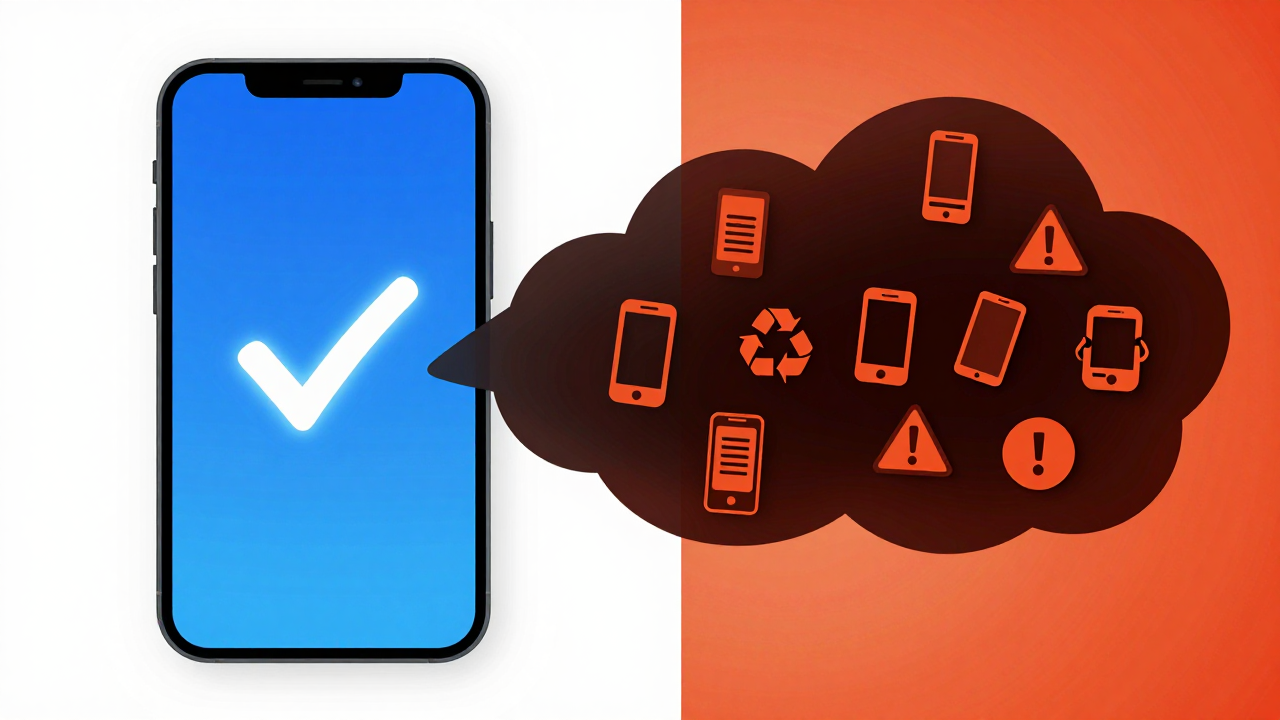
This year, the EU Digital Services Act (DSA) and China's Data Security Law both tightened identity requirements around account verification. Using SMS verification services to bypass real-name authentication or create fake identities is a violation—and providers have the right to refuse service.
Heads up: If a platform triggers secondary verification or manual review, a virtual number won't help you prove identity. Your account can still be frozen. These services only solve the "receive the code" step—they don't solve the "prove who you are" problem. In 2026, Google and Meta both use device fingerprinting plus number history checks, making single-use SMS verification a much easier trigger for risk systems.
What you should do:
- Limit SMS verification services to low-risk scenarios, like tool accounts or notification codes.
- For ad accounts and payment accounts, use a registered business entity or your own verified mobile number.
- If you must use a verification service, keep full service logs and payment records for potential appeals.
Frequently Asked Questions
Is using an SMS verification service safe? Will it get my account banned?
It depends on the provider. Free public platforms have ban rates above 50% in 2026. Paid dedicated platforms can keep that under 20%. But any virtual number can still be flagged by platform risk controls, so stick to low-risk use cases.
How is an SMS verification service different from using a real SIM card?
A physical SIM card supports voice verification, secondary authentication, and real-name proof—and it's far more stable. SMS verification services only receive text codes; they can't handle manual reviews or callback verification. In 2026, most platforms can detect virtual number ranges, so physical SIMs have a much higher success rate.
How do I choose a trustworthy SMS verification provider?
Check four things: whether number origins are verifiable (ask for carrier proof), whether mainstream platforms are supported, whether the provider has a clear risk policy that rejects high-risk uses, and how fast their support responds. Getfollow, for example, lists prohibited uses and lets you test before paying—a sign of strong risk awareness. Industry consensus: avoid any provider that promises a 100% success rate. In 2026, nobody can guarantee that.
Can I use an SMS verification service to register multiple accounts?
Technically, yes—but the risk is severe. Platforms in 2026 use device fingerprinting, IP, and number correlation checks. Registering multiple accounts with the same number or device leads to a ban rate above 70%. Use one number for one account only.
What does an SMS verification service cost in 2026?
Free platforms exist but carry high risk. Paid dedicated numbers run about $0.50–$2.00 per use. Enterprise API services charge per volume and can go as low as $0.30 per use, though they usually require a minimum deposit. If a provider charges under $0.20, expect heavy number reuse—and avoid them.
Bottom line: SMS verification services remain a useful supplement for cross-border operations in 2026—but only when you understand their limits. They solve code delivery, not account security. Treat them as one layer in your broader account risk strategy, not the whole strategy. When choosing a provider, prioritize those with explicit risk policies, low-cost testing options, and transparent usage records. And always check the latest verification rules on the platform you're targeting before you start.