WhatsApp CRM Systems That Actually Retain Customers: The Unspoken Selection Logic in Cross-Border Ecommerce
WhatsApp CRM Systems That Actually Retain Customers: The Unspoken Selection Logic in Cross-Border Ecommerce
Over the past two years, I've watched at least a hundred cross-border ecommerce teams stumble badly when it comes to WhatsApp customer management. The typical first instinct is to grab any bulk messaging tool—and the result is almost always the same: accounts get banned, and customers vanish with them. Here's the hard truth: a system that genuinely retains customer resources isn't about how fast you can blast messages. It's about whether the data actually belongs to you.
The Brutal Reality: A Contact List Is Not a Customer Asset
Plenty of cross-border sellers tell me they've stored thousands of WhatsApp contacts in Excel spreadsheets or phone address books, convinced they're sitting on a goldmine. Then the phone gets lost, the account gets banned, or an employee walks out the door—and suddenly that "asset" is gone overnight.
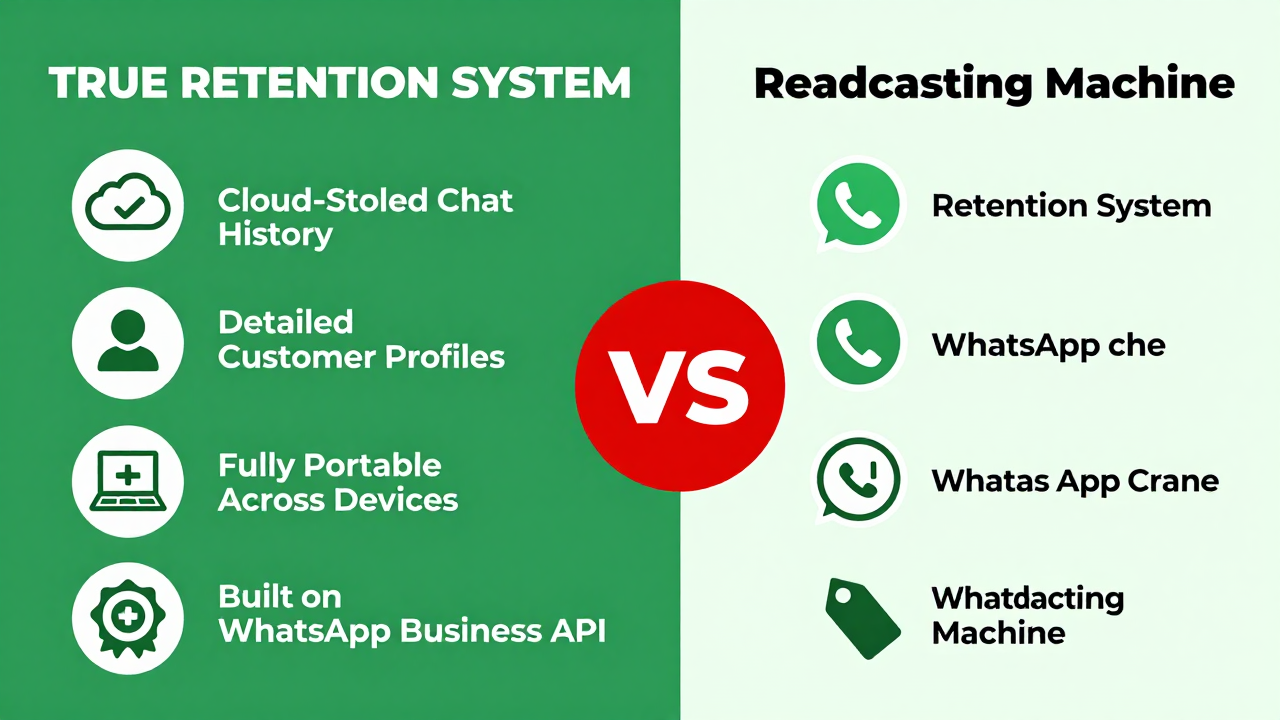
Industry consensus is clear: a legitimate WhatsApp retention system must do three things—build detailed customer profiles, store communication history in the cloud, and remain fully portable across devices. If a tool can't deliver on all three, it's just a fancy broadcasting machine, not a retention system.
Why Most Tools on the Market Fail to Retain Customers
I've personally tested several mainstream tools, and a common flaw keeps surfacing: they obsess over reach efficiency while completely ignoring data ownership. Take certain SaaS platforms—your customer data lives on their servers, and if you stop paying, even exporting your chat history becomes a nightmare.
Then there's the compliance trap, which is far more insidious. WhatsApp has been cracking down hard on automation that doesn't use the official API. Many tools rely on web-based protocol emulation, which sits squarely in a gray zone. I know a home goods team that used an open-source framework for three days of bulk messaging—their account with 2,000 contacts got banned instantly, with zero chance to appeal.
So the first thing to check when evaluating any system is whether its technical foundation is built on the WhatsApp Business API. This is the officially sanctioned interface. Yes, it costs more, but the account security and data stability are on an entirely different level. Platforms like Getfollow have built a solid reputation in the industry precisely because they operate on this compliant framework—you won't wake up one morning to find every customer gone.
The Real Reason Retention Rates Stay Low: You're Confusing Outreach With Engagement
Studio owners frequently complain to me that reply rates actually dropped after they adopted a CRM system. Nine times out of ten, the problem lies in the messaging templates and the tagging logic—not the software itself.
A proper retention system should enable dynamic tag management. Here's a practical example: two customers both send inquiries, but one asks "What's your MOQ?" while the other asks "Can you customize the logo?" These are completely different buying signals at different decision stages. If your system can't distinguish between them and trigger different follow-up sequences, retention is nothing but wishful thinking.
I've seen this play out in real time. A Shenzhen-based 3C accessories team used their system to send promotional messages to every non-converting customer every three days. Within a month, their block rate exceeded 40%. They switched to the system's interest-segmentation feature, sending tutorial content only to customers who had clicked links but hadn't purchased. The recovery rate jumped nearly 15% in two weeks. Same tool, completely different outcome—that's the power of engagement thinking.
Three Details to Scrutinize When Choosing a Provider
Since you're clearly in evaluation mode, let me skip the fluff and give you decision-ready criteria. Don't let sales demos dazzle you with feature lists. Verify these three things instead:
- Data Export Rights: Does the contract explicitly state you can export all customer information and chat records at any time? If the answer is vague, walk away.
- Account Ban Compensation: Ask what happens if your account gets restricted due to system issues. Providers willing to put liability terms in writing are usually the ones worth trusting.
- Multi-Device Sync Logic: Does the system tie to a single phone number, or does it support team collaboration? A genuine retention system must allow multiple team members to work simultaneously with a full audit trail—so a departing salesperson can't walk off with your customers.
One more word of caution: don't fall for "unlimited friend requests" promises. WhatsApp enforces strict frequency limits on new accounts. Any system claiming unlimited outreach is essentially burning through your account's lifespan. Retention starts with keeping your account alive—a lesson many people only learn after paying expensive tuition.
Final Advice: Test Small Before You Commit Long-Term
Whatever solution you're considering, run it on a secondary test account through two weeks of real business flow first. Watch three metrics closely: customer reply rate, contact retention rate, and how fast the provider's support team responds. A pattern I've noticed across the industry: the gap between pre-sale enthusiasm and post-sale support is often enormous—and that gap tells you more than any feature comparison chart ever will.
Remember, a WhatsApp system is just a tool. Real retention comes from how well you understand your customer lifecycle. Choose a compliant provider that lets you take your data with you at any moment. Even if it costs a bit more, it's far cheaper than waking up one day to find your entire customer base has evaporated.
Frequently Asked Questions
What is the WhatsApp Business API and why does it matter?
The WhatsApp Business API is the official interface provided by Meta for business communication. Unlike unofficial automation methods, it's compliant with WhatsApp's terms of service, significantly reducing the risk of account bans while offering stable data storage and retrieval capabilities.
Can I export my customer data from a WhatsApp CRM system?
It depends on the provider. A reliable system should contractually guarantee full data export—including customer profiles, chat history, and tags—at any time. If a provider hesitates on this point, consider it a red flag and look elsewhere.
How do I prevent customer loss when a salesperson leaves?
Choose a system with multi-user access and complete activity logging. This ensures all customer interactions are tracked at the team level, not tied to an individual's device or personal account. The data stays with your business, not the departing employee.
What's the safest way to scale WhatsApp outreach without getting banned?
Use systems built on the official WhatsApp Business API and respect platform limits. Warm up new accounts gradually, avoid high-frequency messaging, and focus on engagement quality rather than message volume. Compliance isn't optional—it's the foundation of sustainable growth.