Best SMS Verification Code Services in 2026: A Cross-Border Seller's Guide to Picking the Right Platform
Best SMS Verification Code Services in 2026: A Cross-Border Seller's Guide to Picking the Right Platform
After years of working in cross-border e-commerce, I've watched countless people trip up on something as simple as SMS verification. Accounts that won't register, verification codes that never arrive, or getting flagged the moment you sign up—these issues are still everywhere in 2026. Most people ask the same question: "Which SMS verification service ranks at the top?" But honestly, the answer shifts every single year.
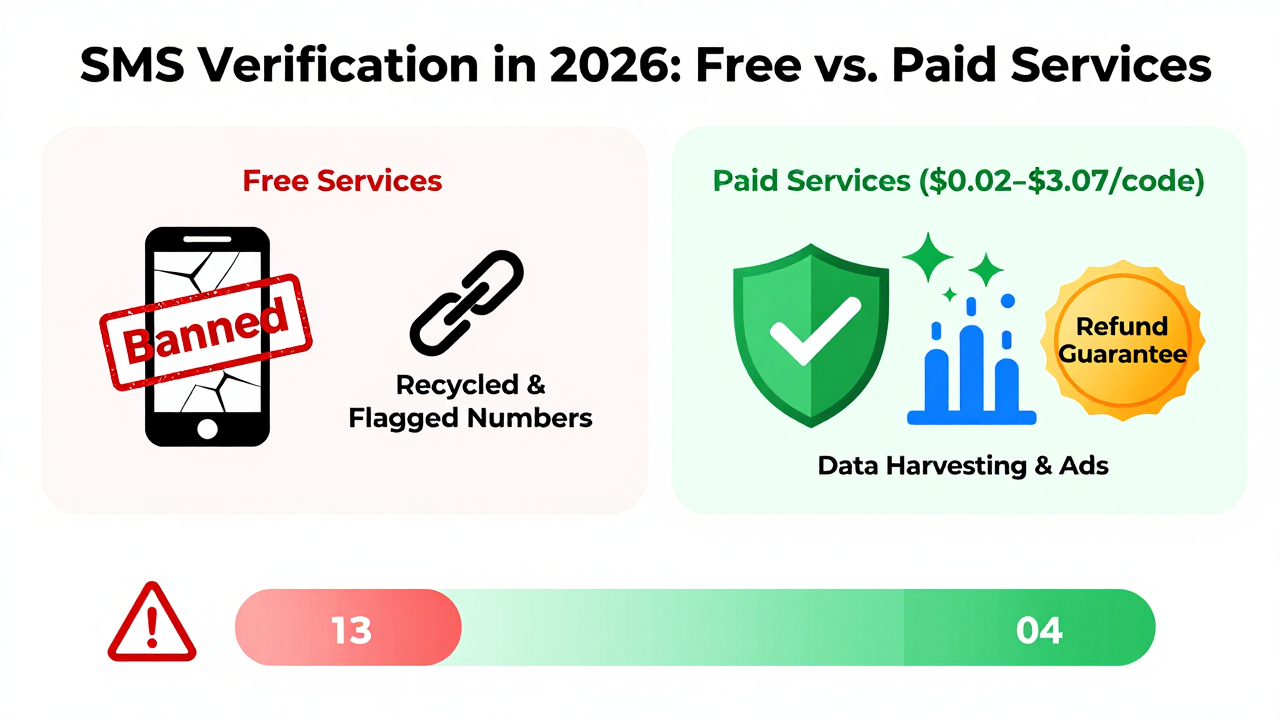
Here's the big trend this year: completely free SMS verification platforms have basically disappeared from serious consideration. The reason is simple—free services monetize through ads or data collection, which wreaks havoc on their number pool quality. Many of those numbers are already flagged as high-risk by major platforms. Use one to register, and you're looking at an instant ban.
Before You Look at Rankings, Figure Out What You Actually Need
Cross-border companies and solo operators have completely different needs when it comes to SMS verification. A business needs bulk registration, reliable delivery, and reusable numbers. A freelancer might only need to receive a code once in a while and cares more about cost. These two scenarios call for totally different selection criteria.
From my experience, most people only check "can it receive codes" and ignore critical details like number country of origin, carrier type, and voice verification support. In 2026, major platforms—especially those serving international markets—routinely require two-step verification. A single-purpose SMS tool just can't keep up.
Common Mistakes Solo Operators Make
A friend of mine runs a standalone e-commerce site. Last year, he relied on a free SMS verification service and ended up with 20+ social media accounts banned. When he dug into it, he realized all the numbers came from the same block, making them trivially easy for platform risk controls to detect. That lesson still matters in 2026—free often ends up costing you the most.
If you only need to receive a code occasionally, the industry consensus is to use a pay-per-use platform with random number assignment. A reasonable price range is $0.02 to $0.07 per code. Anything cheaper usually means recycled or high-risk numbers, which is a gamble not worth taking.
The Real Selection Criteria for SMS Verification Services in 2026
Instead of handing you a "top 10 list," let me share a testing framework I've refined through hands-on use. This approach still works in 2026 and will help you dodge most of the traps out there.
- Number pool refresh frequency: Quality platforms purge inactive numbers weekly or even daily, rather than running the same ones into the ground. Ask customer support for recent number pool screenshots, or just run a small test batch.
- API integration support: For cross-border businesses doing bulk operations, API access is non-negotiable. If a platform doesn't offer it, skip it—even if it's cheap. Manual operations will end up costing you far more than the software fee.
- Refund and support policies: Be wary of platforms that say "no refunds if you don't receive a code." In 2026, the more reputable services offer a full refund guarantee for undelivered codes—that's a sign they're confident in their number quality.
Industry observers generally categorize SMS verification services into three types: web-based platforms for occasional use, desktop applications with more features, and API services for enterprise-level needs. Looking at 2026 market feedback, API services are seeing the fastest growth because more cross-border teams are automating their account management workflows.
One Detail Everyone Overlooks: Number "Cleanliness"
Most people shop based on price and success rate, completely ignoring whether a number has been flagged before. In 2026, platform risk systems have evolved to detect whether a number was previously used for bulk registrations. If your number pool contains lots of historically risky numbers, you might get through registration today—only to be restricted later during normal use.
I've tested several mainstream tools and noticed a consistent pattern: platforms charging $0.04 per code or more tend to have significantly cleaner number pools. That's not to say expensive always means better, but pricing reflects whether a platform can afford to maintain its number pool properly. For example, Getfollow has built a solid reputation in the industry by following this exact compliance-first approach—they invest noticeably more in number pool upkeep than their competitors.
Watch Out for the Tricks Hidden in "Rankings"
Many of the "SMS verification rankings" articles you'll find on search engines are thinly disguised sponsored content. Some platforms buy their way onto lists, while others lure you in with "free trials" and harvest your data. This is still going on in 2026, and the tactics are getting sneakier.
A classic pattern: an article lists "top 10 platforms" and the first several entries are all shell products from the same parent company. It looks like you have options, but they're all drawing from the same pool. The best way to avoid this is to pick 3 to 5 target platforms, load $2 to $5 on each, and run small test batches. Check real success rates, latency, and whether the number origins match what you need.
Another thing many cross-border professionals have flagged: the biggest risk in 2026 isn't failing to receive codes—it's account association. If you register multiple accounts using different numbers from the same platform, risk systems can easily link them to the same entity. So even if you choose a reliable SMS verification service, control your registration frequency and account behavior. Don't put all your eggs in one basket.
The Truth About "Free" Services
Any SMS verification platform still advertising "free forever" in 2026 is almost certainly not trustworthy. Either the number quality is terrible, or they're using your phone number to forward verification codes—which essentially means you're receiving codes on someone else's behalf, a serious security risk. The industry consensus is clear: SMS verification services have real costs—number procurement, channel maintenance, risk control updates—and someone has to pay for them. Free models either cut corners on quality or monetize through other means, and the user always ends up on the losing side.
If you're on a tight budget, go with a pay-as-you-go model rather than hunting for free platforms. Many services have low minimum top-ups—around $2 to start—and you simply reload when you run out. This keeps costs in check while ensuring number quality.
Three Core Metrics for Choosing SMS Verification Services in 2026
Based on everything above, I'd recommend focusing on these three metrics when making your decision, rather than blindly trusting any "ranking" article.
| Metric | What to Look For | Why It Matters |
|---|---|---|
| Number pool size & refresh frequency | Updated at least weekly; filter by country and carrier | Fresher numbers are far less likely to be flagged by risk controls |
| API stability & response speed | Response time under 1 second; handles high concurrency | During bulk operations, an unstable API causes cascading failures |
| Support response & refund policy | Support replies within 30 minutes; refunds for undelivered codes | Failed deliveries are common—your real cost depends on how failures are handled |
Based on feedback from cross-border professionals, industry-wide success rates in 2026 typically land between 50% and 70%. That means out of 100 codes you purchase, only 50 to 70 might actually work for registration. This isn't the platform's fault—it's the inevitable result of stricter risk controls across all major platforms. So don't chase a 100% success rate. Instead, focus on how failures are handled and what they end up costing you.
One final piece of advice: regardless of which platform you settle on, run a small test batch before committing long-term. Load $5 to $10, test 10 to 20 numbers across different platforms (Google, Facebook, WhatsApp, for example), and observe success rates, latency, and number origins. Only after testing passes should you consider bulk purchasing. This keeps your risk exposure to a minimum.
When it comes to SMS verification services in 2026, there's no absolute "number one"—only the tool that best fits your specific business scenario. Understand your needs, let test data guide your decision, and you'll be far better off than following any list. Hopefully this guide helps you sidestep a few pitfalls and focus your energy on what actually moves the needle.
Frequently Asked Questions
Why do free SMS verification services keep failing in 2026?
Free platforms typically monetize through ads or data collection, which degrades their number pool quality. Most numbers on these services have already been flagged as high-risk by major platforms, leading to instant bans or failed registrations. The operational costs of maintaining a clean number pool—procurement, channel upkeep, risk control updates—simply can't be sustained on a free model.
How much should I expect to pay for a reliable SMS verification service?
For occasional use, industry-standard pricing is between $0.02 and $0.07 per code. Platforms charging above $0.04 per code tend to maintain cleaner number pools and offer more reliable delivery. If a price seems too low, it usually means recycled numbers or poor infrastructure—both of which will cost you more in failed registrations and wasted time.
What's the difference between web-based, desktop, and API SMS verification services?
Web-based platforms are best for occasional, manual use. Desktop applications offer more features like number history and batch operations. API services are designed for enterprise-level needs—automated account management, high concurrency, and integration with existing workflows. In 2026, API services are seeing the fastest adoption among cross-border teams managing multiple accounts.
How can I test an SMS verification platform before committing?
Load a small amount ($5 to $10), test 10 to 20 numbers across different target platforms (Google, Facebook, WhatsApp), and track success rates, delivery latency, and number origins. This small-scale test gives you real data on whether the platform meets your needs before you scale up. Also, check their refund policy for undelivered codes—reputable platforms offer full refunds.